When the finish is worn to bare wood or the floor is in rough shape, a full sand takes it back to clean, smooth wood. We have been sanding floors as our main business since 1996.
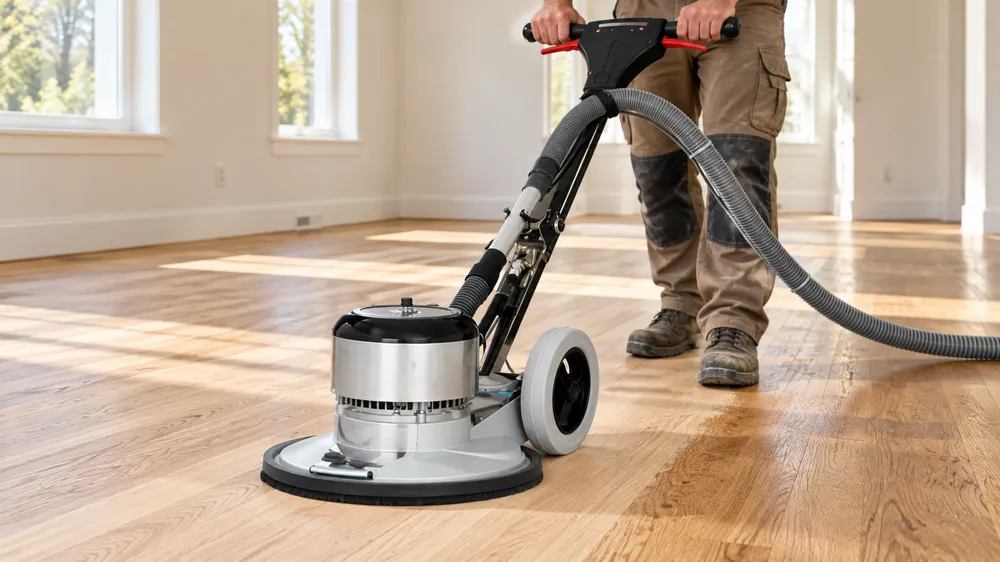
Floor sanding with a modern dust-extraction sander
01
Down to clean wood
We remove the old finish, scratches and stains, not just the top layer of dirt.
02
Edges and corners too
Walls, doorways and closets get the same care as the middle of the room.
03
Smooth to the touch
No swirl marks, no lap lines and no staples left behind under the finish.
01 / HARDWOOD FLOOR SANDING
What hardwood floor sanding is
Sanding is the first and most important step of a full refinish. We take the floor down past the old finish to clean, fresh wood, so the new stain and finish have a sound surface to sit on. Everything you see at the end depends on how well this step is done.
It makes sense when a lighter service can no longer help: the finish is gone in the traffic lanes, the scratches go into the wood, the floor is stained or uneven, or you just pulled up carpet and found oak that has not seen daylight in decades. It is also the step that lets you change the color of the floor completely.
We handle the whole job, from pulling staples and setting nails to the final fine pass. Peter Dudzik, who worked as a floor sander himself before founding the company, has over 30 years of hands-on experience, and the work is done by our own small team.
02 / HARDWOOD FLOOR SANDING
Do my floors really need sanding, or will something lighter do?
This is the question we hear most, and the honest answer depends on what is happening to the wood, not just the shine. If the finish is dull and lightly scuffed but still intact, a lighter service can bring it back, and we will tell you so. Our page on buffing and recoating explains when that works.
A full sand is needed when the damage has gone past the finish. A new coat on top of bare or damaged wood only seals the problem in, and it can peel or look patchy within months. Some homeowners were sold a recoat when the floor needed more, then paid twice. At the free consultation we walk the floor with you and show you what we see.
Gray or bare wood in the traffic lanes, where the finish has worn through
Deep scratches, dents or pet marks you can catch with a fingernail
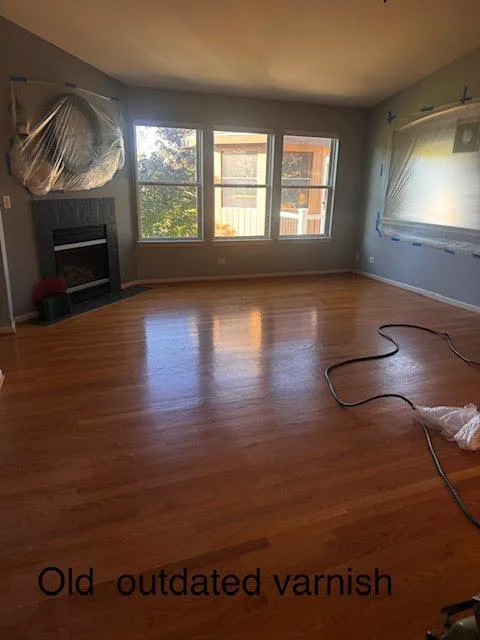
Old finish that is peeling, cracked or turned dark and orangey
Hardwood found under carpet, with staples, tack strip, carpet glue or paint drips
You want a different stain color, which needs bare wood
03 / HARDWOOD FLOOR SANDING
What actually happens when we sand your floor
First comes prep. We pull carpet staples and tack strip, set or remove nails that stick up, and scrape off old glue and paint drips. A sander running over a staple leaves a gouge, so this part is never rushed.
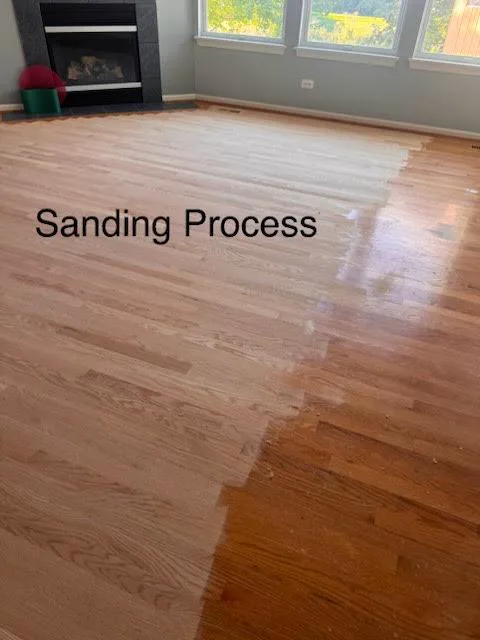
Then the floor is sanded in several passes, from a coarse grit to a finer one. The coarse pass cuts through the old finish and levels the surface. Each finer pass removes the scratches left by the one before, until the wood is clean and even. The big sander runs with the grain of the boards wherever the layout allows.
The big machine cannot reach the last few inches along the walls, so we sand the edges, closets and doorways with an edger, then hand-scrape and hand-sand the corners and tight spots. The goal is for the edges to match the field, so you do not see a frame around every room. Once the floor is clean, it is ready for stain samples or a natural finish.
04 / HARDWOOD FLOOR SANDING
What a well-sanded floor should look and feel like
Sanding removes wood, so it has to be done right the first time. Many of the worst refinishing stories come down to sanding mistakes that show up once the finish goes on and the sun comes through the window. Stain and finish make every flaw easier to see, not harder.
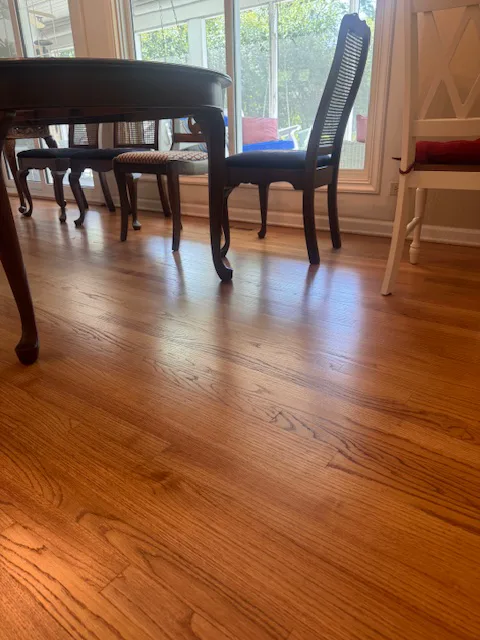
Before any stain or finish goes down, we check the floor in low, side light, the way you will see it on a sunny afternoon. If something is not right, it gets sanded again. That is much easier than fixing it after three coats. You are welcome to look with us, and to ask what is normal for an older floor, such as small gaps between boards or variation in the grain.
No swirl marks or small circles from the edger along the walls
No lap lines or chatter where one sanding pass meets the next
Even color from wall to wall, without a darker frame at the edges
Smooth under your hand and your socks, not rough or gritty
No staples, nail heads or old glue left behind under the finish
05 / HARDWOOD FLOOR SANDING
How many times can a hardwood floor be sanded?
Every full sand takes off a thin layer of wood, so it is fair to ask how many chances your floor has left. With solid hardwood, such as the classic three-quarter-inch oak found in many older North Shore homes in Evanston, Glencoe and Highland Park, there is usually enough wood above the tongue for several sandings over the life of the floor. A careful sander takes off only what is needed to reach clean wood.
Engineered flooring is different. Only the top wear layer is real hardwood, and its thickness varies a lot from product to product. Some can be sanded once or more, some should not be sanded at all. We check what you have before we recommend anything, often by looking at a board edge at a floor vent or threshold.
If your floor has been sanded several times before, or the wear layer is thin, we will tell you plainly. Sometimes a lighter service or replacing a few boards is the better choice.
RECENT PROJECT
Winnetka, IL
Whole-home refinish, about 2,800 sq ft
About 2,800 sq ft of existing hardwood was sanded and refinished throughout a Winnetka home, then finished with one coat of Loba EasyPrime and two coats of Loba Supra A.T. The whole job took five working days.
HOW IT WORKS
How a sanding project goes
Free in-home consultation
We look at the floor, check what kind of wood you have and whether it needs a full sand, take laser measurements and give you a detailed written estimate.
Prep and protection
Our crew helps move furniture, sets up dust containment, then pulls staples, sets nails and removes old glue or paint drips.
Sanding passes
Coarse to fine with the big sander, then edges, closets and corners with the edger and hand tools, until the wood is clean and even.
Check, finish and walkthrough
We inspect the bare floor in side light before stain or finish goes on, then walk the floor with you and explain drying times and care.
BEFORE YOU BEGIN
Your questions, answered.
Have a question about your floor? We can review it during your free estimate.
How do I know if my floor needs sanding or just a recoat?
Look at the traffic lanes, in front of the sink and at the doorways. If the wood there looks gray or bare, or the scratches go into the wood itself, the floor needs a full sand. If the floor is only dull and lightly scuffed, and water still beads up on the finish, a recoat may be enough. When you are not sure, call us or text a few photos. At the free consultation we will tell you honestly which service your floor needs and why, even if it is the smaller job.
We found hardwood under our carpet. Can it be saved?
Usually, yes. Oak that spent years under carpet is often in better shape than it looks. The staples, tack strip holes, carpet glue, padding stains and paint drips can look alarming, but most of that comes off in prep and sanding. We pull every staple first, because a sander that hits one leaves a gouge. Deep pet stains or damaged boards may need repair or replacement, and we will point those out before we start. Once sanded, the floor can be finished natural or stained a new color.
Will sanding remove deep scratches and pet stains?
Sanding removes scratches and stains that sit in the top of the wood, and it takes out most everyday wear. Very deep gouges can still show a little after sanding, because we do not take off more wood than the floor can spare just to chase one mark. Dark pet urine stains often go deep into the board and may not sand out. In those cases replacing the affected boards and blending them in is usually the better answer. We will show you which spots are likely to remain before the work begins.
How long does sanding and refinishing take?
A typical sanding and refinishing job takes about four working days. Sanding and prep usually fill the first part, then stain, if you choose one, and the coats of finish follow, with drying time in between. Larger homes or added repairs can take longer. Our Winnetka whole-home project of about 2,800 sq ft took five working days. Light foot traffic is usually fine after about two hours on the last coat, and furniture after about two days, depending on the finish system. Your written estimate lists the expected duration.
Can my floor be sanded again in the future?
Solid hardwood can usually be sanded several times over its life, as long as enough wood remains above the tongue. A careful sander removes only what is needed, which leaves room for future refinishing. Engineered floors depend on the thickness of the top wear layer, and some cannot be sanded at all. Between full sandings, good care and a periodic lighter maintenance coat can stretch the time a lot, so you do not need to sand again for many years. We are glad to explain the options at the end of your project.
LET’S TALK ABOUT YOUR HOME
Not sure if your floor needs a full sand?
Call (847) 781-0100 or send us a few photos, and we will come out, look at the floor with you and give you a free written estimate.