
SCREEN AND RECOAT · NORTH SHORE
Screen and Recoat for Listings, Move-Ins and Rentals
A fresh topcoat in about one day, timed around your listing photos, your closing or your next lease. Urgent projects can usually start within about a week.
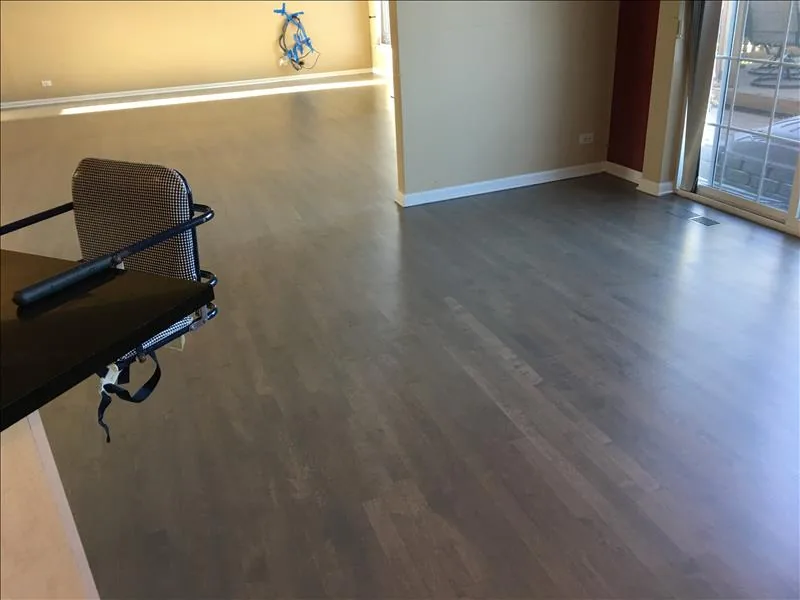
Deadline friendly
Urgent projects can usually start within about a week.
About one day
Most screen and recoat jobs are finished in a single working day.
Honest advice
If the floor needs a full sanding, we tell you before you list.
01 / SCREEN AND RECOAT
A Quick, Clean Refresh When the Calendar Is Tight
Screen and recoat is a light refresh for hardwood floors that are dull and scuffed but still have their finish. We abrade the existing finish with a fine screen or pad so the new coat can bond, clean up every bit of dust, and apply a fresh protective topcoat. No sanding to bare wood.
It makes the most sense when a date is coming: listing photos, an open house, a closing, a move-in, or a new tenant. It also works well as planned maintenance for busy homes and rentals, so traffic lanes never wear through to bare wood.
We handle the whole job and schedule it around your deadline. We work directly with homeowners, realtors and investors, and the owner or his wife answers the phone or calls you back within about an hour.
02 / SCREEN AND RECOAT
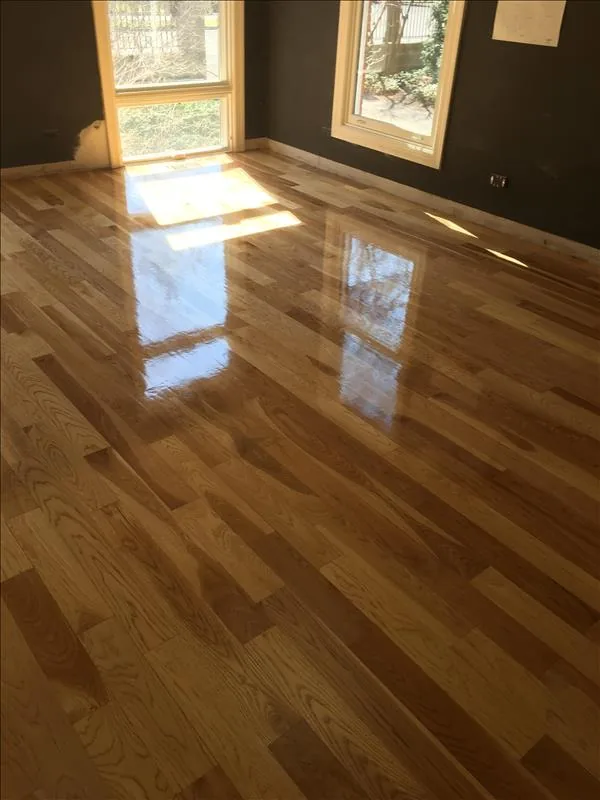
Selling your home or moving in soon?
Buyers notice floors the moment they walk in. Dull, scuffed hardwood can make an otherwise well-kept house look unkempt, and buyers start to wonder what else was let go. A fresh topcoat brings back an even sheen in listing photos and at the open house, without the four days of a full refinish.
Timing matters more than anything here. Plan the coat after painting and repairs are done and before photos and staging. Light foot traffic is usually fine after about two hours, and furniture can go back after about two days. We give you project-specific instructions, so you can tell your realtor or stager exactly when the rooms are ready.
Buying a home works the same way in reverse. An empty house before move-in is the easiest time to refresh the floors. There is no furniture to move and no family living around the work.
- Book after painting, before listing photos and staging
- Ask about our next opening if closing is close; urgent jobs can usually start within about a week
- We can coordinate access and timing with your realtor
03 / SCREEN AND RECOAT
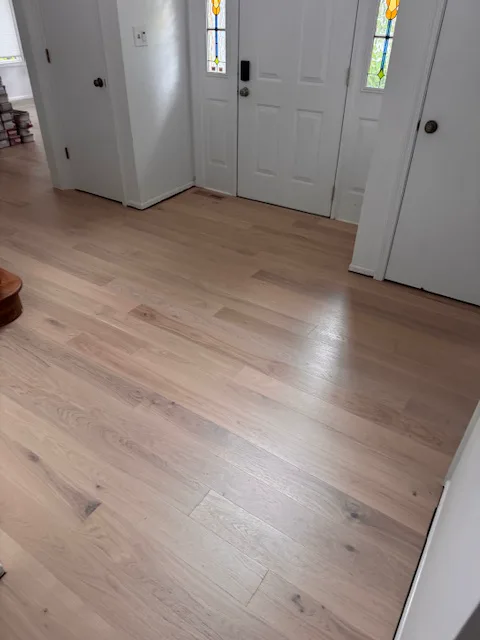
Rentals, investment properties and high-traffic floors
For rental owners and investors, the best time to refresh hardwood is between tenants, while the unit is empty. A screen and recoat is a fast, cost-effective way to make a vacant unit look cared for at the next showing, and it adds a new layer of protection before the next lease starts.
The bigger win is keeping the floor from wearing out at all. Hallways, entries, kitchens and the path to the back door lose their finish first. As long as some finish is still on the wood, a new topcoat can renew it. Once traffic wears through to bare wood, the wood starts to gray and stain, and a recoat can no longer fix it. Then you are paying for a full sanding.
There is no fixed schedule that fits every floor. How often a recoat makes sense depends on traffic, pets, shoes and cleaning habits. A good rule is to recoat when the finish looks dull and scratched in the busy areas, not after it is gone. We look at the floor and tell you honestly whether it is time.
- Schedule between tenants, while the unit is vacant
- Watch entries, hallways and kitchens first
- Recoat while the finish is worn but still intact
04 / SCREEN AND RECOAT
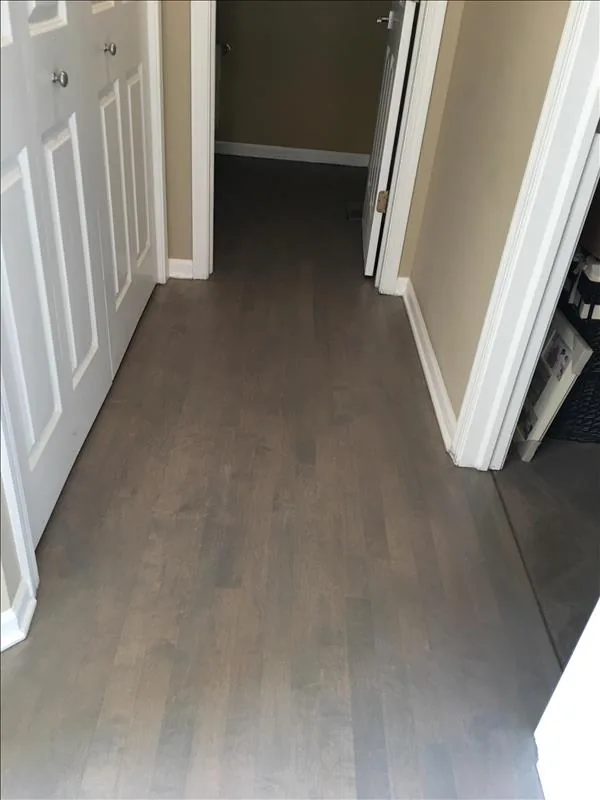
Screen and recoat or buff and recoat: what is the difference?
Honestly, none that matters to you. Contractors use different names for the same light process. Screening means abrading the existing finish with a fine screen or pad on a floor buffer, which is why some people call it buffing. Then the floor is cleaned and a new topcoat goes on. If you want a closer look at how the process works in a lived-in home, see our page on buffing and recoating.
What matters more is knowing the limits. A recoat works on top of the old finish, so it cannot reach anything below it. It will not remove deep scratches, gouges, pet stains or gray spots where the wood is bare. It will not change the color of the floor. If the floor is honey oak or orangey today, it will be the same color with a fresh sheen.
The existing finish also has to accept a new coat. Floors treated with wax or some polish and shine products may not bond well, so we check the surface and ask about past cleaning products before we recommend a recoat.
05 / SCREEN AND RECOAT
When a full sanding is the better investment before a sale
Some sellers are sold a recoat when the floor really needs sanding. The result looks better for a few weeks, but the deep scratches and worn traffic lanes still show through the new coat, and buyers see them anyway. We would rather tell you that up front.
A full sanding is usually the better choice when the finish is worn through to bare wood, when there are deep scratches or pet stains, or when the color itself is the problem. Many buyers are put off by dated orange or yellowed floors. Sanding takes about four working days instead of one, so it needs more lead time before your listing date. Read more about hardwood floor sanding if that sounds like your floor.
Not sure which one you need? We walk the floor with you at a free in-home consultation and explain what we see, room by room. Sometimes the answer is a mix: a recoat in rooms with light wear and sanding where the finish is gone.
- Bare, gray wood in traffic lanes
- Deep scratches, gouges or pet stains
- A color you or your buyers will not like
HOW IT WORKS
How a Screen and Recoat Works
Free in-home consultation
We look at the finish, check for wax or polish residue, and tell you whether a recoat will do the job or the floor needs sanding. You get a detailed written estimate with an approximate start date.
Prepare the rooms
Furniture comes out with your help, and we protect cabinets and baseboards. In a vacant listing or rental, this step is quick.
Screen, clean and coat
We abrade the existing finish, remove the dust completely, and apply a fresh topcoat in satin or another sheen. Most jobs take about one day.
Walkthrough and timing
We walk the floor with you and explain drying times, when people can walk on it, when furniture may return, and which cleaning products to use.
BEFORE YOU BEGIN
Your questions,
answered.
Have a question about your floor? We can review it during your free estimate.
(847) 781-0100Is it worth refreshing the floors before we list the house?
Often, yes, if the floors are dull and scuffed but the finish is still intact. Worn floors can make a home look neglected in photos and at showings, and a recoat is a small project that takes about one day. If the floor has bare spots, deep scratches or a dated color, a recoat will not hide them, and a full sanding may be the better use of your money. We will look at the floor and give you an honest recommendation, including when it is not worth doing anything. Your realtor’s advice about your market matters too.
How soon can you start? We close in two weeks.
Urgent projects can usually start within about a week, sometimes sooner. Call or text photos of the floor and tell us your date, and we will tell you our next opening. A screen and recoat itself usually takes about one day. Light foot traffic is usually fine after about two hours, and furniture can go back after about two days, depending on the finish and conditions in the home. If you are moving in, the best time is before the moving truck arrives, while the rooms are still empty.
Do you work with realtors and property investors?
Yes. We work with realtors and investors as well as homeowners. We can coordinate access to a vacant home, schedule around listing photos or showings, and give you a written estimate you can share with the owner. For rental owners, we can refresh floors between tenants so the unit is ready for the next showing. You talk directly to the owner or his wife, and calls are answered or returned within about an hour, which helps when a closing date is fixed.
How often should a rental or busy home be recoated?
There is no single schedule that fits every floor. It depends on how many people live there, pets, whether shoes come off at the door, and how the floor is cleaned. The simple rule is to watch the busiest areas: entries, hallways and the kitchen. When the finish there looks dull and scratched, it is time to recoat. Do not wait until the finish is gone and the wood turns gray. At that point a recoat cannot help, and the floor needs a full sanding, which takes longer and removes wood.
Can a screen and recoat change the color or remove scratches?
No. A recoat adds a new clear topcoat over the existing finish. It does not reach the wood, so the color stays the same and deep scratches, gouges and pet stains stay visible under the new coat. It does help with dullness and fine surface scuffs. If you want a lighter or more neutral color, or the floor has deep damage, it needs to be sanded to bare wood and refinished. We explain the difference at the consultation so you are not paying for a recoat that will disappoint you.
LET’S TALK ABOUT YOUR HOME
Have a Listing Date or Move-In Coming Up?
Call (847) 781-0100, text us photos of the floor, or request a free estimate and tell us your deadline.