
BUFF AND RECOAT · NORTH SHORE
Hardwood Floor Buffing and Recoating
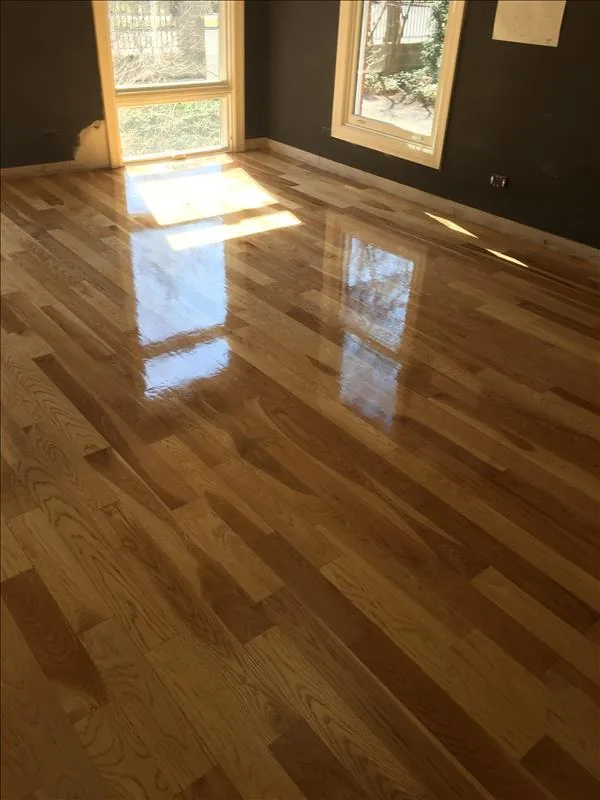
When your floors look dull and scuffed but the finish has not worn through, a buff and recoat can bring back the shine in about one day. We tell you honestly whether it will work on your floor before we quote it.
Honest assessment
We check the finish first and say plainly if your floor needs sanding instead.
About one day
Most buff and recoat jobs are finished in a single working day.
Compatibility tested
We look for wax, polish and oil soap residue before any new coat goes down.
01 / BUFFING AND RECOATING
A Fresh Coat for Floors That Are Tired, Not Damaged
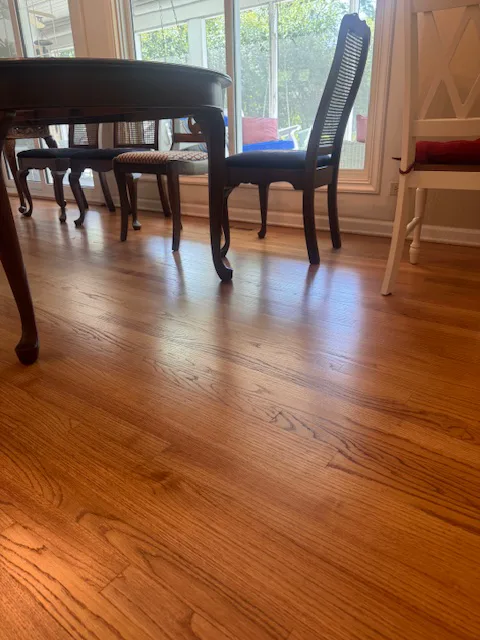
Buffing and recoating means we clean your floor, lightly abrade the existing finish so a new coat can grip it, and apply a fresh protective topcoat. We do not sand into the wood, so the stain color stays the same and no wood is removed.
It makes sense when the floor is dull, scuffed or covered in light surface scratches, but the finish is still there across the whole floor. It is a good fit for busy kitchens, hallways and family rooms in homes across Glenview, Northbrook and Highland Park that have lost their sheen, and for homeowners who want their floors to last longer between full sandings.
Peter Dudzik, who founded the company, has more than 30 years of hands-on floor experience, and during the free consultation we look at the floor in person before recommending anything. We handle the testing, cleaning, buffing, coating and cleanup, and we explain when you can walk on the floor and when furniture can go back.
02 / BUFFING AND RECOATING
Is a Buff and Recoat Enough, or Does My Floor Need Sanding?
This is the most important question on this page, and we answer it honestly. It is also the first decision in any wood floor refinishing project. Some homeowners have paid for a recoat when their floor really needed sanding, and were disappointed a few weeks later. A fresh coat cannot fix wear that has already gone into the wood. It only seals it in.
During the consultation we walk the floor with you in good light, look closely at the traffic lanes and doorways, and often put a few drops of water on the most worn spots. If the water beads up, the finish is still protecting the wood. If it soaks in and darkens the boards quickly, the finish is gone there and a recoat will not hold up.
If your floor needs full sanding and refinishing instead, we tell you, explain why, and show you what we see. You decide. We would rather lose a one-day job than sell you a result you will not be happy with.
- Recoat is usually enough: dull or cloudy finish, light scuffs, fine scratches that stay in the finish
- Sanding is usually needed: gray or bare wood in traffic lanes, deep scratches and dents, black pet stains
- Sanding is also needed when you want a new stain color
03 / BUFFING AND RECOATING
What Happens During a Buff and Recoat
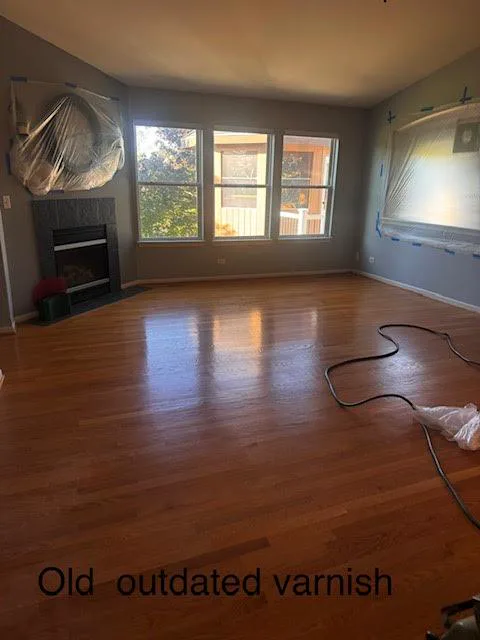
The work is simple, but the preparation decides how long the new coat lasts. First we clean the floor thoroughly to remove dirt, grease and residue. Then we buff the whole surface with a floor buffer and an abrasive screen or pad. This dulls the old finish evenly and gives the new coat something to bond to. We hand-sand along the edges and in corners where the buffer cannot reach.
Next we vacuum and tack the floor so no dust ends up trapped in the finish. Then we apply a fresh coat of professional finish, usually a commercial-grade waterborne product such as Bona Traffic HD or Loba Supra A.T., chosen after we confirm it is compatible with what is already on your floor.
Buffing produces only light, fine dust, nothing like a full sanding. Before we leave, we walk the floor with you and explain drying times and care for your finish. Most homes are done in about one day.
04 / BUFFING AND RECOATING
Wax, Polish and Oil Soap: Why We Test Before We Coat
A new coat of finish has to stick to the old one. Many common cleaning and shine products leave a film that stops it from bonding. Paste wax, oil soaps, and some store-bought floor polishes and restorers are the usual problems. If a fresh coat goes over them, it can peel, flake or look blotchy within weeks.
That is why we ask what you have used on the floor, sometimes for years back, and test the surface before we recommend a recoat. Light residue from polish or cleaners can often be removed with the right cleaning steps before buffing. A floor that has been waxed is a different story. Wax soaks into the old finish and the wood, and in most cases it has to be sanded off before any modern finish will bond.
If we are not confident a recoat will bond to your floor, we say so before you spend anything. A peeling recoat costs more to fix than doing the right job the first time.
- Paste wax: usually rules out a recoat
- Oil soap or polish build-up: often removable, we check first
- Unknown products from a previous owner: we test a small area
05 / BUFFING AND RECOATING
Sheen, Scratches and How Long a Recoat Lasts
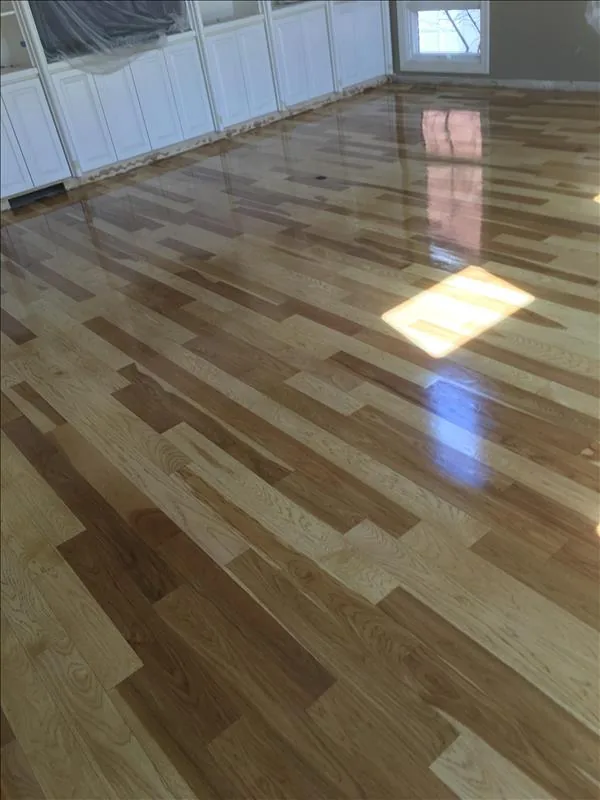
A recoat is also your chance to change the shine level. Most of our customers choose satin, which hides everyday dust and scuffs well. Semi-gloss and gloss are available if you want more shine. The new coat sets the sheen you see, so a floor that has gone flat and cloudy can look evenly bright again.
Fine surface scratches usually blend in or disappear under the fresh coat. Scratches that go into the wood will still be there, although they may look less obvious. A recoat does not change the stain color, remove gray worn-through areas or fix pet stains, gaps or loose boards.
How often a floor needs a recoat depends on traffic, pets, grit at the doors and how it is cleaned. Kitchens, entries and main hallways wear first. Recoating those floors before the finish wears through to bare wood is the easiest way to put off a full sanding for years, and it protects the wood you have left.
HOW IT WORKS
How a Buff and Recoat Works with Us
Free in-home consultation
Peter looks at the finish, tests worn areas and asks about past cleaning products, then tells you whether a recoat will work.
Written estimate
You get a detailed written estimate with the work, the finish product, the sheen and an approximate start date.
Clean, buff and coat
We clean the floor, buff the old finish evenly, remove the dust and apply a fresh coat, usually in about one day.
Walkthrough and care
We walk the floor with you and explain drying times, when furniture can return and which cleaning products to use.
BEFORE YOU BEGIN
Your questions,
answered.
Have a question about your floor? We can review it during your free estimate.
(847) 781-0100How do I know if my floors need refinishing or just a buff and recoat?
Look at your busiest areas in good light. If the floor is dull, scuffed or lightly scratched but still has an even layer of finish, a recoat is often enough. If you see gray or bare wood in the traffic lanes, deep scratches that catch your fingernail, or dark pet stains, the finish has failed and the wood needs sanding. A few drops of water can help: if they soak in and darken the wood, the finish is gone there. We check all of this for free at the consultation and explain what we see before we recommend anything.
How long does a buff and recoat take, and when can we walk on the floor?
Most homes are done in about one day. Light foot traffic in socks is usually fine after about two hours, and furniture can usually go back after about two days. These times depend on the finish we use, the temperature, humidity and airflow in your home, so we give you exact instructions for your project at the final walkthrough. Rugs should stay off longer while the finish cures. We also explain ventilation and which rooms you can use while the floor dries.
Will a recoat get rid of scratches?
It depends on how deep they are. Light scratches that are only in the finish usually blend in or disappear under the new coat, which is why a recoat can make a scuffed floor look much better. Scratches that go through the finish into the wood, dents from dropped items and pet nail gouges will still be there, though they may look a little less noticeable. If those deeper marks bother you, full sanding is the only way to remove them, and we will tell you that up front.
Can you recoat a floor that has been waxed or cleaned with oil soap?
Waxed floors usually cannot be recoated. Wax works its way into the finish and the wood, and a modern finish will not bond to it, so the wax normally has to be sanded off. Oil soaps, polishes and shine restorers leave a film that can also cause peeling, but light build-up can often be removed with proper cleaning before we buff. We always ask what has been used on the floor and test it before we recommend a recoat, so you do not end up with a coat that flakes off. You can also send us photos and tell us what products you have used.
Can a recoat change the color of my floors?
No. A buff and recoat only adds clear finish over the existing one, so the stain color stays the same. If your floors look orange, too red or dated and you want a different color, the floor has to be sanded to bare wood and stained. What a recoat can change is the sheen. You can go from a worn, cloudy look to an even satin, or choose semi-gloss or gloss if you prefer more shine. Most of our customers stay with satin.
LET’S TALK ABOUT YOUR HOME
Not Sure Whether Your Floor Needs a Recoat?
Call (847) 781-0100 or send a few photos, and we will tell you honestly whether a buff and recoat will work for your floor.