Hardwood Floor Staining: Choose a Color You Won’t Regret
Stain color is the one decision you live with every day. We apply real samples on your own sanded floor, so you choose the color in your own rooms and your own light, without being rushed.
About 12 × 12-inch samples, applied on your own sanded wood.
02
No rushed decisions
You look at the colors in your light and make the final pick.
03
Matched to what stays
New boards and stairs blended into the floors you keep.
01 / HARDWOOD FLOOR STAINING
What floor staining is, and why the color choice matters so much
Staining changes the color of the wood itself. After the floor is sanded to bare wood, the stain goes into the grain, and the clear finish goes on top to protect it. Once the finish is down, the only way to change the color is to sand the floor again.
It makes sense when you hate the color you have: red oak that looks orangey or pink, honey oak that feels dated, an old dark stain that shows every speck of dust, or new boards that must blend into an older floor. It is also part of most jobs where hardwood was found under carpet.
Staining is one part of our wood floor refinishing work. We discuss colors at the free consultation, apply samples on your floor during the project, stain the whole floor evenly, and protect it with a commercial-grade finish in the sheen you choose.
02 / HARDWOOD FLOOR STAINING
Why a store sample is not enough
The most common stain regret story starts the same way: the color was picked from a small store chip or a brochure, and the finished floor looked nothing like it. A sample board is a different piece of wood, with different grain, sanded differently and seen under store lights. Your floor will take the stain in its own way.
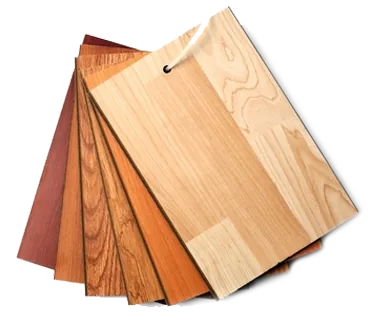
That is why we apply stain samples, each about 12 × 12 inches, directly on your own sanded floor. You see how the color reads on your boards, next to your walls, cabinets and trim. We suggest looking in the morning and again in the evening, because a color that looks warm in daylight can look darker or grayer under lamps.
There is no pressure to decide on the spot. You can live with the samples for a while, compare two or three side by side, or ask us to try a blend. The final choice is always yours.
Look at samples standing up, not only from above
Check them in daylight and under your evening lights
Hold a cabinet door, rug or paint chip next to them
Remember the clear finish deepens the color a little
03 / HARDWOOD FLOOR STAINING
My red oak looks orange or pink. What can stain really do?
Red oak is the floor in many North Shore homes, and plenty of homeowners tell us it looks too orange, too pink or too yellow. Part of that often comes from an old oil-based finish that has ambered over the years. Sanding it off and choosing the right stain and finish can change the floor a lot.
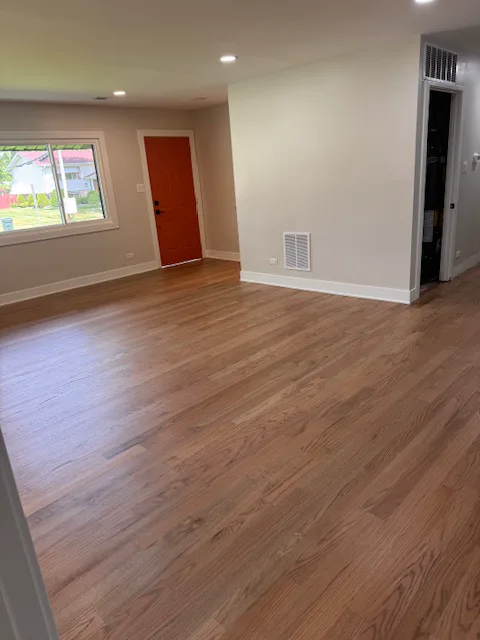
A soft brown or neutral mid-tone usually calms the red down well. If you like the natural look, a clear waterborne finish stays lighter and less yellow than many older oil-based finishes. Gray and beige tones can work too, but they read differently on red oak than on white oak, so they always need a sample first.
We are honest about the limits. Red oak keeps its open grain pattern and some of its warm undertone under any stain. We can get it much closer to a lighter, more neutral look, but a true white-oak appearance on red oak has limits, and we tell you that before you choose, not after.
04 / HARDWOOD FLOOR STAINING
Popular directions: natural, mid-tones, grays and custom blends
Most of our customers end up in one of a few directions. Natural with a clear waterborne finish shows the wood as it is. Mid-tone browns are the easiest to live with: not too light, not too dark, and forgiving with dust and pet hair. Very dark stains look rich but show dust, footprints and scratches more.
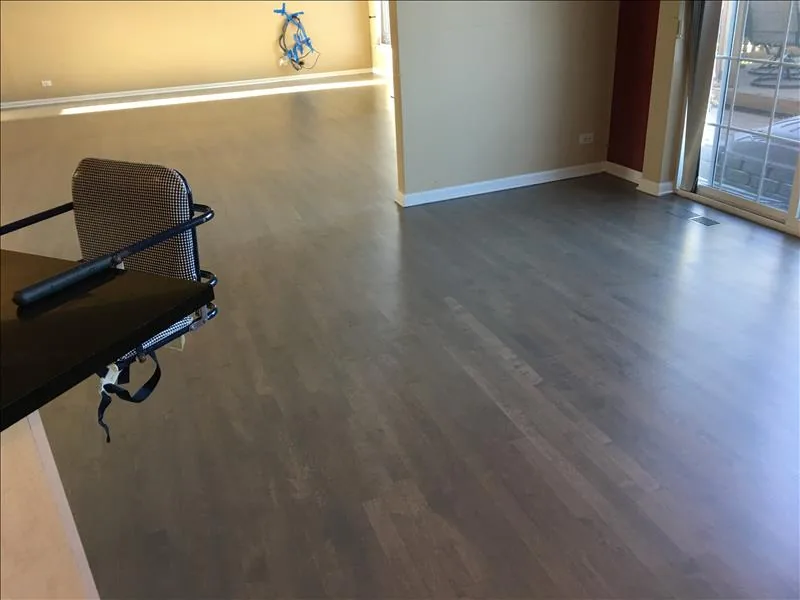
Grays have stayed popular. In Lake Forest we stained a whole home, upstairs and downstairs, in Silvered Gray. When one store color is not quite right, a blend often is: in Round Lake the homeowners chose a custom mix of Classic Gray and Provincial, and in Lincolnshire we finished the main level in a custom beige.
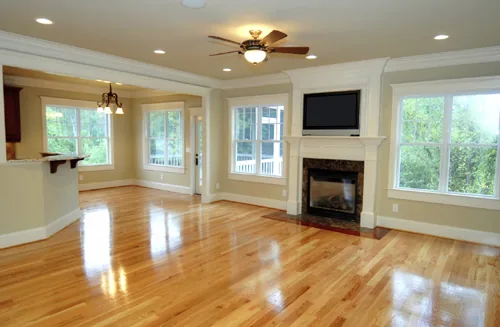
Sheen matters as much as you might think. Satin is what most of our customers choose, because it has a soft glow and hides everyday wear well. Semi-gloss and gloss are available; they shine more but also show scratches and dust sooner.
05 / HARDWOOD FLOOR STAINING
Matching new boards and stairs to the floors you keep
Color matching is where many jobs go wrong. New wood laced in where a wall or tile was removed, or new stair treads next to an older floor, can stand out if the stain is not adjusted to them. New boards often take stain a little differently from wood that has been in the house for decades.
We match the species first, then sample the stain on both the new and the existing wood so the two read as one floor. In Lincolnshire, 500 sq ft of new select red oak went in where kitchen tile had been, and the whole main level was stained together in one custom beige.
Stairs follow the same rule. When treads, risers or railings are part of the job, we sample on them too, so the color carries from the rooms up the steps. You can read more about refinishing stairs to match your floors.
RECENT PROJECT
Lake Forest, IL
Silvered Gray, upstairs and downstairs
About 2,000 sq ft upstairs and downstairs was sanded and stained Silvered Gray, including repairs where walls had been removed and 14 stair treads and risers, then finished with three coats of Bona Traffic HD satin in five days.
HOW IT WORKS
How we get from samples to a finished color
Free in-home consultation
We look at your floors, talk through the colors you like and the ones you want to leave behind, and give you a detailed written estimate.
Sanding to bare wood
The old finish and color come off so the stain can go into clean wood evenly.
Samples on your floor
We apply about 12 × 12-inch samples of the colors you are considering, and you make the final choice in your own light.
Stain, finish and walkthrough
We stain the whole floor evenly, apply the finish in your chosen sheen, and walk through drying times and floor care with you.
BEFORE YOU BEGIN
Your questions, answered.
Have a question about your floor? We can review it during your free estimate.
How do you help me choose a stain color I won’t regret?
We start at the free consultation by talking about the look you want, the rooms, your cabinets and trim, and what you dislike about the current floor. After the floor is sanded, we apply stain samples about 12 × 12 inches directly on your own wood, usually several colors side by side. You look at them in daylight and in the evening and take the time you need. If none is quite right, we can try a blend. Nothing is stained until you have made the final choice.
Can you make my red oak floors look like white oak?
We can make red oak look much lighter and more neutral, and far less orange or pink, but we will not promise a true white-oak look. Red oak has a different grain pattern and a warm undertone that stays visible under stain. A natural or soft neutral stain with a clear waterborne finish usually gets closest. Samples on your floor show you exactly how near a given color gets, so you can decide with real expectations before any stain goes down.
Will the floor look like the sample once it is done?
It should look very close, because the sample is on the same floor, sanded the same way, with the same stain. A large room can feel a little darker or lighter than a small square simply because there is more of it, and the clear finish deepens the color slightly. We explain this when you look at the samples, so the finished floor does not surprise you. Looking at the samples standing up, from across the room, also helps.
Which sheen should I choose: satin, semi-gloss or gloss?
Most of our customers choose satin. It has a soft, low glow, looks natural and hides everyday scratches, dust and footprints better than shinier finishes. Semi-gloss gives more shine and suits some formal rooms. Gloss reflects the most light and looks striking, but it shows wear and dust the soonest, so it needs more care in busy homes with kids or pets. Sheen does not change the stain color much, but it changes how the floor looks in light.
Can you match new boards or stairs to my existing floor?
Yes, this is a regular part of our work. We match the wood species first, then test the stain on both the new and the existing wood, because new boards often take stain a little differently from old ones. When the whole area is sanded and stained together, new pieces laced in where a wall or tile was removed can blend with the rest of the floor. Stair treads, risers and railings can be sampled and stained in the same color so the floors and stairs match.
LET’S TALK ABOUT YOUR HOME
See your color on your own floor first
Book a free in-home consultation and we will talk through stain colors and sheens for your floors, or call (847) 781-0100.