Choose a hardwood flooring company that performs an in-home assessment and provides a detailed written estimate. The estimate should explain the recommended scope, preparation steps, and expected finish work.
Does My Floor Need Sanding, Refinishing, or a Screen and Recoat?
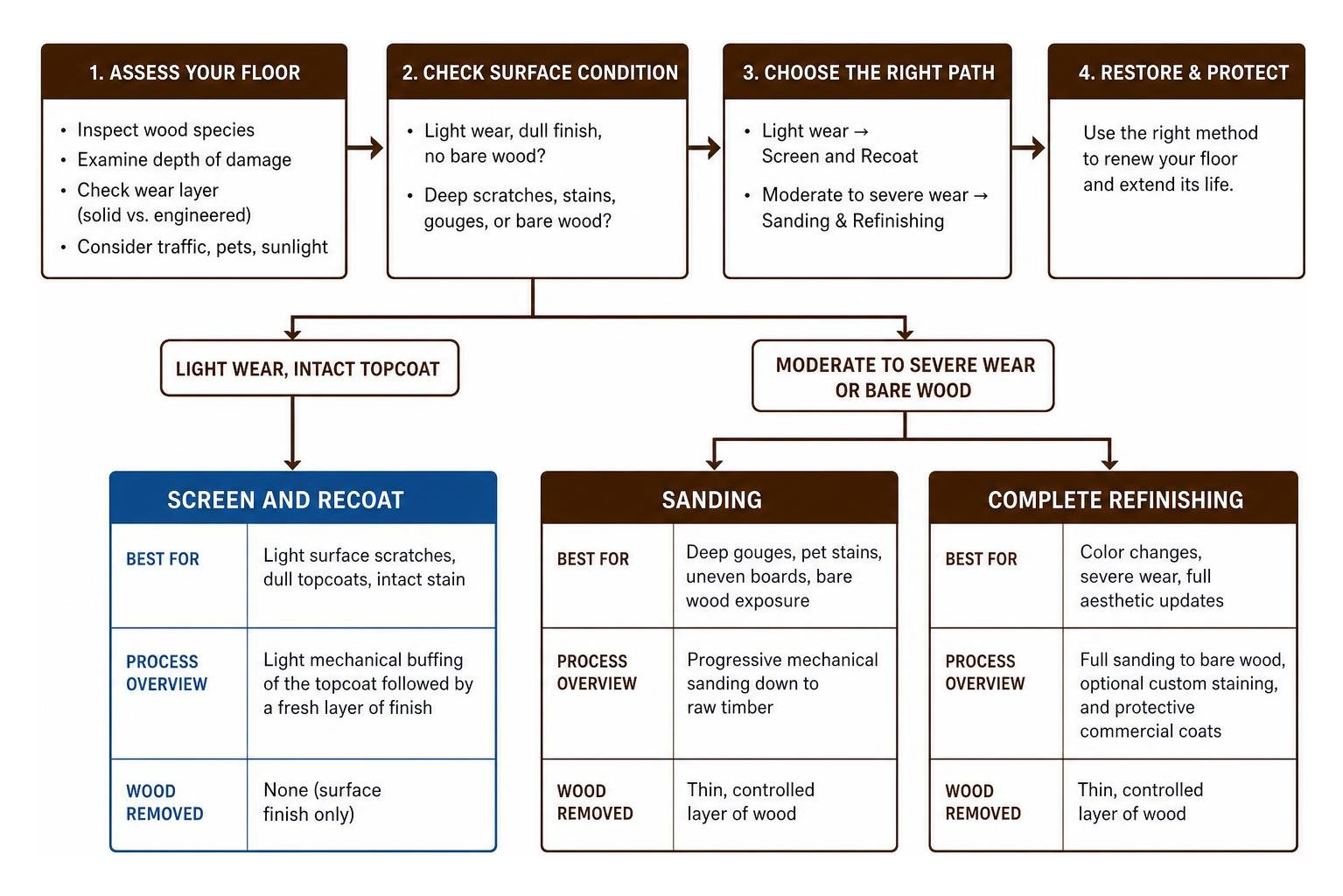
A screen and recoat may be suitable when wear is limited to the finish, while sanding and refinishing may be needed when damage reaches the wood. We inspect your floor’s condition and remaining wood thickness before recommending a method.
Choosing a hardwood floor sanding company starts with a clear assessment of your floor’s condition. Light surface scratches and dull topcoats may only need a screen and recoat. Deeper damage may need sanding and refinishing, but an inspection is needed to determine whether the floor can be restored. A professional contractor should identify the wood species, examine the depth of surface damage, and check how much wood remains available for sanding before recommending a restoration method.
Solid hardwood planks can typically be sanded multiple times over their lifespan. Engineered wood floors have a thinner top layer of real wood that requires careful evaluation. Knowing your floor’s condition helps determine the right restoration method.
| Restoration Method | Suitable For | Process Overview | Wood Removed |
|---|---|---|---|
| Screen and Recoat | Light surface scratches, dull topcoats, intact stain | Light mechanical buffing of the topcoat followed by a fresh layer of finish | None (surface finish only) |
| Sanding | Deep gouges, pet stains, uneven boards, bare wood exposure | Progressive mechanical sanding down to raw timber | Thin, controlled layer of wood |
| Complete Refinishing | Color changes, severe wear, full aesthetic updates | Full sanding to bare wood, optional custom staining, and protective commercial coats | Thin, controlled layer of wood |
What Professional Hardwood Floor Sanding Involves
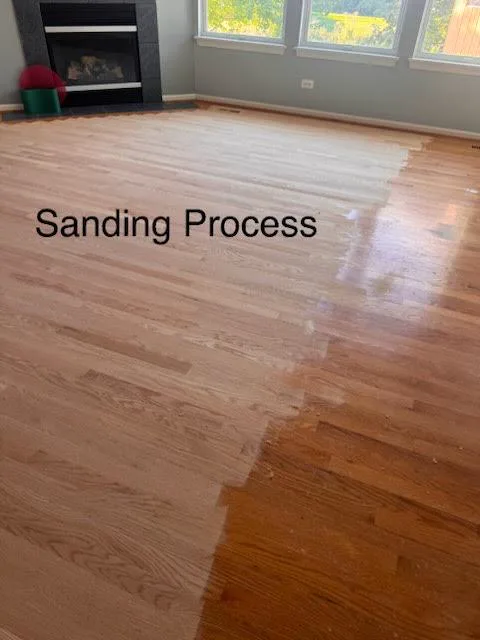
Full sanding is the process of removing old finish, stains, and surface damage down to fresh, raw wood. We use floor sanders for the main open areas and specialized edge sanders to level the perimeter along baseboards.
Creating a smooth surface requires moving from coarse to finer sandpaper. Skipping grades or sanding across the grain can leave visible swirls or repeated ridges called chatter marks. Our professional hardwood floor sanding process removes just enough wood to address imperfections while preserving as much of the remaining wood as possible.
Refinishing vs. Screen and Recoat
Homeowners often use the terms refinishing and resurfacing interchangeably, but they refer to distinct services:
- Screen and Recoat (Buff and Coat): If your existing stain is in good condition and scratches have not reached the bare wood, you may not need full sanding. A screen and recoat involves lightly roughening the existing topcoat with a buffer and applying a fresh protective coat. This process takes about one day and refreshes dull floors.
- Complete Refinishing: Changing the stain color or addressing damage that reaches bare wood may require a complete refinish. Our floor refinishing service removes the old finish, allows for custom color application, and seals the wood with multiple protective layers.
How Should I Evaluate Companies That Sand Hardwood Floors?
Check the company’s license, insurance, completed work, dust-containment equipment, and detailed written estimate before hiring. Hardwood flooring is a lasting part of your home, and aggressive or incorrect sanding can permanently damage your boards.
When evaluating a hardwood floor sanding contractor, verify that the business holds appropriate contractor licenses. Check for active general liability and workers’ compensation insurance. Ask for an in-home assessment rather than relying on a verbal quote. The contractor should check changes in height or support where flooring areas meet, measure the space, and supply a detailed written estimate. We use laser measurements for our free in-home estimates.
Vetting Portfolios and Customer Reviews
A contractor’s portfolio should show clear, close-up images of completed residential floors, seamless board repairs, and integrated staircases. Look for consistency across their past projects:
- Even Color Transitions: Look for even stain color across wide rooms, without dark lines from overlapping stain applications or blotches.
- Edge Blending: Check that the edges match the center of the room in sheen—the level of shine—and texture.
- Staircase Integration: Confirm that stair treads, risers, and handrails match the adjoining flooring.
- Direct Communication: Ask whether you can speak directly with the team that will perform the work, rather than only with sales representatives.
Equipment Standards: Dust-Contained Sanding Systems
Traditional floor sanding creates large volumes of fine wood dust that can settle into ductwork, cabinets, and furniture. Ask the contractor how sanding dust will be contained.
We use advanced dust containment floor sanding equipment, connecting our heavy sanders directly to high-powered vacuum systems like the Oneida Vortex DCS and Bona Portable DCS 2.0. These systems capture sanding dust where it is made, reducing how much spreads through your home. Some fine dust can still settle near the work area.
Should I Hire a Professional Rather Than Sand My Floors Myself?
Hire a professional to reduce the risk of permanent sanding damage to your floorboards. Floor sanders can leave deep gouges if they pause in place during sanding. Schedule a professional visit to assess your floor before deciding on the work.
Common DIY pitfalls include:
- Wavy Surfaces: Uneven drum pressure creates dips and valleys across the room.
- Cross-Grain Scratches: Using handheld edgers incorrectly leaves heavy swirl marks that may become more noticeable after stain is applied.
- Inadequate Dust Removal: Trapped dust particles create rough, bumpy finishes when topcoats are rolled on.
- Fire Hazards: Fine sawdust mixed with old finish residues can generate heat; professionals follow strict safety protocols for sawdust containment and disposal.
Why Homeowners Choose Professional Sanding Over DIY
Floor sanding requires skill and experience. Professional crews use balanced machinery that cuts cleanly across variations in grain density. Hiring an experienced contractor can reduce the risk of excessive wood removal and help prepare a smooth surface for the finish.
Cost Factors in Professional Sanding and Refinishing
Rather than relying on flat online estimates, professional contractors evaluate specific property conditions that influence project scope:
- Total Square Footage: The overall size and layout of the rooms being restored.
- Wood Species and Hardness: Dense hardwoods like white oak sand differently than softer historic pine boards.
- Board Repairs and Lacing: Replacing damaged planks or weaving in new boards where walls were moved.
- Stair Treads and Spindles: Hand-sanding individual treads, risers, and railings to match adjoining rooms.
- Custom Stain Selection: Applying on-site stain samples to raw wood to verify the exact color tone before full application.
- Protective Finish Type: Selecting commercial-grade water-based finishes for long-term wear resistance.
To receive an accurate evaluation tailored to your home, request a free in-home written estimate based on precise laser measurements.
What Should I Expect During Hardwood Floor Refinishing?
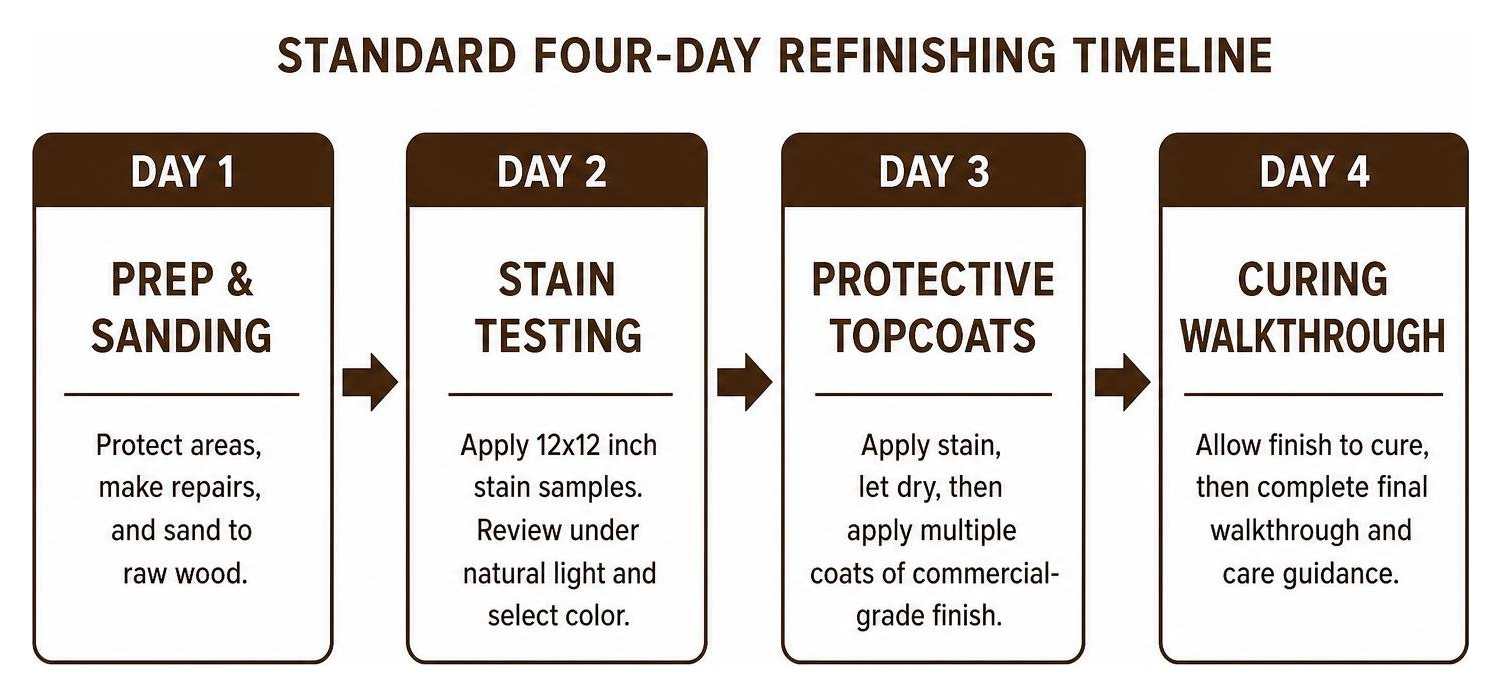
A residential sanding and refinishing project includes preparation, sanding, stain testing, and protective finish application; its timing depends on room size, repair needs, and site humidity. Your contractor should outline how nearby surfaces will be protected, how stain colors will be tested, and when the finished floor can be used.
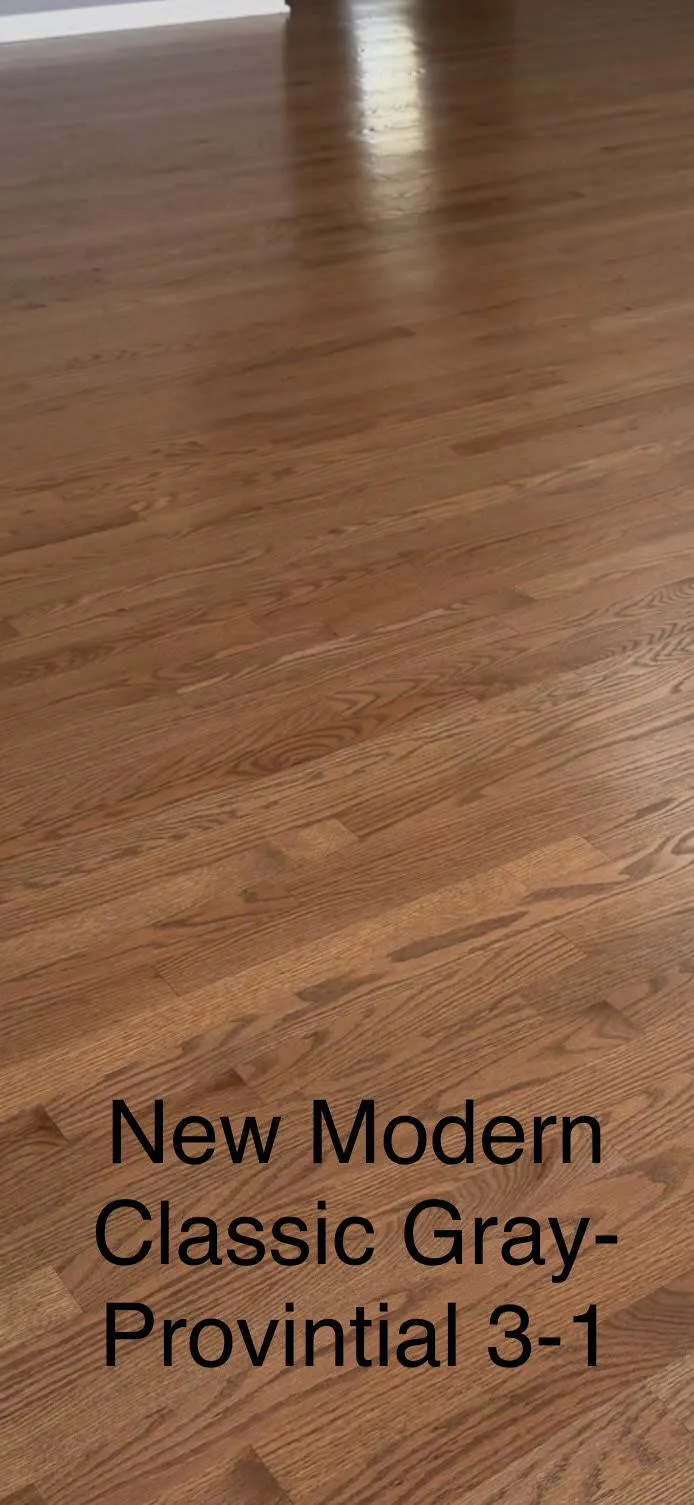
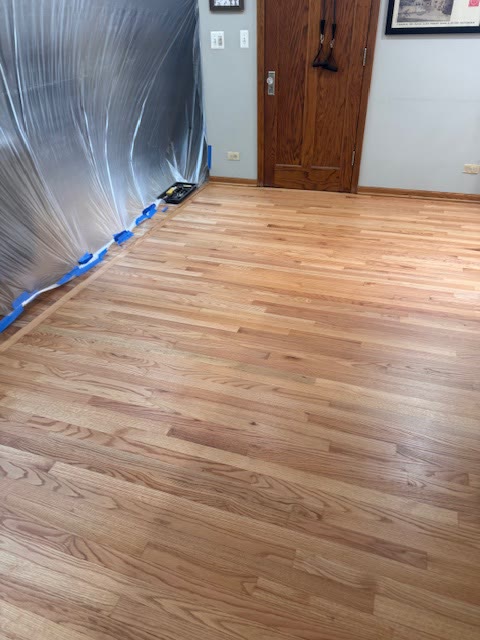
Before work begins, we protect your living environment by taping plastic sheeting across doorways and covering kitchen cabinets. Once the floor is sanded down to raw timber, we apply 12×12 inch stain samples directly onto your floorboards so you can view true color tones under your home’s natural lighting. After you select your stain, we apply the color, allow it to dry thoroughly, and apply multiple coats of commercial-grade finish. We finish with a walkthrough and instructions for caring for your floor.
Selecting the Right Finish: Commercial-Grade Durability
The protective finish is your floor’s barrier against daily foot traffic, pet claws, and spills. We use commercial-grade water-based polyurethane finishes. Our primary choices are Bona Traffic HD and Loba Supra A.T., usually in satin, a low-shine finish.
Finish benefits and drying guidance:
- Fast Drying Times: Allow light foot traffic in socks after about two hours.
- Color Appearance: Water-based finishes generally add less amber color than oil-based finishes.
- Ventilation: Follow the finish manufacturer’s ventilation guidance while the finish dries.
- Commercial Wear Resistance: Designed to withstand high residential traffic and active households.
Maintaining Your Hardwood Floors After Refinishing
Proper post-refinishing care keeps your newly restored floors looking fresh for years:
- Felt Pads: Attach high-quality felt protectors to the feet of all chairs, tables, and couches.
- Gentle Cleaning: Use a soft microfiber mop and hardwood floor cleaners labeled pH-neutral, meaning neither acidic nor alkaline. Avoid steam mops or oil soaps.
- Spill Response: Wipe up water and liquid spills promptly to prevent moisture from seeping between board joints.
- Area Rugs: Place breathable mats at exterior entryways to catch dirt, sand, and grit before it reaches your wood.
Explore our full range of residential services to learn how we maintain and restore wood floors across various living spaces.
What Else Should Homeowners Know Before Refinishing Wood Floors?
Plan for several working days for a full refinish and clear the work areas before the crew arrives. Whether your floor needs sanding or a lighter recoat depends on its condition.
How often should residential hardwood floors be sanded?
Sanding should be based on the floor’s condition and remaining wood thickness, not a fixed schedule. If the wood stain remains intact and wear is confined to the clear topcoat, a screen and recoat can refresh the protective layer sooner without removing any wood.
How should I prepare my home before the crew arrives?
Remove all furniture, rugs, and personal items from the work areas. Clear items from closet floors if those spaces are being refinished. Make arrangements for pets to remain in a secure, separate area of the house. Our team will seal doorways, protect cabinetry with plastic, and handle all machine setup and dust containment.
How Can I Get Started on My Hardwood Floor Project?
Start by scheduling a free in-home estimate so we can assess your floors and discuss the work needed. Ask your contractor how the work area will be protected and which finish materials will be used.
Access Wood Flooring is a family-owned residential hardwood flooring company founded in 1996 by owner Peter Dudzik, who brings over 30 years of hands-on experience to every project. We handle every stage of your wood floor refinishing with our own family team, from laser-measured estimates and dust-contained sanding to on-site stain testing and commercial-grade finishes.
We answer calls directly or return them within about an hour. Urgent jobs can typically start within about a week.
To discuss your flooring project and schedule a free in-home estimate, visit our contact page.