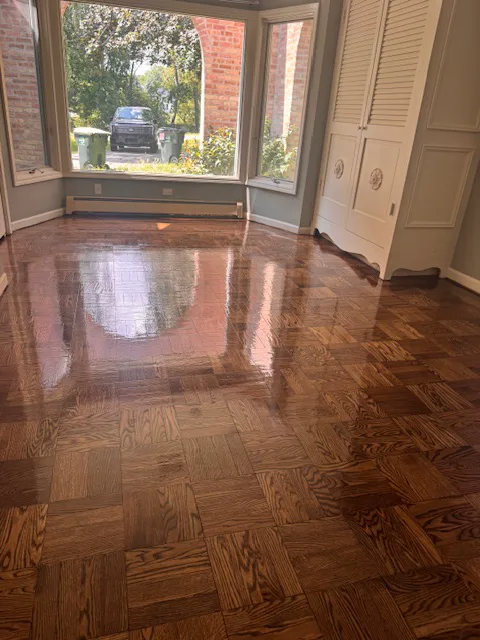
Parquet restoration starts with a professional assessment of wear, loose blocks, and remaining wood. Depending on the condition, repairs and refinishing or a compatible maintenance recoat may be appropriate.
How Can Worn Parquet Floors Be Restored?
Have a flooring professional assess loose blocks, surface wear, and the remaining wood before refinishing. Access Wood Flooring can recommend repairs and full refinishing or, for a compatible lightly worn finish, buffing and recoating—a light surface preparation followed by a fresh finish coat.
DIY sanding can gouge the blocks or remove too much wood, so arrange a professional visit first.
Parquet’s geometric pattern is part of its appeal, but the grain runs in different directions. That makes careful sanding and block repairs especially important in older Chicago and North Shore homes.
I’m Peter Dudzik, owner of Access Wood Flooring, the family-owned company I founded in 1996. I bring more than 30 years of hands-on sanding, repair, and finishing experience to parquet floor refinishing in homes across Chicago’s North Shore and northwest suburbs.
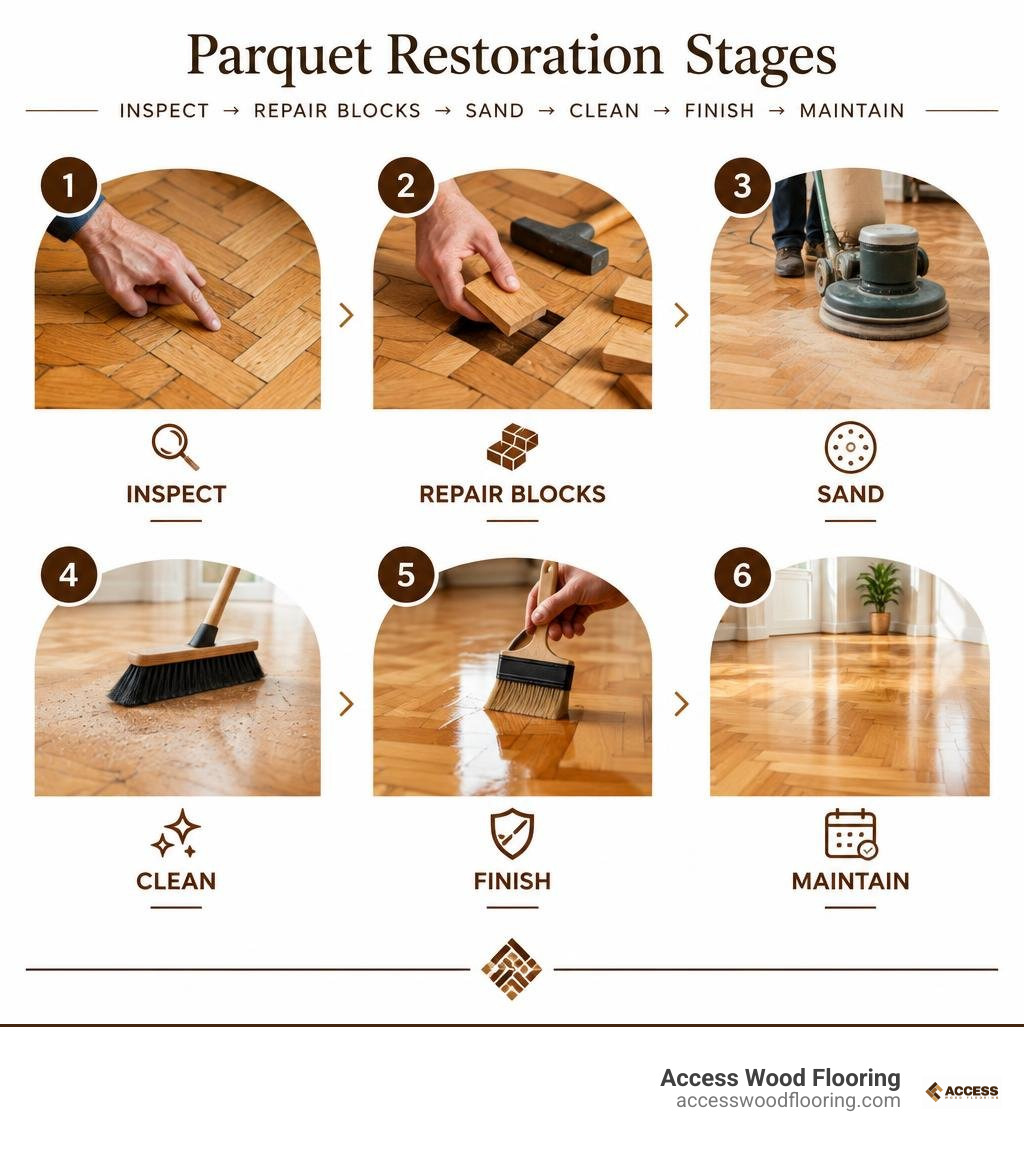
How Do You Know When Parquet Flooring Needs Restoration?
Worn finish, deep scratches, discoloration, loose blocks, or uneven boards are reasons to have parquet assessed. A professional should check the floor’s condition and remaining wood before recommending a maintenance recoat, repairs, or full refinishing.
If your North Shore home has vintage parquet, its condition should guide the restoration plan. For historically significant floors, consult a conservator—a specialist in preserving historic materials—before deciding on treatment, as advised in Building Conservation’s article on historic timber floors.
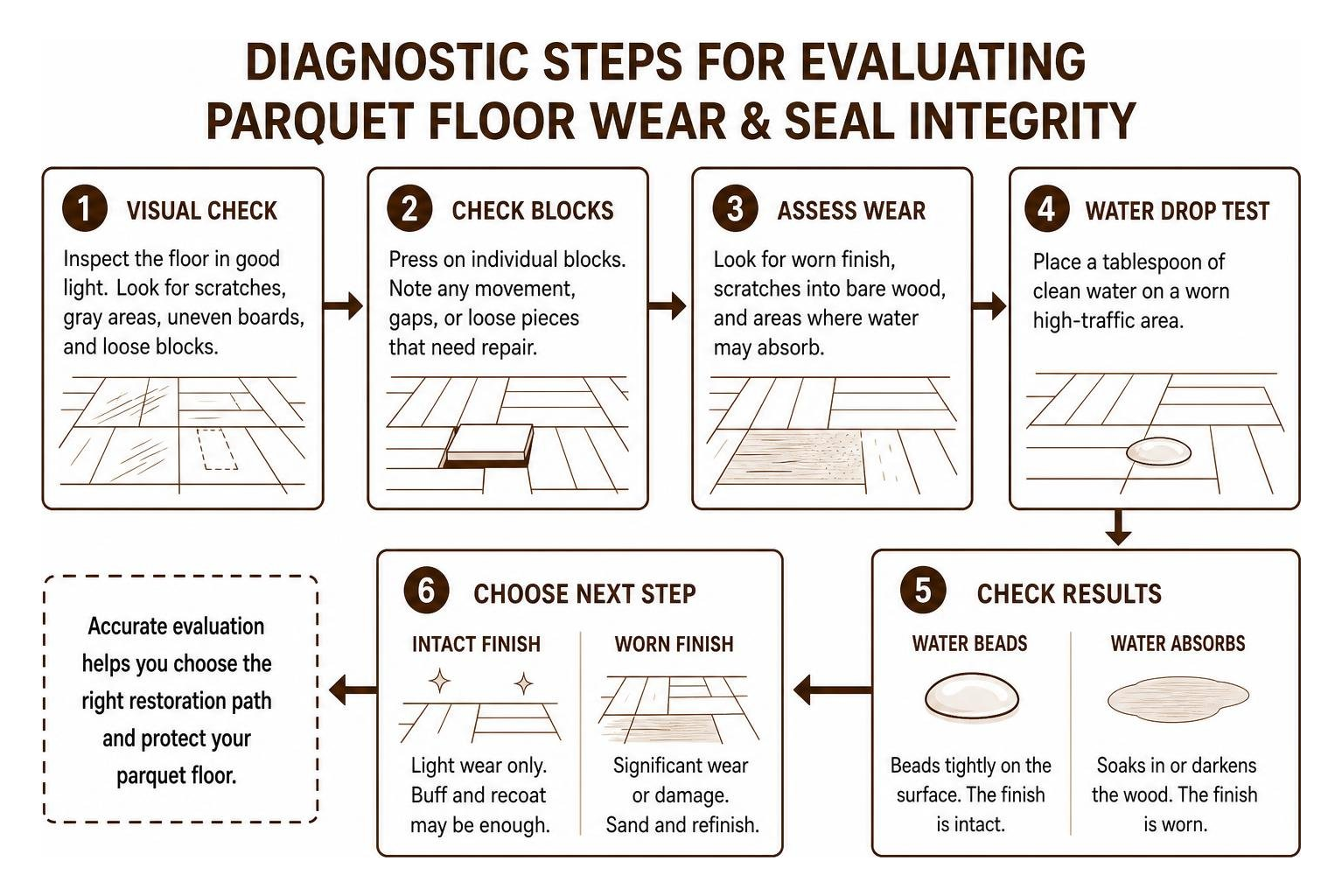
Surface Inspection and Professional Assessment
Look for worn finish, scratches, and loose blocks without adding water to the floor. Ask a flooring professional to assess whether the existing finish is suitable for recoating.
Look closely at doorways, hallways, and near sunny windows. Deep gouges, sun fading, and dull traffic lanes warrant assessment, but they do not all indicate the same problem or treatment.
Wear Layer Evaluation on Solid vs. Engineered Parquet
Before recommending sanding, a flooring professional should assess the remaining wood thickness. Solid wood parquet blocks are typically around 20mm thick, but whether they can be sanded again depends on their remaining thickness and condition.
Engineered parquet has a top layer of real hardwood over a backing made of multiple layers. This top wear layer ranges from 2.5mm to 6mm. If too little hardwood remains, sanding could expose the backing layer. We assess the floor’s construction, remaining wood, and condition before recommending a refinishing plan.
What Happens During Professional Parquet Floor Refinishing?
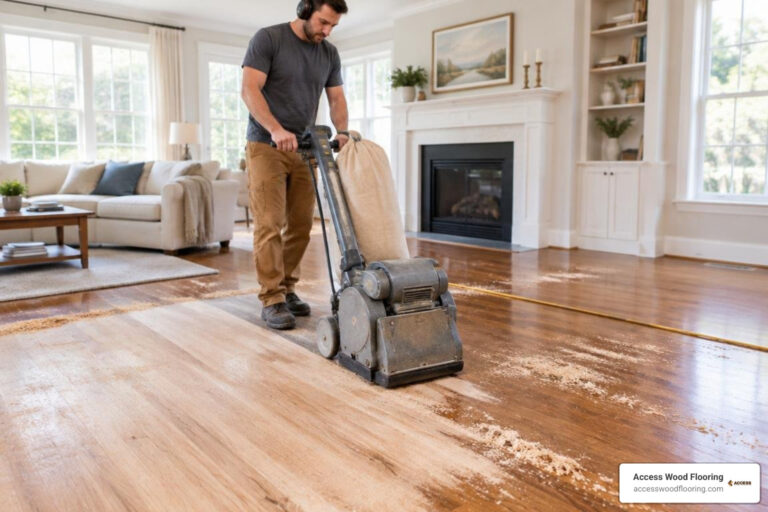
Professional refinishing starts with assessing the floor and addressing needed repairs before sanding and applying new finish coats. Parquet’s changing grain directions require an approach suited to the pattern and remaining wood. Professional dust-containment systems reduce airborne dust, but sanding is not completely dust-free.
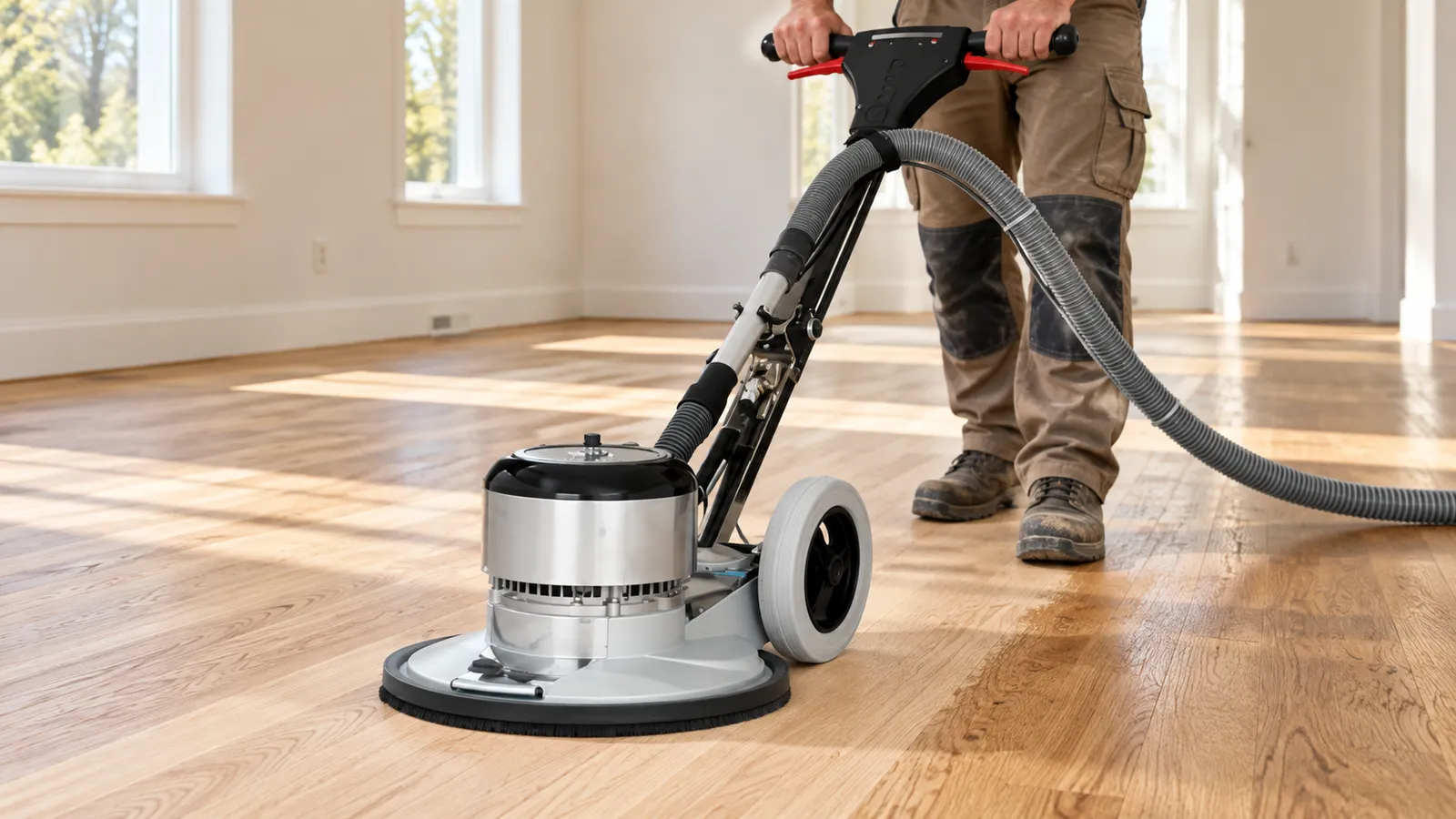
Precision Sanding Techniques for Parquet Floor Refinishing
Parquet needs a sanding approach suited to its pattern. Unlike straight-plank flooring, parquet can place neighboring blocks in different grain directions.
Poor sanding control can leave gouges or scratches across the wood grain. A professional selects equipment and sanding directions for the floor’s pattern and condition.
Professional sanding removes the old finish and prepares the wood for the selected stain and finish. The approach depends on the pattern, condition, and remaining wood.
Our dust-contained sanding system connects dust collectors directly to our sanding machinery, reducing airborne dust and cleanup in North Shore homes.
Assessing Gaps and Preparing the Surface
Seasonal changes cause wood to expand and contract, which can open small gaps between parquet pieces. We assess gaps before recommending treatment. Refinishing does not necessarily correct gaps caused by seasonal movement, installation, or damage.
We vacuum between sanding steps and before applying finish coats.
Custom Staining and Color Matching
If you wish to adjust the floor color, selecting the right tone is critical. Oak parquet readily accepts pigment, but alternating grain patterns absorb stain at varying rates. This variation creates natural contrast, highlighting the geometric design.
Through our hardwood floor staining process, we apply actual 12-inch by 12-inch test samples directly to your sanded floor. This allows you to view different stain colors under your home’s natural and artificial lighting before making a final selection.
Modern Sealers and Commercial Topcoats for Parquet Floor Refinishing
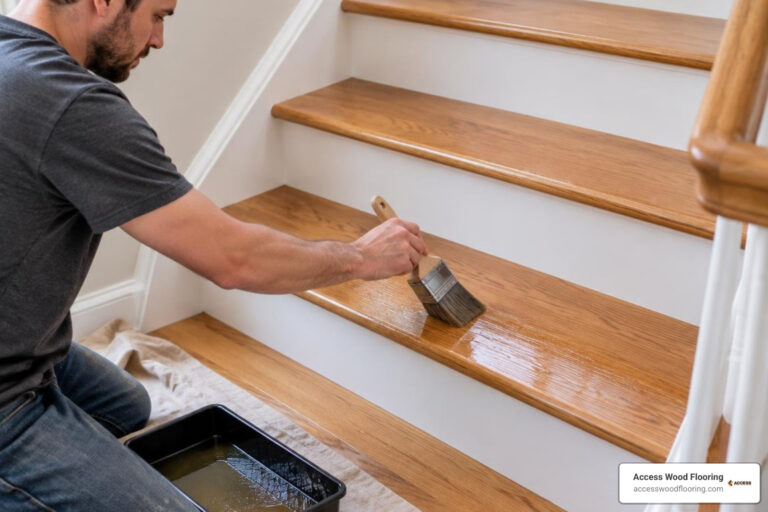
The final coating helps protect the wood from everyday wear, but spills still need prompt cleanup. We discuss your preferred appearance and household activity when reviewing finish choices. The table below offers a brief comparison of finish categories, not a list of finishes Access Wood Flooring offers.
| Finish Type | Appearance & Sheen | Durability & Protection | Maintenance Needs |
|---|---|---|---|
| Two-Component Water-Based Polyurethane (Bona Traffic HD, Loba Supra A.T.; a finish mixed with a hardener) | Access Wood Flooring usually applies satin | Suitability depends on the floor and selected finish system | Follow the selected finish’s care instructions; assess wear before planning a recoat |
| Hardwax Oil (a finish combining oils and waxes) | Appearance varies by product | Assess the specific product rather than assuming a level of protection | Follow product-specific care instructions rather than a fixed conditioning schedule |
| Penetrating Oil (an oil finish that soaks into the wood) | Appearance varies by product | Assess the specific product and existing floor condition | Follow product-specific maintenance guidance |
| Traditional Varnish / Oil Polyurethane | Appearance varies by product and age | Assess the existing coating before recommending treatment | Professional assessment determines whether recoating or sanding is appropriate |
We use commercial-grade water-based finishes such as Bona Traffic HD and Loba Supra A.T., usually in satin. At the final walkthrough, we explain when the floor can be used and how to care for the selected finish.
How Can Damaged or Loose Parquet Blocks Be Repaired?
A professional assesses loose or damaged blocks before deciding which can be repaired and which need replacement. Access Wood Flooring offers hardwood floor repair and lacing in new wood to blend with the existing floor.

Assessing Loose Blocks and Old Adhesive
Loose blocks can signal a bonding problem. Have the floor and any old adhesive assessed before repair work begins.
Do not lift blocks or scrape unidentified old adhesive yourself. DIY removal can damage neighboring wood, and the repair method needs professional assessment. Arrange a professional visit before disturbing the floor.
For homeowners facing loose or fractured sections, our hardwood floor repair service addresses damaged wood before refinishing.
Replacing Damaged Blocks and Patching Intricate Patterns
When individual blocks are cracked or missing, replacement pieces need to fit the existing pattern. We assess how replacement wood can blend with the existing floor.
Replacement wood is fitted into the existing layout—a repair method called lacing—to blend with the surrounding floor. The repair plan accounts for custom wood floor patterns like herringbone, chevron, and basketweave.
What Factors Influence the Cost of Restoring Parquet Floors?
The investment needed to restore a parquet floor depends on the pattern complexity, the overall square footage, the number of loose blocks, and your finish choices. Intricate geometric layouts require more labor hours and detail sanding than standard straight planks.
Review our guide on what affects the cost of hardwood floor refinishing to understand the primary factors involved in your estimate:
Pattern Complexity and Room Layout
- Geometric Design: Complex patterns like Versailles panels, Marie Antoinette squares, or intricate herringbone designs take longer to sand and edge than standard layouts.
- Room Proportions and Obstacles: Narrow hallways, closets, stair landings, radiators, and fireplaces require careful sanding along edges and around obstacles.
- Borders and Inlays: Contrasting feature strips and decorative wood inserts require careful hand-scraping so neighboring wood species sand down evenly.
Floor Condition, Subfloor Repairs, and Finish Selection
- Loose Blocks and Adhesive Problems: A professional should assess loose blocks and old adhesive before recommending repairs and refinishing.
- Previous Sanding Depth: The remaining wood affects whether sanding is possible and which treatment can be recommended.
- Custom Staining vs. Clear Sealing: Adding custom stain steps adds application and drying time compared to clear commercial topcoats.
- Finish Selection: The selected finish system and coating requirements affect the work involved.
Homeowners can view our gallery of completed projects to see examples of our hardwood flooring and stair projects. We provide free in-home written estimates using precise laser room measurements.
What Should Homeowners Know Before Restoring Parquet?
A professional assessment helps determine whether parquet can be recoated, repaired, or sanded and refinished. The answers below cover sanding risks, typical timing, and routine care.
Can you sand a parquet floor with a drum sander?
A drum sander can be used on some parquet floors by a skilled professional, but DIY sanding is risky. Poor equipment control or an unsuitable sanding direction can leave scratches across the grain, ridges, or gouges. A professional selects the equipment and approach for the pattern and condition. Arrange a professional visit before attempting any sanding.
How long does a full parquet floor refinishing project take?
A typical parquet sanding and refinishing project takes about four working days. The timing depends on the floor’s condition, repair needs, and selected stain and finish. Light foot traffic is usually possible after about two hours, depending on the finish system and site conditions. Furniture can usually return after about two days.
How do I maintain newly refinished parquet floors to prevent premature wear?
To protect your newly refinished parquet floors:
- Maintain Stable Indoor Humidity: Follow the flooring manufacturer’s humidity guidance and address moisture problems promptly.
- Use Felt Floor Protectors: Apply heavy-duty felt pads beneath all chair, table, and sofa legs.
- Clean with Microfiber: Sweep or vacuum regularly using a soft brush attachment. Use a lightly dampened microfiber mop with a cleaner recommended for your floor’s finish.
- Avoid Excess Moisture: Never use steam mops or wet string mops, which force water deep into the parquet joints.
How Can You Plan Your Parquet Restoration?
Start with a professional assessment of your parquet’s condition and the options for your home. Professional restoration may improve its appearance and address repairable damage, depending on the floor’s condition.
Access Wood Flooring is a family-owned contractor founded in 1996 by Peter Dudzik. With over 30 years of hands-on experience, our dedicated family team provides dust-contained sanding, precision block repair, custom staining, and commercial-grade finishes for residential properties throughout the northwest suburbs and North Shore.
If you are ready to restore your home’s historic hardwood, schedule your free in-home estimate today. We will measure your space with precision laser tools, evaluate your floor’s wear layer, and provide a clear written estimate.