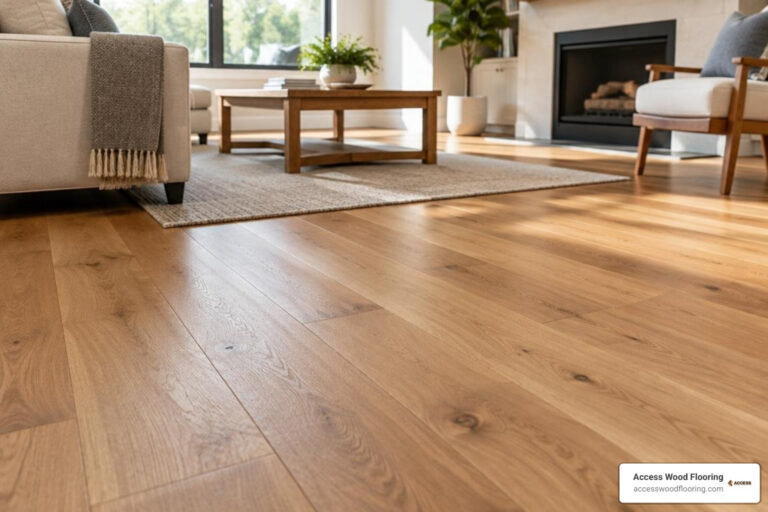
A professional screen and recoat can refresh hardwood floors when the existing finish is intact and compatible. Exposed wood, deep damage, or stains call for an in-home assessment before choosing a treatment.
Which Refresh Method Suits Your Hardwood Floor’s Finish?
An intact, compatible finish may be suitable for recoating. Worn-through wood or deeper damage may need repairs or full refinishing instead.
A professional screen and recoat may suit hardwood floors with an intact, compatible finish. It refreshes the protective coating without sanding down to bare wood. DIY recoating can peel if preparation or compatibility is wrong, so arrange an in-home professional assessment, especially if you see exposed wood, deep gouges, or water damage.
I’m Peter Dudzik, owner of Access Wood Flooring. With over 30 years of hands-on experience sanding, repairing, and recoating floors, I help homeowners choose an appropriate way to refresh their hardwood floors without choosing a shortcut that won’t last.
Related hardwood floor refinishing guides:
- hardwood floor refinishing
- cost to sand and refinish wood floors
- cost to have hardwood floors refinished
Can Hardwood Floors Be Refreshed Without Bare-Wood Sanding?
When the existing finish is suitable, a professional can lightly scuff the protective coating and apply a compatible new coat. This can improve light surface wear and sheen without sanding down to bare wood.
Polyurethane is a clear protective coating that takes everyday wear instead of the wood beneath it. Everyday foot traffic, pet claws, and grit wear down this clear coat over time. When this wear is caught early, bare-wood sanding may not be needed. A screen and recoat lets a professional lightly scuff a suitable existing finish to help a compatible new coat bond. How often a floor can be sanded depends on its remaining wood thickness and previous sanding. Timely recoating may help delay full refinishing when the existing finish remains suitable.
Reviving Sheen with a Polyurethane Revitalizer Gloss
A liquid revitalizer or floor restorer is a light maintenance product designed to bring shine back to dull polyurethane finishes. It can fill tiny surface scratches and provide a short-term sheen boost without sanding equipment.
This guide on polishing wood floors explains why finish compatibility matters. The wrong polish can make a floor slippery, dull its finish, or complicate later recoating. A revitalizer is not a replacement for a new polyurethane coat; arrange a professional visit before choosing a treatment.
Using Chemical Abrasion Kits to Etch Old Finishes
Chemical abrasion kits are intended to prepare a compatible existing finish for a new coat without machine buffing. Their suitability depends on the floor’s finish and the kit manufacturer’s requirements.
DIY chemical treatments can leave uneven areas or residue that interferes with the new finish. Products also have specific ventilation and application requirements. Arrange a professional visit to assess compatibility before treating the floor.
Tinting and Refreshing with Gel Stains
Do not assume gel stain is suitable for a finished hardwood floor or a thin engineered wood surface. A professional should assess the remaining wood thickness and finish compatibility before recommending a color change.
DIY stain-over-finish treatments can produce uneven color or adhesion problems. Arrange a professional visit before attempting a color change.
Is Your Hardwood Floor a Candidate for a Screen and Recoat?
A screen and recoat may suit a floor with an intact, compatible finish and no exposed wood. Worn-through areas or contamination need professional assessment because a new coat may not bond properly or hide existing damage.
Look at high-traffic pathways, entryways, and areas under dining chairs for bare, discolored, or dry-looking wood. Appearance alone cannot confirm that a new finish will bond. Have a professional assess worn areas and finish compatibility rather than relying on a water-drop test. These practical tips for cleaning hardwood can help you distinguish everyday dirt from possible finish wear.
Professional Checks for Wax and Finish Compatibility
Wax, paste polishes, oil soaps, and acrylic shine restorers can leave residues that interfere with a new finish. Before planning a recoat, have a professional assess contamination and finish compatibility.
A professional can check for wax or polish residue and assess whether a compatible new finish will bond. A simple solvent check alone does not establish that a floor is ready for recoating.
Wax or acrylic buildup can prevent a new polyurethane coat from bonding. A professional should determine whether the contamination can be removed or full sanding is needed.
Identifying Damage Beyond Surface Abrasion
Surface refreshes cannot fix physical dents, cupped planks, or deep gouges that penetrate the wood fibers. Before trying advice on fixing minor surface dents, arrange a professional visit. DIY heat and moisture treatments can damage the finish or wood.
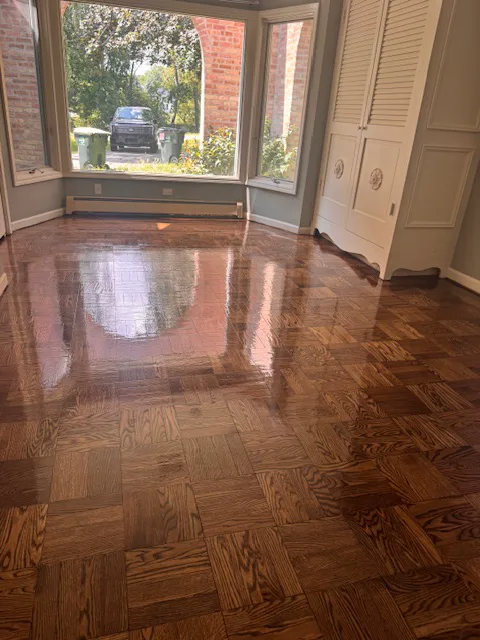
Deep scratches from pet claws or dragging heavy furniture can cut through polyurethane and expose wood to dirt and moisture. Pet urine stains and water marks can penetrate the wood. A new clear coat does not remove these stains and may leave them visible.
What Happens During a Professional Buff and Recoat?
A professional screen and recoat can refresh dull hardwood when the existing finish is suitable. Lightly scuffing the clear coat helps a compatible new topcoat bond to the surface.
A standard buff and recoat takes about one working day to complete. Controlling a heavy floor buffer requires care. If a buffer gets away from an inexperienced operator, it can slam into baseboards or leave swirl marks in the old finish. Arrange a professional visit rather than attempting to buff and recoat the floor yourself.
Professional Assessment and Room Protection
Access Wood Flooring discusses room preparation with the homeowner and protects kitchen cabinets and doorways with plastic and tape.
Before recoating, the floor needs to be clean and assessed for residues that could interfere with the new finish. The professional determines suitable preparation for the existing coating.
Preparing the Existing Finish
A professional lightly scuffs the existing clear coat to prepare it for a compatible new finish. Equipment guidance includes instructions for re-coating wood floors.
Edges and corners also need professional attention. Careful preparation and dust removal help reduce visible flaws and bonding problems in the new coat.
Assessing Scratches and Repair Needs
Scratches that reach the stain or wood may need more than a new clear coat. A professional can assess whether localized repair or full refinishing is appropriate.
DIY color touch-ups can leave uneven patches or interfere with the new finish; arrange a professional assessment before attempting them. If you have gouges or split boards, targeted hardwood floor repair may be necessary before sealing the room. Any repair compound must be fully cured and compatible with polyurethane topcoats.
Professional Finishing and Return-to-Use Timing
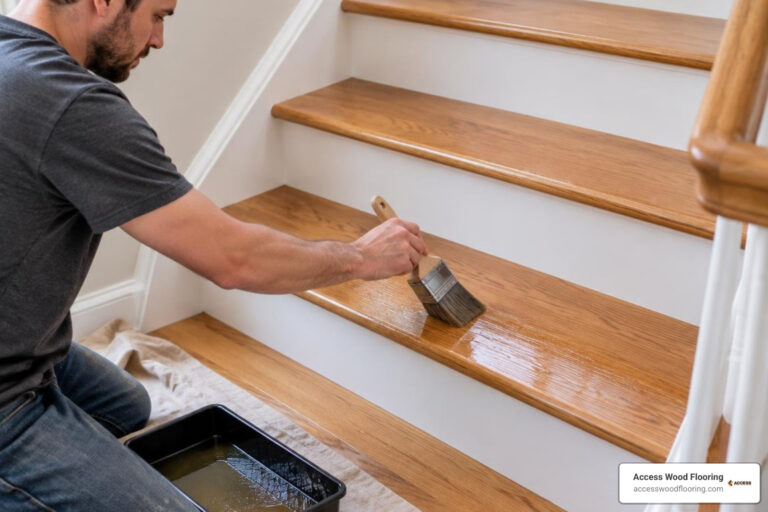
Access Wood Flooring uses Bona Traffic HD and Loba Supra A.T. finishes, usually in satin. Professional application helps manage uneven coverage, overlap marks, and bubbles.
Water-based polyurethanes allow for fast turnaround times. You can walk on the floor in clean socks after about two hours. Keep pets and furniture off the floor for roughly two days to let the film gain strength. Follow the care instructions provided at the final walkthrough for rugs and full curing.
When Might Your Floor Need Full Sanding Instead of Recoating?
A screen and recoat is not a cure-all. Deep wear, discoloration, or movement needs professional assessment. Depending on the cause and remaining wood thickness, the floor may need repairs, board replacement, or full refinishing.
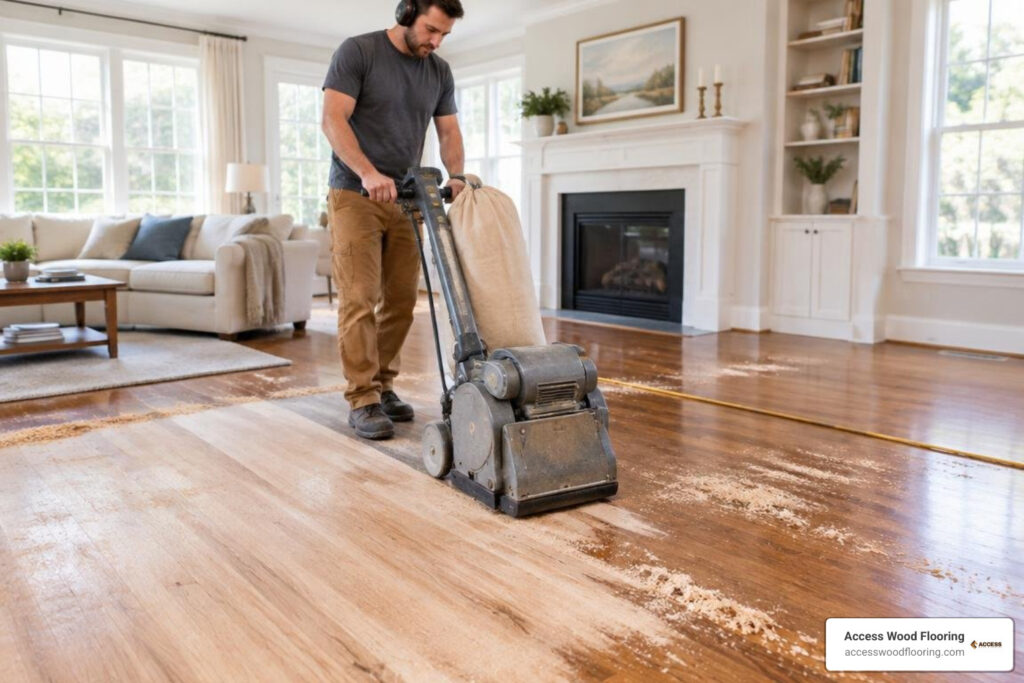
A full refinishing project removes old finish and a layer of wood to prepare the surface for a new finish. When we perform full refinishing, we use dust-contained sanding systems, including the Oneida Vortex DCS and Bona Portable DCS 2.0, to collect dust at the machine and reduce its spread.
Structural Board Damage, Warping, and Deep Discoloration
A surface topcoat cannot flatten boards with raised edges (cupping), raised centers (crowning), or wide gaps. A professional should assess the cause before recommending repairs or sanding.
Warped or deeply stained boards need an assessment before sanding. Some damage may be addressed through refinishing, while other areas may need damaged boards replaced and matching new boards fitted into the existing floor.
Managing Old Finishes and Historic Home Hazards
Old coatings in homes built before 1978 may contain lead and need assessment before they are disturbed. This lead dust and floor sanding safety guide discusses the risks of disturbing old finishes. Arrange a professional visit rather than attempting to sand them yourself.
Dry sanding old varnishes or painted wood in historic homes can release toxic dust into the air. Old coatings should be assessed before sanding. Appropriate dust collection, work-area containment, and respiratory protection reduce exposure, but they do not guarantee a hazard-free home.
How Do Hardwood Floor Refresh Options Compare?
Choosing the right refresh method depends on your floor’s condition, how much time you have, and your durability expectations. A screen and recoat may suit an intact, compatible finish, while worn-through wood or deep damage needs a professional repair or refinishing assessment.
| Refresh Method | Potentially Suitable Floor Condition | Equipment Needed | Expected Durability | Drying Time Before Traffic |
|---|---|---|---|---|
| Polyurethane Revitalizer | Intact finish, very light dullness | Microfiber mop, cleaner | Temporary sheen treatment | Follow product-specific instructions |
| Chemical Abrasion Kit | Surface scuffs, no wax present | Scrub pads, chemical wash, brush | Varies with product, preparation, traffic, and care | Follow product-specific instructions |
| Gel Stain & Poly Topcoat | Suitability not established; professional assessment needed | Depends on professional assessment | Not established for this application | Follow product-specific instructions |
| Screen and Recoat | Intact finish, moderate scuffs, no bare wood | Professional floor buffer, fine abrasive screen, finish applicator | Varies with product, preparation, traffic, and care | About 2 hours for light foot traffic; about 2 days for furniture |
What Should Homeowners Know Before Refreshing Hardwood Floors?
The appropriate treatment depends on finish compatibility and the depth of wear. A professional visit can clarify whether recoating, repairs, or full refinishing is suitable.
How long does a screen and recoat last compared to a full refinish?
Service life depends on foot traffic, pets, care, and the condition of the floor. A screen and recoat renews a suitable existing finish, while full refinishing removes the old finish and can address deeper wear. Access Wood Flooring uses Bona Traffic HD and Loba Supra A.T. finishes.
Can you apply polyurethane over an unknown floor finish?
Do not apply fresh polyurethane over an unknown finish without a professional compatibility assessment. Oil soaps or acrylic shine restorers can leave residues that interfere with bonding. Arrange a professional visit to assess contamination and finish compatibility before recoating; a simple solvent test alone does not establish compatibility.
How soon can you walk on floors and return furniture after recoating?
With modern water-based commercial finishes, you can walk on the floor in clean socks after about two hours. Furniture can be returned after approximately 48 hours, making sure to use felt pads under all contact points. Follow the care instructions provided at the final walkthrough for rugs and full curing.
How Can You Choose the Right Hardwood Floor Refresh?
When the clear coat is intact and compatible with a new finish, a professional buff and recoat may refresh the floor without bare-wood sanding. Deep scratches, pet stains, or worn-through areas need an assessment to determine whether repairs or full refinishing are appropriate.
At Access Wood Flooring, we help homeowners across Chicago’s North Shore and northwest suburbs find the right approach for their floors. We provide free in-home estimates with laser measurements, test custom stain samples directly on your wood, and protect your living spaces with dust-contained sanding systems.
If your hardwood floors are ready for a refresh, visit our contact page to schedule your free in-home estimate. You can also explore our full range of wood floor refinishing options to see how we care for your home.