Refinish or Replace? Start With the Wood Beneath the Wear
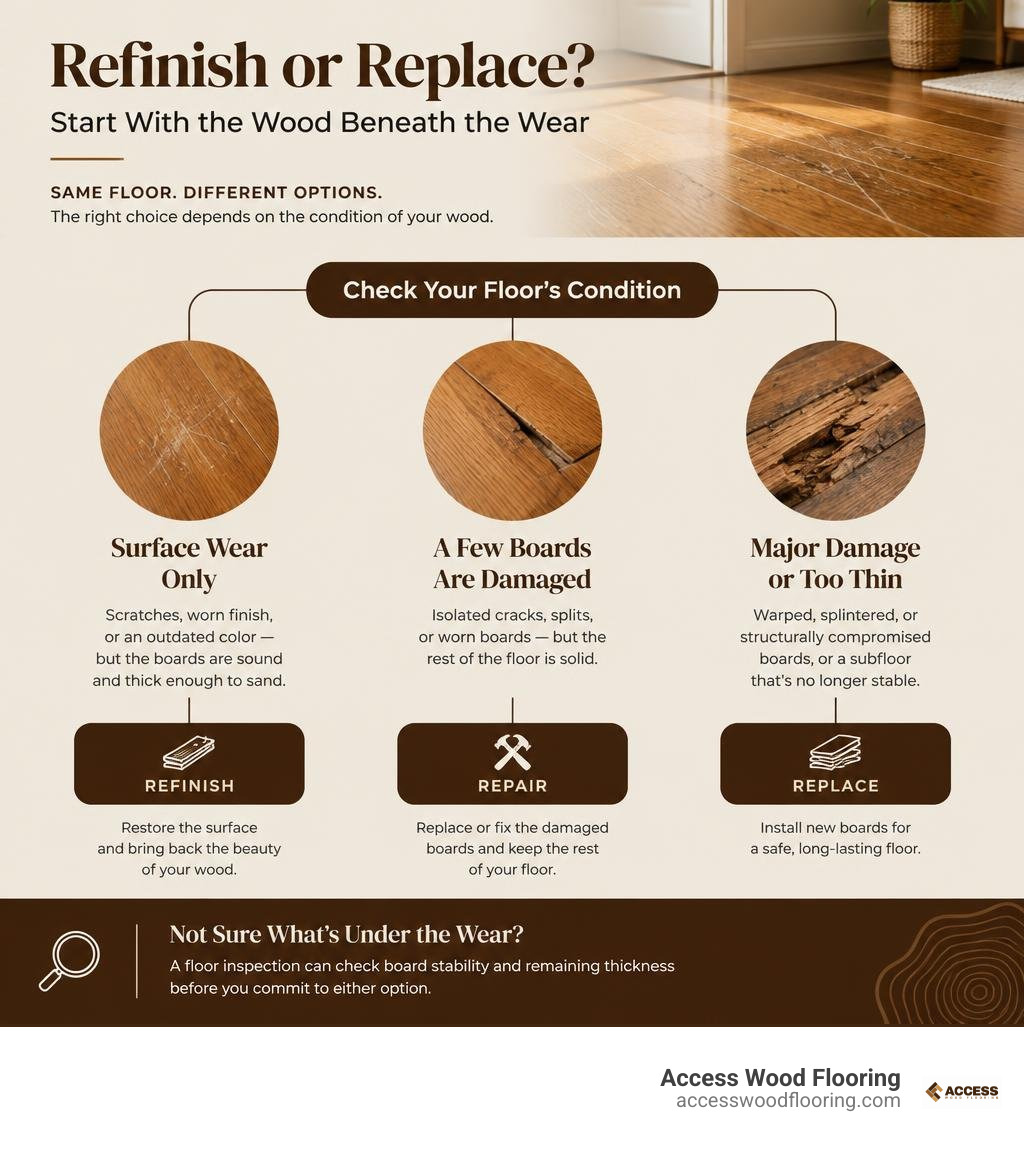
Refinish when the boards are sound and thick enough to sand. Scratches, worn finish, and an outdated color usually do not mean you need a new floor. If only a few boards are damaged, repair may let you keep the rest. Consider replacement when the boards or subfloor are badly damaged, or the wood is too thin to sand safely.
Not sure what is under the worn finish? A floor inspection can check board stability and remaining wood thickness before you commit to either option. The National Wood Flooring Association explains that solid wood floors can be sanded and refinished multiple times over their lifespan, which is why surface wear alone rarely requires replacement.
I’m Peter Dudzik, owner of Access Wood Flooring. I’ve worked hands-on with hardwood floor refinishing, repairs, and installation for over 30 years, and I’ll walk you through the checks that matter most.
The Simple Test: Should You Refinish or Replace Your Hardwood Floors?
You can determine whether to refinish or replace your wood floors by testing the protective finish and checking remaining board thickness. If the protective seal has worn away but the structural wood remains intact, refinishing restores the surface completely. When boards are warped, splintered, or structurally compromised across large areas, targeted hardwood floor repair or complete replacement becomes necessary.
Every hardwood floor eventually shows its age through traffic lanes, micro-scratches from pets, and dull patches near exterior doorways. The key is separating surface finish degradation from deep structural failure.
The Water-Droplet Test for Wood Damage
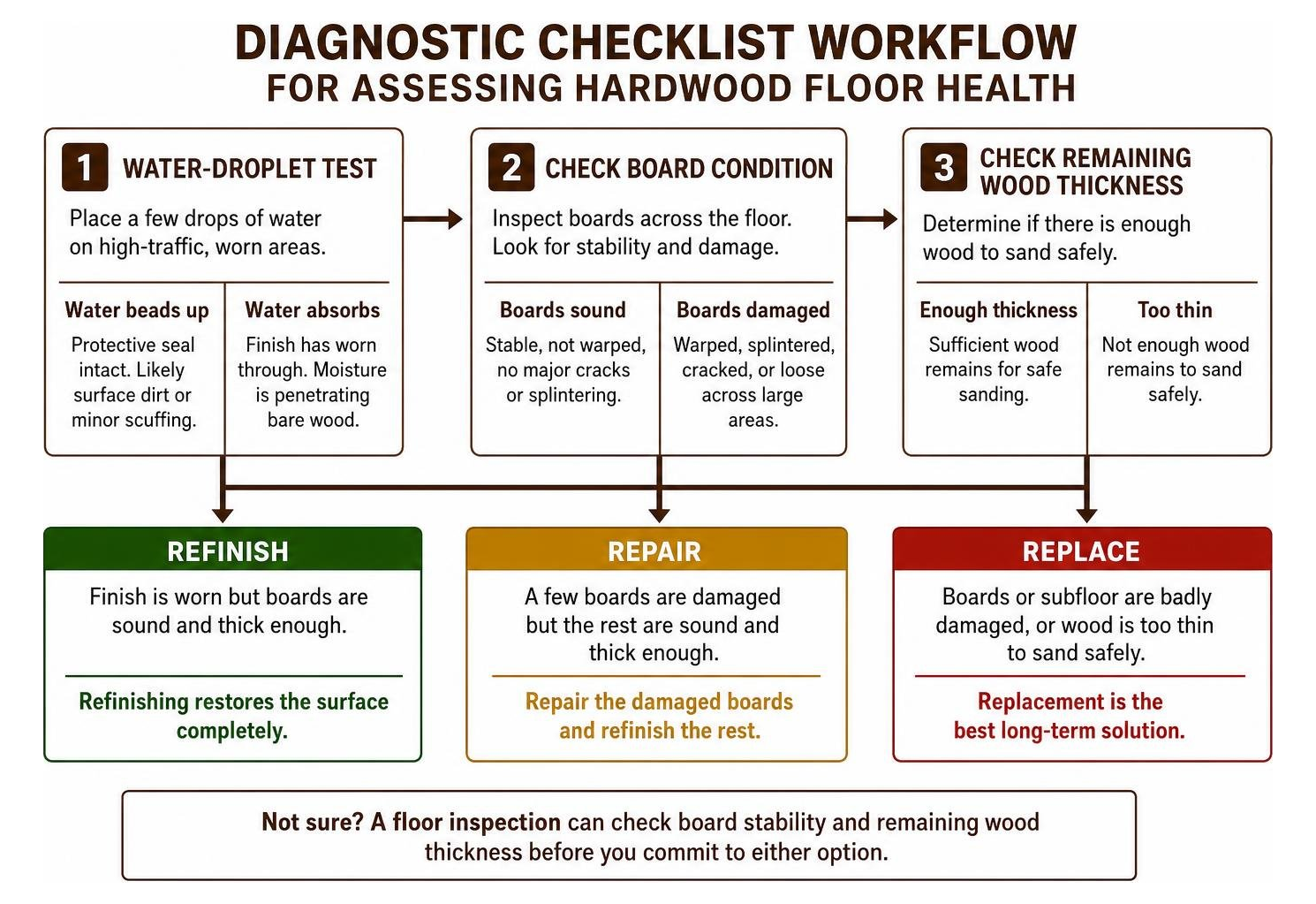
The water-droplet test reveals whether your polyurethane barrier is still protecting your wood or if moisture is penetrating bare fibers. Place a few drops of water on high-traffic areas where the floor appears worn or faded.
- Water beads up: The protective seal remains intact. The dullness is likely surface dirt or minor scuffing, which means the floor does not yet require full sanding.
- Water slowly soaks in after several minutes: The finish has worn thin. Sanding and refinishing will soon be needed to prevent bare wood exposure.
- Water absorbs immediately, turning the wood dark: The top protective coating is completely gone. Raw wood fibers are absorbing moisture and oxidizing, creating gray or black discoloration.
Floors that fail the water-drop test need prompt attention to prevent permanent wood rot.
Assessing Wear Layer Thickness and Structural Damage
A floor can only be sanded if enough wood remains above the tongue-and-groove joint. Traditional solid 3/4-inch hardwood planks can typically undergo three to five heavy sanding cycles over their lifetime.
To check your floor’s remaining thickness:
- Remove a floor heating vent register or pull back a transition threshold piece.
- Look at the exposed cross-section of the plank.
- Measure the wood thickness from the top surface down to the tongue.
If less than 1/16-inch of wood remains above the tongue, drum sanding risks exposing nail heads and cracking the groove edges. In that scenario, structural stability is lost, and replacement is required.
Comparing Refinishing vs. Replacing Hardwood Floors
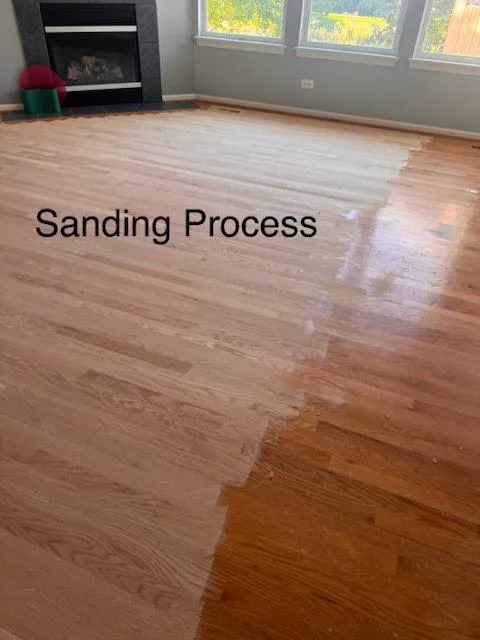
Refinishing restores your existing boards by removing the damaged top layer and applying fresh sealers and protective coats. Replacing involves tearing out old planks, prepping the subfloor, and installing new wood. For most structurally sound floors, refinishing takes less time, creates less disruption, and preserves original architectural materials.
Here is how the two approaches compare:
| Consideration | Hardwood Floor Refinishing | Hardwood Floor Replacement |
|---|---|---|
| Primary Purpose | Restores surface wear, scratches, and outdated colors | Replaces structurally failed or overly thin boards |
| Material Impact | Preserves existing solid planks | Discards old boards and introduces new lumber |
| Subfloor Exposure | Subfloor remains undisturbed | Full access to inspect and repair subfloor issues |
| Customization | Custom stains applied directly to bare wood | Complete freedom to change plank width, species, or layout |
| Typical Project Scope | Completed within days using dust containment | Requires demolition, disposal, subfloor prep, and installation |
Steps Involved in Professional Hardwood Floor Refinishing
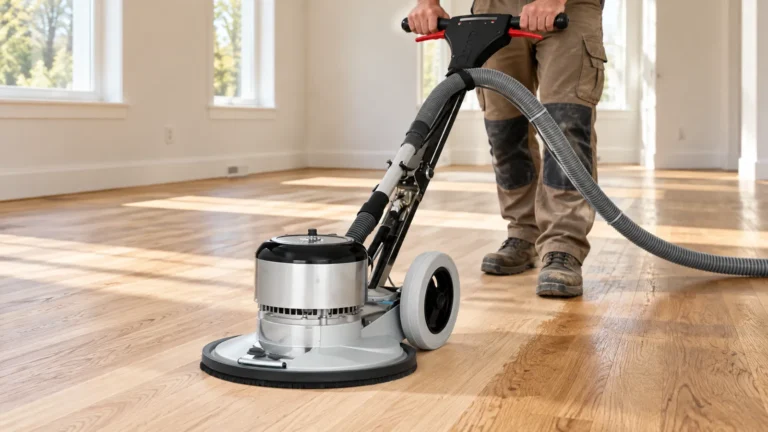
Professional refinishing relies on heavy equipment and sequential sanding grits to remove old coatings without unevenly gouging the wood. Homeowners sometimes consider renting drum sanders, but these powerful tools can permanently groove a floor in seconds if paused for a single heartbeat.
Our family team follows a precise system:
- Dust-Contained Sanding: We use dedicated vacuums like the Oneida Vortex DCS and Bona Portable DCS 2.0 connected directly to our sanding machines during hardwood floor sanding to capture fine dust before it circulates through your home.
- Perimeter Edging: Edging sanders cut through old finish along baseboards and corners where drum sanders cannot reach.
- Fine Screening: A rotary buffer blends the field and edges using fine abrasive screens to ensure an even surface.
- Custom Staining: We apply 12-inch by 12-inch stain samples directly onto your raw floor so you can see exact pigment reactions under your home’s natural lighting before committing to hardwood floor staining.
- Commercial Finish Application: We apply multi-coat commercial systems such as Bona Traffic HD or Loba Supra A.T. to provide long-term resistance against heavy household foot traffic.
When Full Hardwood Floor Replacement Is Unavoidable
While refinishing works for most residential wear, certain conditions require tearing out the old floor. Full replacement becomes necessary if you experience:
- Extensive Water Damage: Severe board cupping, crowning, or buckling that persists after subfloor moisture levels have stabilized.
- Deep Contamination: Black pet urine stains or chemical spills that penetrate through the full thickness of the board into the subfloor.
- Severe Subfloor Flex: Excessive movement, structural rot, or broken joists requiring complete subfloor reconstruction.
- Exhausted Wear Layer: Floors that have been sanded down to the fasteners from previous renovations.
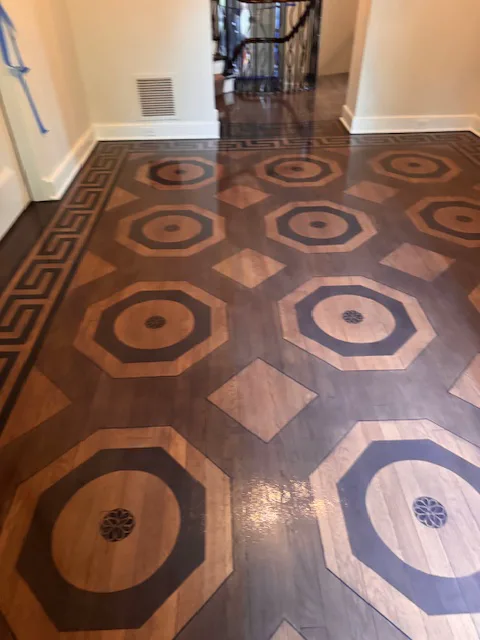
When replacement is required, installing unfinished red oak or white oak that is sanded and finished on site allows for flat surfaces and custom stain matching. You can review our hardwood installation options, as well as custom parquet patterns like herringbone and chevron, to see what is possible.
Key Factors That Determine Hardwood Floor Refinishing Costs and Value
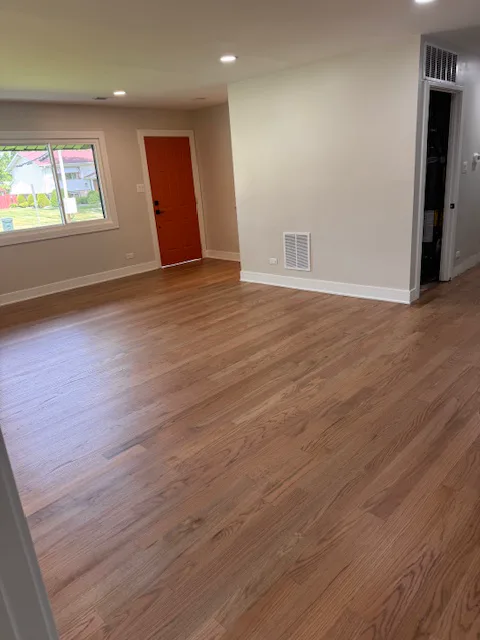
The investment required for floor refinishing depends on square footage, room layout, staircase work, and existing wood species. Rather than relying on generic square-foot estimates, accurate pricing requires evaluating site-specific labor factors in person. Refinishing consistently delivers strong home value retention by restoring original features without new material manufacturing expenses.
When we evaluate a project, we use laser measurement tools to calculate exact surface areas and provide a comprehensive written estimate on site.
Square Footage, Layout, and Species Considerations
Several distinct elements shape project labor:
- Room Layout Complexity: Large, open-concept living areas allow sanding machines to run continuous, efficient passes. Small powder rooms, closets, and narrow hallways require hand-edging and detailed corner work, which increases labor time.
- Wood Species: Harder species such as maple require specialized sanding techniques to avoid visible swirl marks, whereas open-grained red and white oak accept stain pigments readily.
- Staircases and Railings: Restoring treads, risers, handrails, and spindles requires detailed hand-sanding and careful color matching. We handle both floor finishing and complete stairs and railings rebuilds so your entire entryway matches seamlessly.
- Repairs and Lacing: If walls have been removed or heating vents relocated, new boards must be interlaced into the existing floor pattern before sanding begins.
To understand what goes into labor evaluation, review our overview on what affects the cost of hardwood floor refinishing as well as our hardwood floor refinishing pricing guide.
Recoating vs. Complete Hardwood Floor Refinishing
Not every tired floor requires sanding down to raw wood. If your floor has light surface scratches and dullness, but the wood stain underneath is intact and free of deep gouges, a maintenance coat may be all that is needed.
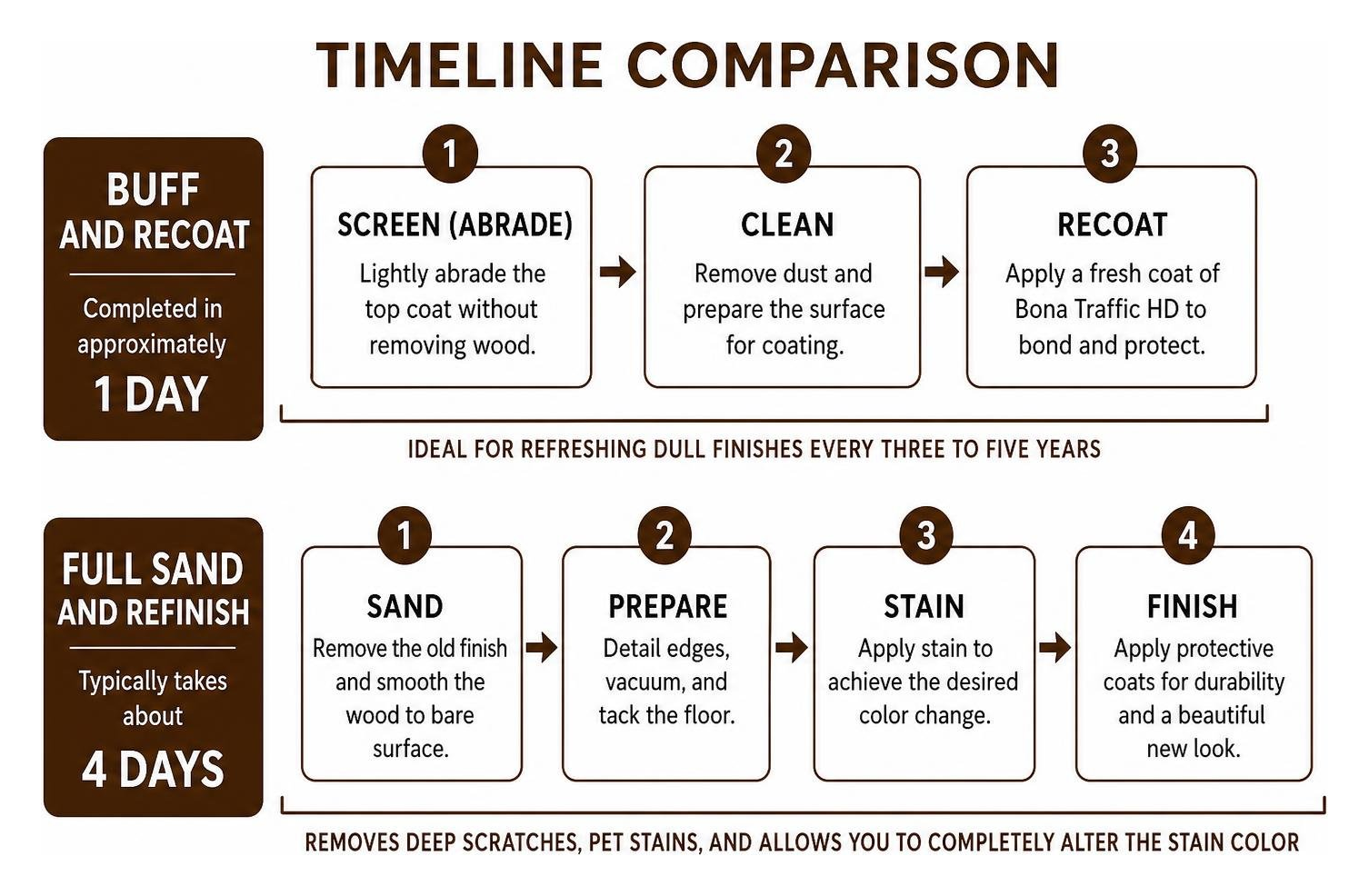
A maintenance screen and recoat abrades only the top protective layer of finish without removing wood. This allows a fresh coat of Bona Traffic HD to chemically and mechanically bond to the surface.
- Buff and Recoat: Completed in approximately one day; ideal for refreshing dull finishes every three to five years.
- Full Sand and Refinish: Typically takes about four working days; removes deep scratches, pet stains, and allows you to completely alter the stain color.
For light maintenance details, see our dedicated floor recoating overview.
Frequently Asked Questions About Refinishing and Replacing Floors
Can Engineered Hardwood Floors Be Refinished?
Engineered hardwood floors can be refinished only if the real wood top veneer is thick enough. Quality engineered planks with a wear layer of 4 millimeters or greater can safely handle two to three careful sandings by an experienced professional.
If your engineered floor has a thin veneer (under 2 millimeters), standard drum sanding will cut straight through to the plywood core beneath. For thin veneers, an abrade-and-recoat process is the only safe method to restore surface sheen.
How Many Times Can Solid Hardwood Floors Be Sanded and Refinished?
Standard 3/4-inch solid hardwood planks can be fully sanded and refinished approximately three to five times across their lifespan. Each standard sanding removes roughly 1/32-inch to 1/16-inch of wood.
If a floor is well maintained with routine screening every few years, a single sanding can easily last 15 to 20 years. That means a quality solid oak floor can serve a home for over a century before replacement becomes necessary.
How Long Does Hardwood Refinishing Take Compared to Replacement?
A typical full sanding and refinishing project for a home takes about four working days. Replacement projects generally take longer because they include demolition of old materials, subfloor leveling, acclimation of new lumber, installation, and on-site finishing.
With water-based commercial finishes like Bona Traffic HD:
- Light foot traffic in stocking feet is typically permitted after about two hours.
- Furniture replacement can usually occur after two days.
- Area rugs should remain off the floor for two weeks while the finish achieves its full chemical cure.
Conclusion
Deciding whether to refinish or replace your hardwood floors comes down to the condition of the wood beneath the surface. If your floorboards have sufficient thickness, sit firmly on the subfloor, and show only finish wear, scratches, or minor water marks, professional refinishing will make them look new again while saving significant time. If boards are split, worn down to the tongue, or suffering from structural rot, replacement is the right choice.
Access Wood Flooring has served homeowners throughout Chicago’s North Shore and northwest suburbs since 1996. Our family team handles every step personally—from laser measurements and on-floor stain sampling to dust-contained sanding and commercial-grade finishing.
To view recent residential projects, explore our gallery of finished installations, read homeowner experiences on our testimonials page, or learn more about our complete wood floor refinishing and services.
Ready to find out the exact condition of your hardwood floors? Request your free in-home estimate today, and we will provide an honest assessment and a detailed written plan.