Hardwood floor refinishing costs depend on floor area, condition, layout, and finish choices. A free in-home written estimate identifies the work your floor needs.
What Affects Hardwood Floor Refinishing Costs?
Floor area, room layout, wood type, and needed repairs affect refinishing costs. Sanding methods, dust containment, stain, and protective finish choices also matter.
Past wear and maintenance help determine how much preparation is needed.
Square Footage, Layout Complexity, and Room Accessibility
Total floor area is the starting point for planning the work. But square footage does not tell the whole story. Your home’s layout also affects how much work is needed and how long the project takes.
Wide-open spaces, such as large living rooms or open-concept dining areas, allow continuous machine passes. Narrow hallways, tight closets, alcoves, and detailed entryways require more sanding along edges by hand or with smaller tools.
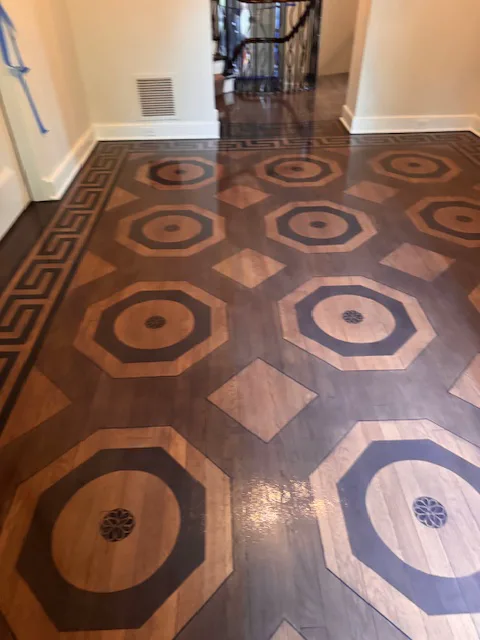
Staircases need special attention. Refinishing treads, risers, and handrails requires careful hand work and scraping along corners. It also involves detail work around spindles, the upright supports beneath a railing. Transitions between rooms, such as thresholds meeting tile or stone, need careful attention to blend the adjoining surfaces.
Wood Species, Existing Damage, and Required Repairs
The species and physical condition of your hardwood directly affect the preparation work required before applying fresh protective coats:
- Wood Hardness and Species: Common regional hardwoods like red oak and white oak sand predictably and take stain evenly. Denser species like maple need careful sanding to help prevent swirl marks and uneven stain color. Softer woods like historic pine need gentle handling and carefully chosen sandpaper coarseness to avoid over-sanding.
- Surface Damage: Standard machine sanding can remove surface wear, high-traffic graying, and surface scuffs.
- Deep Scratches and Pet Stains: Deep gouges, dark pet urine stains, or localized water damage can extend below the surface. These areas may need professional hardwood floor repair.
- Lacing in New Planks: Boards that cannot be restored need replacement. Lacing means fitting matching new boards into the existing floor pattern before sanding the room.
Sanding Method and Dust-Contained Equipment
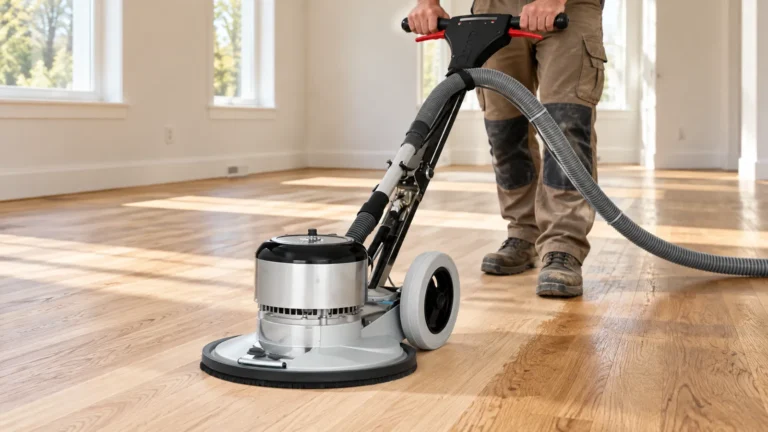
The equipment and sanding technique used on your floors influence both the finished quality and the cleanliness of your home. Traditional drum sanding without specialized filtration can release fine wood dust into air ducts, trim, and living spaces.
Professional contractors use heavy 220-volt sanding machines connected to powerful vacuums. Dust containment floor sanding systems, such as the Oneida Vortex DCS and Bona Portable DCS 2.0, collect dust at the sanding machine. Dust containment reduces airborne dust but does not eliminate it. We also protect kitchen cabinets and doorways with plastic and tape. Careful hardwood floor sanding removes old finishes and levels uneven plank edges while avoiding gouges and chatter marks—the repeated ridges a vibrating sander can leave.
How Do the Work Required and Finish Choices Affect Cost?
Staining, finish selection, and the amount of preparation affect the work required and the cost. A lightly worn floor may need only a screen and recoat, while deeper wear may call for full sanding.
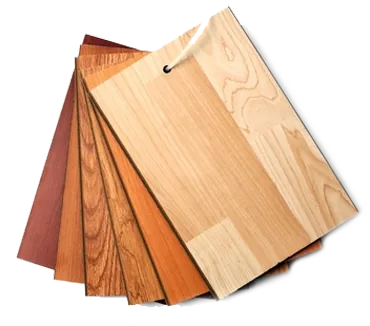
The products applied after sanding affect your floor’s appearance, durability, and future care needs.
How Custom Staining and Premium Topcoats Impact the Cost to Have Hardwood Floors Refinished
Changing your floor’s color involves several steps. For some stain colors, professionals use water-popping: dampening bare wood to raise its grain before staining. This can help the wood absorb stain more evenly. Choosing a natural, clear sealer skips the stain step and highlights the wood’s grain.
Our professional hardwood floor staining process includes testing custom stain samples directly on your freshly sanded floor. Viewing roughly 12-by-12-inch samples in your home’s lighting helps you choose a shade.
After staining, the protective topcoat helps protect the floor from spills and daily wear:
- Two-Part Protective Finishes: Water-based polyurethane finishes, such as Bona Traffic HD and Loba Supra A.T., are mixed with a hardener before application. They provide a durable clear coat, cure quickly, and resist yellowing.
- Sheen Levels: We typically use satin finishes. Their low shine helps make fine scratches less noticeable.
High-quality finishes can help the floor’s protective surface last longer. This analysis of home improvement project returns describes refinishing as a home improvement that can pay off.
Screen and Recoat vs. Full Sanding and Refinishing
Not every tired floor requires sanding down to bare wood. If your floor’s color is intact and the wood has only light surface scuffs without deep gouges or bare, exposed patches, a maintenance procedure may be the right choice.
A professional screen and recoat lightly roughens the existing clear coat with a rotating mesh pad so a new protective coat can grip it. Periodic floor recoating restores sheen and adds a protective layer. It also takes much less time than full sanding.
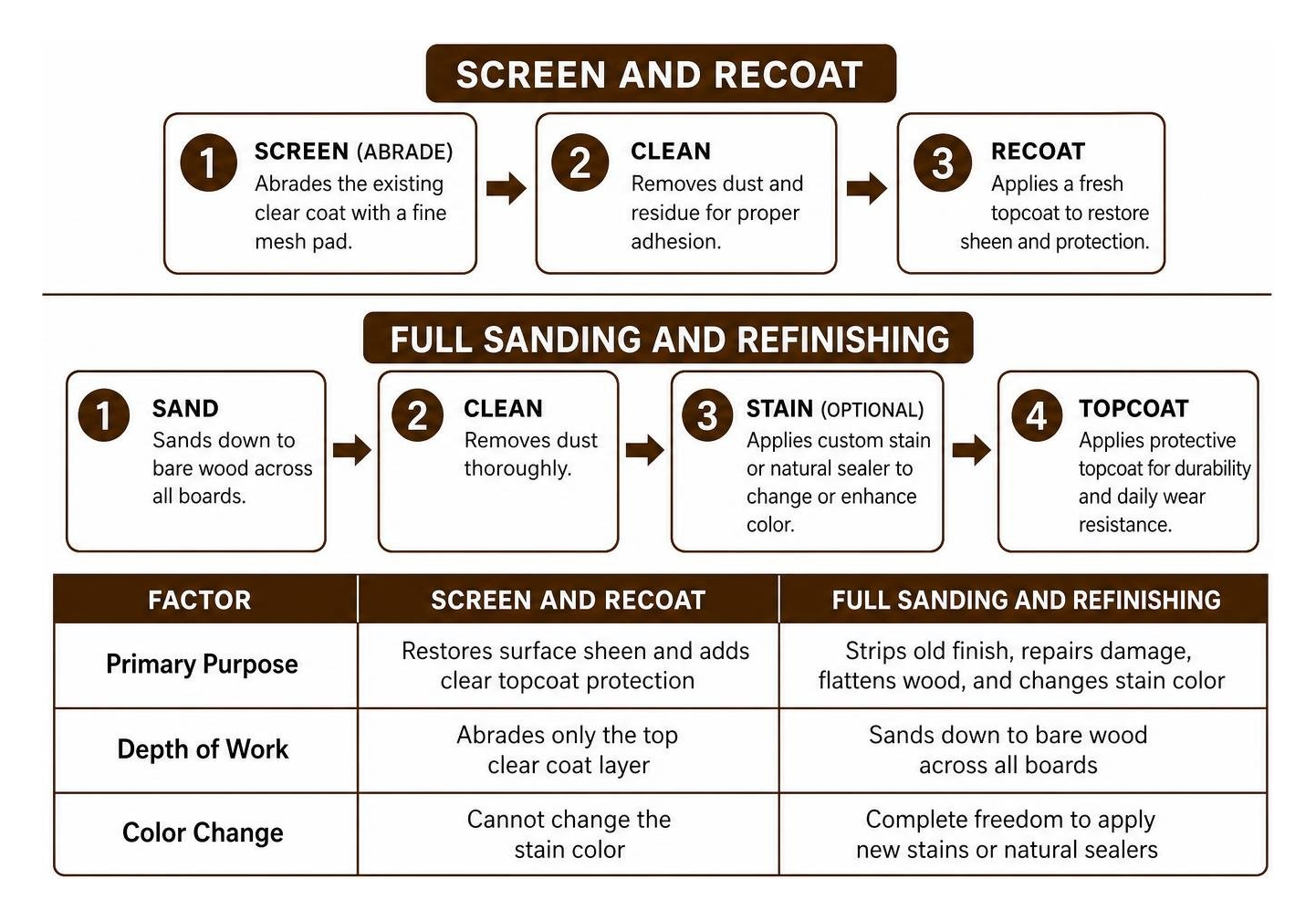
| Factor | Screen and Recoat | Full Sanding and Refinishing |
|---|---|---|
| Primary Purpose | Restores surface sheen and adds clear topcoat protection | Strips old finish, repairs damage, flattens wood, and changes stain color |
| Depth of Work | Lightly roughens only the top clear coat layer | Sands down to bare wood across all boards |
| Color Change | Cannot change the stain color | Complete freedom to apply new stains or natural sealers |
| Deep Scratch Removal | Does not remove deep gouges or water stains | Removes deep scratches, pet stains, and surface dents |
| Typical Project Time | Usually completed in about one working day | Typically takes about four working days |
| Frequency | Recommended every 3 to 5 years as maintenance | Recommended every 7 to 10 years or as needed |
Should You Refinish or Replace Your Hardwood Floors?
Refinishing can preserve existing hardwood when enough usable wood remains and its condition allows restoration. Replacement may be needed when the floor cannot be safely sanded or repaired.
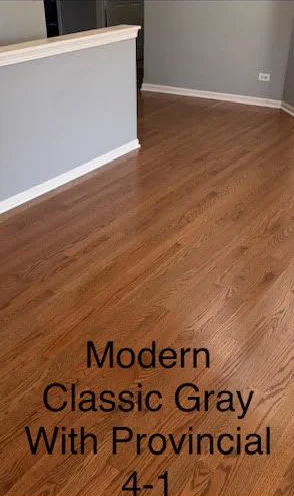
We assess the floor’s condition and remaining usable wood before recommending restoration or replacement.
Is It Worth the Cost to Have Hardwood Floors Refinished or Replaced?
Professional wood floor refinishing can be a practical alternative to replacement when your solid hardwood is suitable for restoration. Refinishing keeps your existing wood and can avoid demolition and repairs to the supporting floor beneath it. It also keeps usable lumber out of landfills.
Refinishing original oak floors preserves the tight-grain character found in older homes that is difficult to replicate with newly milled wood.
Professional Refinishing vs. DIY Risks and Hidden Expenses
DIY floor sanding can damage the wood or leave an uneven finish. We recommend hiring a professional who can assess the floor and use the right equipment.
- Equipment Limitations: Rental equipment varies in power and condition. Professional equipment and experience help produce an even surface.
- Drum Gouging: Holding a running drum sander in one spot can cut deep grooves that are difficult to repair.
- Uneven Edges and Wave Patterns: Blending the edges with the center of the floor takes experience. Inexperienced sanding can leave swirl marks, waves, and uneven stain absorption.
- Hidden DIY Expenses: Sanding belts, sanding discs for edges, safety gear, and finish applicators add to the expense. Sanding through the usable wood above the boards’ interlocking joints can ruin boards and add replacement work.
What Should You Know Before Scheduling Hardwood Floor Refinishing?
A typical sanding and refinishing project takes about four working days. Before scheduling, a professional should check the floor’s condition and remaining usable wood.
How long does the hardwood floor refinishing process take?
A standard residential sanding, staining, and multi-coat refinishing project typically takes about four working days, depending on the square footage, stain drying requirements, and room layout. A maintenance screen and recoat is much faster, usually wrapping up in about one working day.
With commercial-grade waterborne finishes like Bona Traffic HD or Loba Supra A.T., light foot traffic in socks is permitted after about two hours under normal temperature and humidity conditions. Furniture can typically be moved back into place after about two days.
How often should residential hardwood floors be refinished?
Residential solid hardwood floors generally benefit from complete sanding and refinishing every 7 to 10 years. A typical 3/4-inch-thick solid oak floor has usable wood above the boards’ interlocking edges. This allows it to be safely sanded and restored six to eight times over its life. Applying a protective recoat every few years can extend the time between full sandings and help preserve the wood.
Can engineered wood flooring be sanded and refinished?
Engineered wood flooring can be sanded only if the top real wood veneer (wear layer) is thick enough—typically 3 millimeters or greater. Planks with thin wear layers cannot withstand heavy machine drum sanding without exposing the plywood core beneath. However, engineered floors with intact veneers can often receive a rotary screen and recoat to refresh their protective topcoat safely.
How Can You Get an Estimate for Your Floors?
Request a free in-home written estimate to learn what your floors need. We assess the floor, measure the rooms, and discuss repairs and finish choices before outlining the work.
At Access Wood Flooring, owner Peter Dudzik brings over 30 years of hands-on experience to every project. Our free in-home estimates include laser measurements and a detailed written estimate. We protect your home with dust containment and apply custom stain samples directly to your floor so you can choose your color in your own lighting.
At the final walkthrough, we review the finished floor and explain drying times and floor care.
We answer calls directly or usually return them within about an hour. Urgent jobs can typically start within about a week.
Ready to restore your hardwood floors? Visit our residential hardwood flooring consultation page to learn more. Schedule a free in-home estimate through the contact page.