Compare the hardwood wear layer, core construction, and finish when choosing engineered flooring. These features affect stability, maintenance, and refinishing options.
Which Engineered Hardwood Core Offers Good Stability?
A multi-ply plywood core provides stability through layers with alternating grain directions. Compare the core construction and the manufacturer’s requirements for moisture and installation when choosing flooring for your home.
As professional flooring contractors, we look for planks built to handle daily life and seasonal weather changes. The best quality engineered hardwood combines a thick, dry-sawn wear layer of 3 mm to 6 mm with a 7- to 11-ply Baltic birch core and a finish certified for low emissions of volatile organic compounds (VOCs). This build resists movement far better than solid wood. It also leaves you with genuine hardwood that we can sand and refinish down the road.
A plank’s internal core controls how the floor reacts to moisture swings. Solid wood boards expand and shrink across their grain as humidity shifts. In contrast, engineered flooring uses cross-grained core layers beneath the surface veneer to lock the board flat.
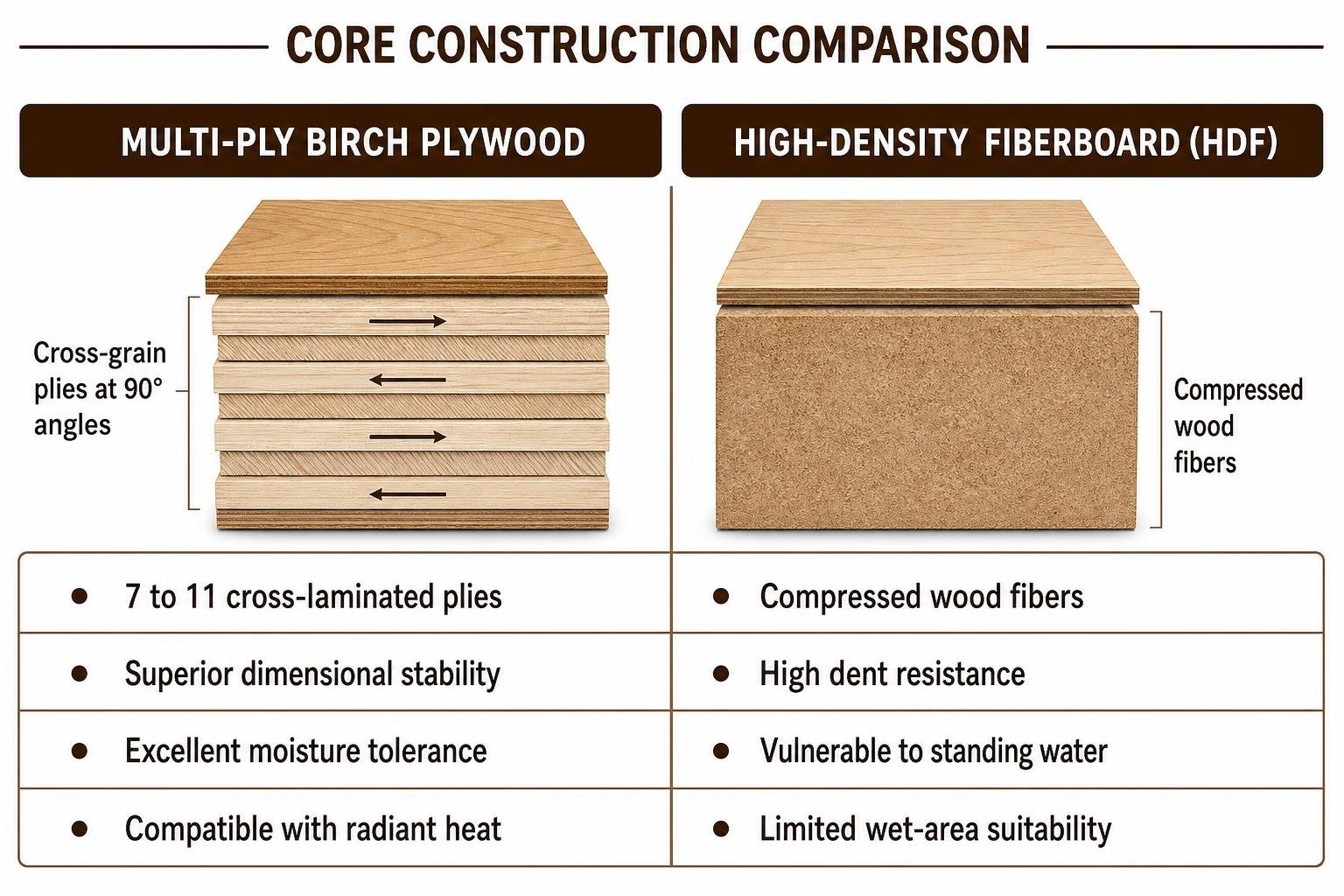
Residential engineered flooring uses two main core types: multi-ply plywood and high-density fiberboard (HDF).
Multi-ply birch cores feature 7 to 11 layers of Baltic birch glued at alternating 90-degree angles. This cross-ply construction helps resist movement as humidity changes. In tougher spaces, like concrete basement slabs or over radiant heating, a Baltic birch multi-ply core can help reduce cupping, where board edges rise above the center, and crowning, where the center rises above the edges.
HDF cores use compressed wood fibers held together with resin. HDF resists heavy surface impacts, but it swells quickly if moisture gets into the joints. As noted in The Best Engineered Wood Flooring – Top Picks by Bob Vila, plywood cores remain the standard choice for moisture resistance and lasting stability.
How Does Wear Layer Thickness Affect Refinishing?
The wear layer is the hardwood surface you walk on. Its thickness helps determine whether the floor can be sanded and refinished.
The wear layer is the actual hardwood surface you walk on. How this layer is manufactured affects both its visual character and its long-term service life.
Manufacturers produce top veneers using two main methods:
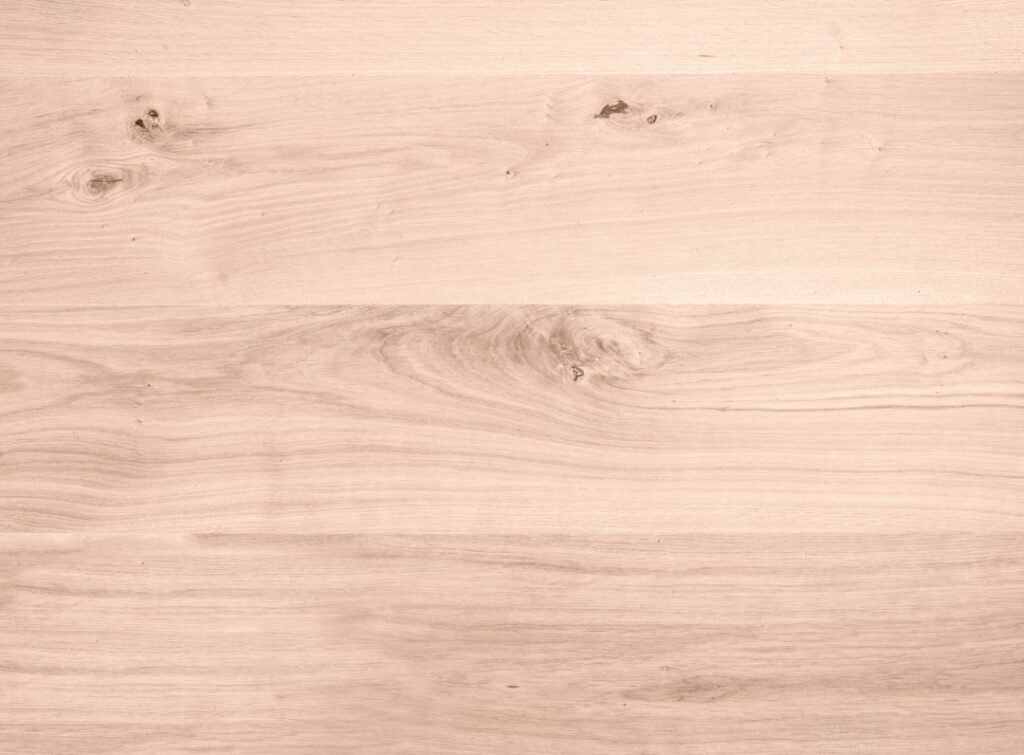
- Dry-sawn veneers: The wood is sawn from a dried log in the same manner as solid hardwood lumber. This method preserves natural grain patterns, authentic texture, and structural strength.
- Rotary-peeled veneers: The log is soaked in water and spun against a blade, creating a peeled sheet. This method often results in exaggerated, repeating grain patterns and higher stress in the wood fibers.
Why Wear Layer Thickness Defines the Best Quality Engineered Hardwood
The thickness of the top veneer dictates how many times a floor can undergo professional maintenance. Thin veneers provide a genuine wood aesthetic, but they offer little to no room for mechanical sanding if deep scratches or wear spots occur.
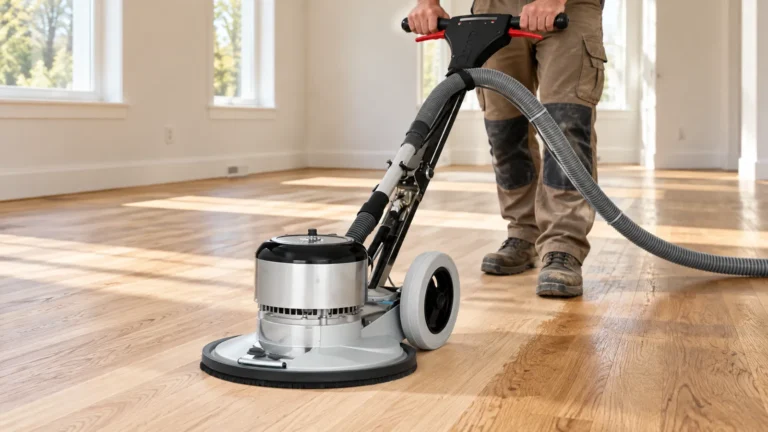
- 1 mm to 2 mm wear layers: Suitable for light-traffic rooms. These floors cannot safely withstand sanding with a drum sander, which uses a rotating sanding drum to remove wood. Routine care is limited to light buffing and recoating the factory sealant.
- 3 mm to 4 mm wear layers: The baseline for premium flooring. A 3 mm to 4 mm sawn layer can undergo full Hardwood Floor Sanding and refinishing one to two times over its lifespan.
- 6 mm wear layers: Equivalent to the usable wood above the tongue-and-groove joint on a traditional 3/4-inch solid plank. At this joint, a projecting edge fits into a matching slot on the next board. Floors with a 6 mm wear layer can support three to four complete sandings, offering decades of service.
The National Wood Flooring Association (NWFA) Engineered Refinishable Program offers independent verification for products that support standard sanding procedures. For homeowners seeking a long service life, selecting a verified refinishable product helps keep professional Wood Floor Refinishing an option down the road.
Surface Finishes and Scratch Resistance for High-Traffic Living
Factory-applied finishes shield the real-wood veneer from daily foot traffic, pet claws, and household spills. Common factory finish systems include:
- Aluminum oxide coatings: Microscopic ceramic particles suspended in polyurethane hardened with ultraviolet (UV) light create a hard protective layer against abrasion and everyday scuffs.
- Ceramic bead technology: These formulations provide high wear resistance while preserving wood clarity and depth.
- UV-cured polyurethane: Offers a durable, non-yellowing protective film. Low-gloss versions help disguise minor dust and footprints.
- Natural oil finishes: Penetrate the wood fibers rather than creating a surface film, highlighting the natural grain. Scratches on oiled floors can blend in, though these finishes require routine re-oiling over time.
When planning for pets or active households, consider the wood species’ natural density alongside its finish. For example, white oak has a Janka hardness rating of around 1360, a measure of resistance to denting. When isolated damage occurs, professional Hardwood Floor Repair can address individual planks without disturbing the surrounding floor.
Which Installation Method Works With My Subfloor?
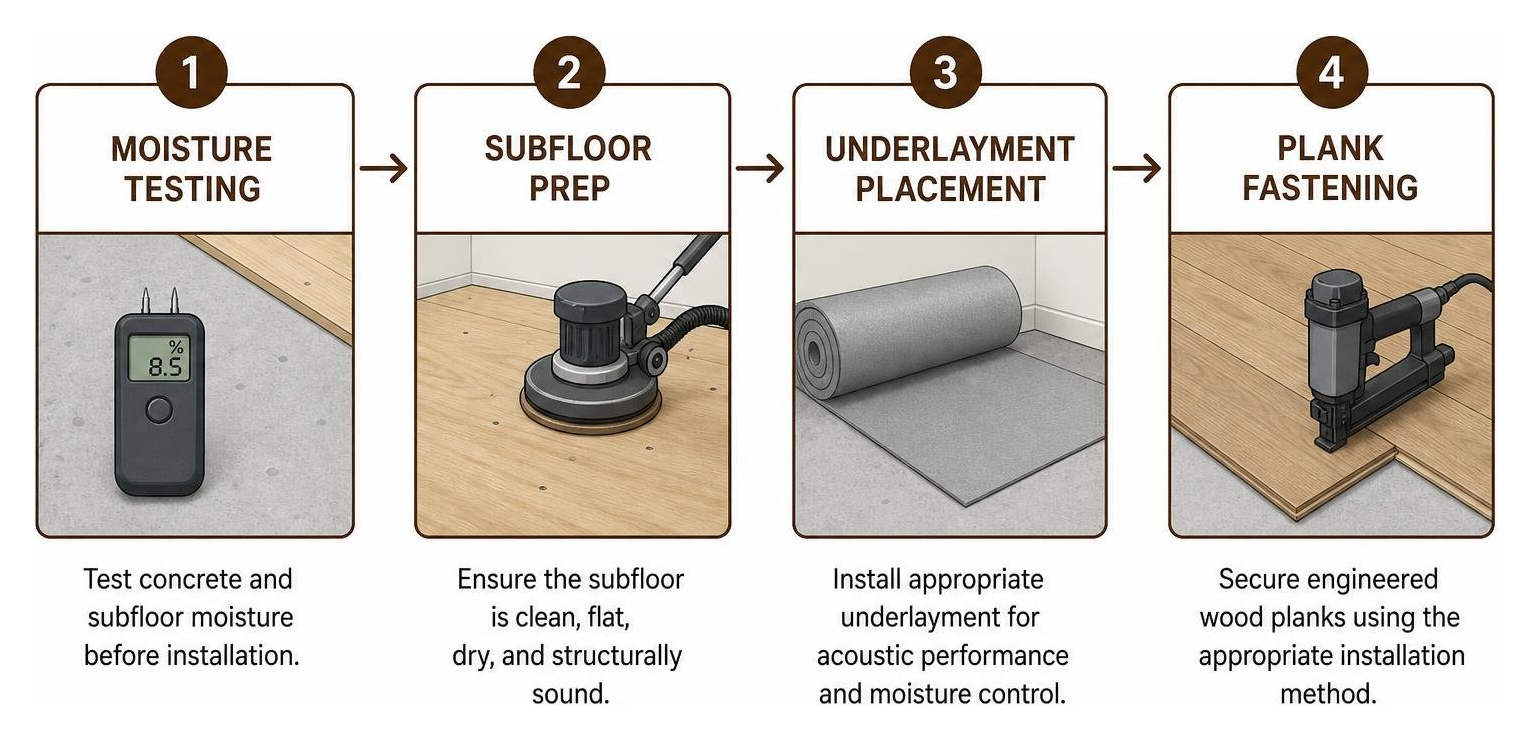
Engineered flooring can be glued down, fastened to a wood subfloor, or installed as a floating floor, depending on the product and subfloor. The subfloor must be flat, clean, structurally sound, and moisture-tested before installation.
Before installing any engineered wood floor, the subfloor must be flat, clean, and structurally sound. Professional preparation begins with comprehensive moisture testing on both concrete and plywood subfloors.
Residential installations use three main fastening methods:
- Glue-Down Application: Planks are bonded directly to concrete or wooden subfloors using specialized adhesives that harden by reacting with moisture. This method delivers a solid, quiet feel underfoot and provides stability for wide planks.
- Nail-Down / Staple-Down: Fasteners secure the tongue-and-groove profile directly into a wood subfloor. This remains a standard approach over existing plywood or oriented strand board (OSB) subfloors.
- Floating Click-Lock: Planks lock edge-to-edge over an underlayment—a supporting layer beneath the flooring. They are not glued or mechanically fastened to the subfloor. This method allows the floor to expand and contract as a single unit over concrete slabs or radiant heating elements, where approved by the flooring manufacturer.
Choosing the Best Quality Engineered Hardwood for Concrete and Wood Subfloors
Subfloor conditions and the flooring manufacturer’s requirements determine the installation method. Plywood subfloors can support nail-down, glue-down, and floating configurations. Concrete subfloors—common in basements, condominiums, and ground-level extensions—can support glue-down or floating installations. A floating system may use a dense, sound-reducing layer beneath the flooring. Moisture protection must also meet the flooring manufacturer’s requirements.
As discussed in The Best Engineered Wood Flooring, Tested by Experts, installation conditions matter when choosing engineered flooring. Stable support beneath the flooring helps prevent hollow sounds, boards bending underfoot, and early joint wear. Professional Hardwood Floor Installation addresses expansion gaps along baseboards, properly fitted transitions between rooms, and secure bonding where adhesive is used.
Wide Plank Selection and Environmental Health Standards
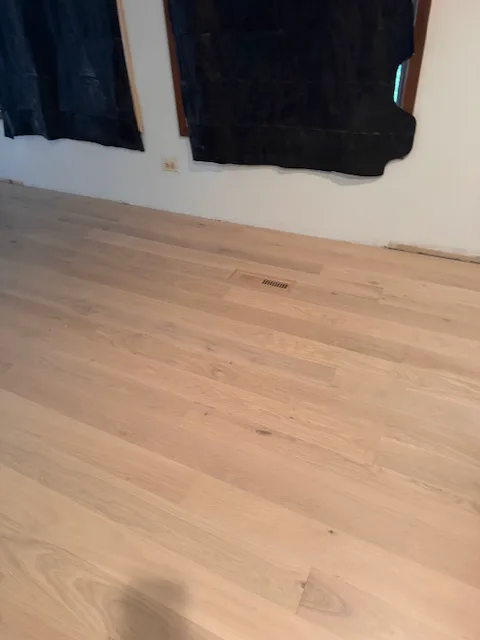
Planks measuring 7 inches to 9 inches wide remain a popular choice in modern home design. In solid hardwood, wide boards are prone to cupping because wider cross-sections expand significantly with seasonal humidity changes. Engineered construction counters this tendency, allowing wide boards to remain flat across varying indoor climates.
Indoor air safety is equally important when selecting engineered flooring. Because multi-ply boards use manufacturing adhesives, homeowners should look for recognized low-emission standards:
- FloorScore: Certifies that flooring complies with strict indoor air quality emissions limits.
- GREENGUARD Gold: Enforces low total chemical emissions for sensitive living environments.
- CARB II Compliance: Verifies that composite wood products stay within strict formaldehyde emission caps.
Selecting verified low-VOC materials can help reduce indoor chemical emissions, particularly when coordinating custom Hardwood Floor Staining on site to match existing architectural elements.
How Should I Care for Engineered Hardwood?
Remove grit regularly, use a cleaner approved for your floor’s finish, and avoid standing water. Follow the flooring manufacturer’s humidity and care instructions to protect the wood and finish.
Follow these straightforward maintenance practices:
- Dry dust mopping: Sweep or dust mop regularly using a soft microfiber pad to lift grit and fine dirt before it acts like sandpaper on the finish.
- Hardwood-specific cleaners: Use pH-neutral cleaning sprays designed specifically for polyurethane-finished hardwood floors. Lightly mist the pad rather than spraying liquid directly onto the floor.
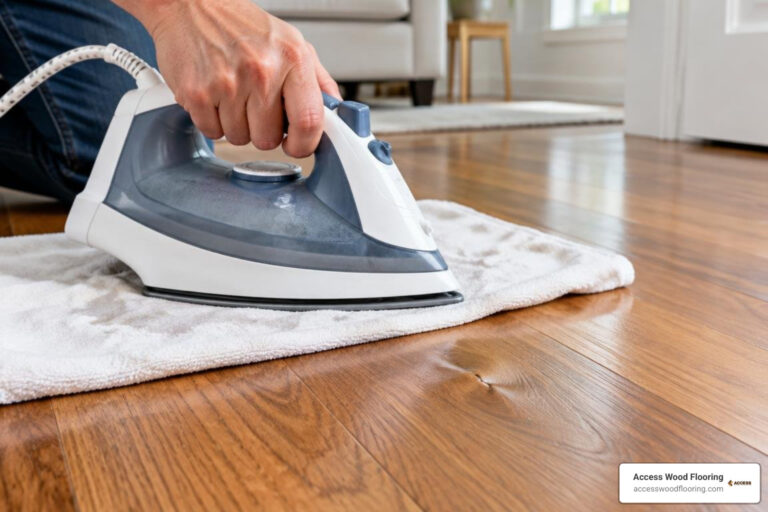
- Avoid standing water and steam mops: Steam cleaners force high-pressure moisture past the wear layer and into the core plies, causing localized swelling and finish peeling.
- Maintain indoor humidity: Keep indoor relative humidity between 35% and 55% using whole-home humidifiers in winter and dehumidification during humid summers.
- Use floor protectors: Place felt pads beneath all chair and table legs, and position breathable mats at exterior entryways to catch dirt and gravel.
Following these steps helps Engineered Wood Flooring maintain its look and performance over time.
What Factors Affect an Engineered Hardwood Project’s Cost?
Material selection, subfloor preparation, installation method, and stair details affect the work involved. An in-home assessment helps identify what your project needs.
Key factors include:
- Wear layer and core grade: Dry-sawn veneers (3 mm to 6 mm) bonded to 9-ply Baltic birch cores require more raw timber processing than thin rotary veneers over softwood.
- Wood species and plank width: Domestically sourced red oak or white oak has different sourcing requirements than wide-plank European oak or select-grade walnut.
- Subfloor preparation: Grinding concrete and leveling uneven floor joists—the framing members directly supporting the subfloor—help make the subfloor flat enough to meet the flooring manufacturer’s requirements. Materials that slow moisture vapor from passing through the subfloor may also be needed.
- Fastening method and adhesives: Full glue-down installations require compatible adhesives and any moisture protection specified for the concrete and flooring.
- Staircases and architectural transitions: Custom fabrication for stair treads, risers, nosings (the front edges of steps), and fitted transitions into adjoining rooms requires careful hand-fitting.
Each home’s layout and moisture conditions affect the work involved. Request a free in-home visit for laser measurement and a detailed written estimate.
What Should Homeowners Check Before Choosing Engineered Hardwood?
Check the wear layer, core construction, and the manufacturer’s installation requirements. These details help you assess refinishing options and suitability for basements or radiant heat.
Can engineered hardwood floors be sanded and refinished like solid wood?
Yes, provided the wear layer is at least 3 mm thick. Floors with 3 mm to 4 mm sawn veneers can be sanded and refinished one to two times. Products with a 6 mm wear layer can be sanded three to four times, giving them a service life comparable to solid hardwood. Floors with veneers under 2 mm should only receive surface buffing and recoating.
Is engineered hardwood safe for basement and radiant heat installation?
Engineered hardwood can be suitable when the manufacturer approves the product for those conditions. Its layered core helps limit movement, but it does not eliminate risks from moisture in below-ground concrete or temperature changes from radiant heating. Verify that the flooring and adhesive are approved for the installation, address slab moisture, and follow the manufacturer’s temperature and indoor humidity requirements.
How do I distinguish between cheap engineered planks and premium construction?
Look at the cross-section of the plank. Premium construction features a thick, dry-sawn hardwood top layer (3 mm or greater) backed by 7 to 11 plies of void-free Baltic birch plywood. Lower-grade boards typically use very thin, rotary-peeled veneers over 3-ply softwood or low-density fiber cores that are more vulnerable to moisture damage.
How Do I Choose Engineered Hardwood for My Home?
Choosing the right flooring comes down to matching the plank’s construction to your home’s layout, subfloor type, and daily traffic. Prioritizing a stable multi-ply core, a dry-sawn wear layer of 3 mm or more, and certified low-VOC materials can help support stability, refinishing options, and lasting appearance.
Access Wood Flooring is a family-owned hardwood flooring company that has served homeowners on Chicago’s North Shore and in the northwest suburbs since 1996. We invite you to request a free in-home estimate to review your flooring project in detail.