Before paying for refinishing, have a professional check whether your engineered floor has enough real wood left to sand safely. Cost depends on floor size, condition, repairs, and finish choices; request a free in-home written estimate.
What Does It Cost to Sand and Refinish Engineered Hardwood Floors?
Your estimate depends on the work your floor needs and whether it can be sanded safely. Have a professional assess the remaining wear layer before comparing refinishing options.
The cost depends on the floor’s size, condition, and whether it can be sanded safely. Repairs, stain changes, dust containment, and local labor rates can raise the quote, so request a free in-home written estimate for your project.
Before comparing prices, check the floor’s wear layer: the real wood above its plywood or fiberboard core. A layer of at least 3 mm is a common starting point for full sanding. Past sanding and floor damage can reduce what’s left. If the layer is too thin, ask about a screen and recoat—a light abrasion of the existing finish followed by a fresh coat—or replacement instead.
I’m Peter Dudzik. I founded Access Wood Flooring in 1996 and have over 30 years of hands-on flooring experience.
Is Your Engineered Wood Wear Layer Thick Enough for Sanding?
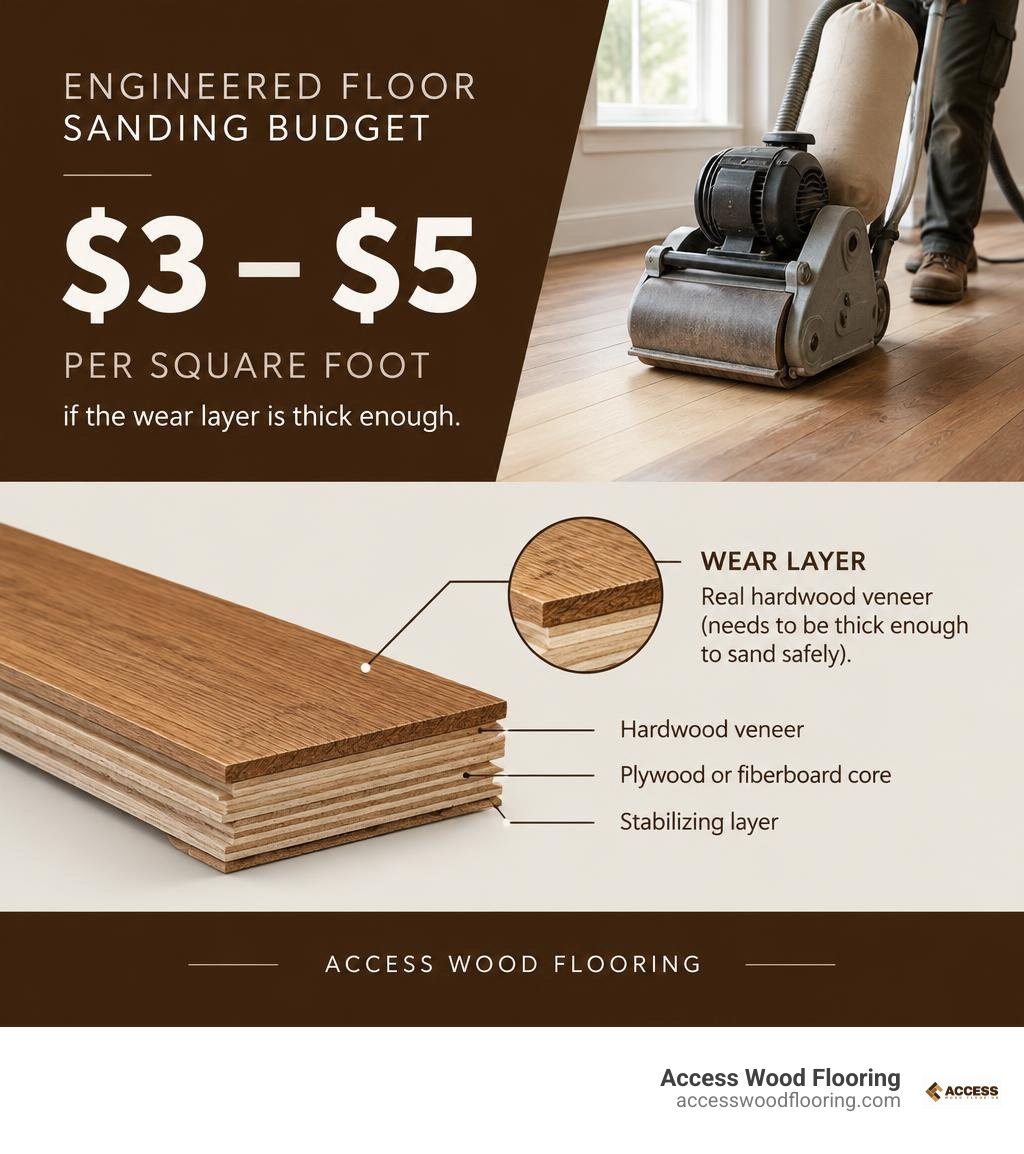
Engineered hardwood may be sanded if enough of its real-wood top layer remains. Have a professional check its thickness, condition, and sanding history before choosing full sanding or a screen and recoat.
Solid hardwood is cut from one piece of wood. Engineered hardwood has a thin real-wood top layer bonded to plywood or fiberboard underneath. This layered base helps limit movement as humidity changes. Sanding through the top layer exposes the base and permanently damages the surface.
Have a professional measure the remaining wear layer before you sign a contract. They can check an exposed board edge at a floor register or doorway. A leftover plank can show the original thickness, but it will not show wear or past sanding. Sanding a layer that is too thin can permanently damage the floor.
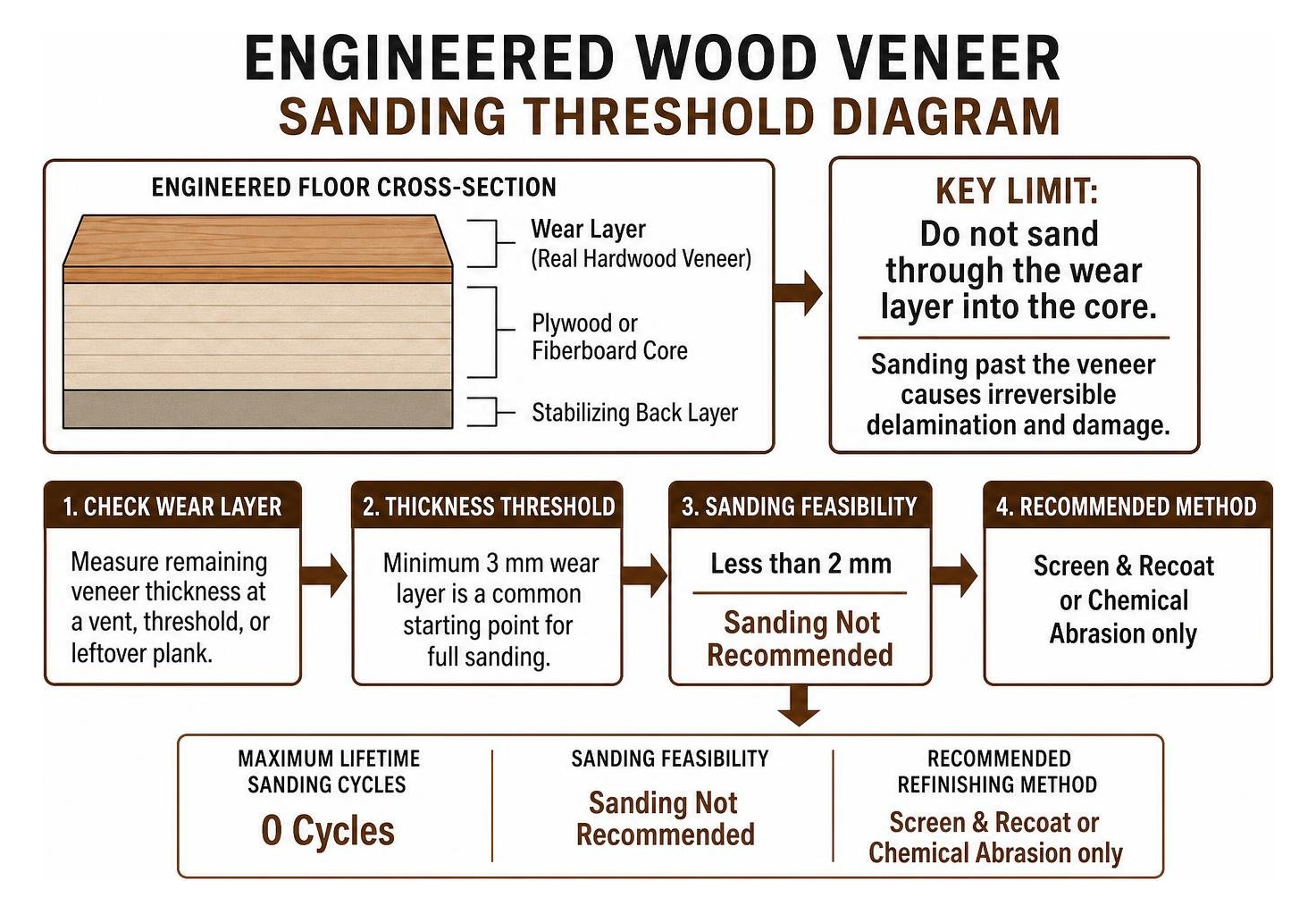
The table below gives wear-layer thickness guidelines to review before planning your project:
| Wear Layer Thickness | Sanding Feasibility | Conditional Sanding Guidance | Recommended Refinishing Method |
|---|---|---|---|
| Less than 2 mm | Full sanding not recommended | Do not plan on full sanding | Ask about screen and recoat if the existing finish is compatible |
| 2 mm – 2.5 mm | Full sanding not recommended | Do not plan on full sanding | Ask about screen and recoat if the existing finish is compatible |
| 3 mm – 4 mm | May be suitable; uneven areas increase risk | About 3 mm may allow one full sanding | Professional assessment required before full sanding |
| 5 mm – 6 mm+ | Depends on condition and previous sanding | About 6 mm may allow about three sandings | Professional assessment required before full sanding |
Minimum Wear Layer Requirements for Sanding
A wear layer of at least 3 mm is a common starting point for full sanding. Thickness alone does not guarantee that sanding is safe. How the top layer was made can also affect sanding. Ask a professional to assess it before work begins.
When a wear layer is under 2 mm, a heavy sanding machine can quickly damage the thin top layer. Coarse sandpaper may expose or damage the plywood underneath.
How Many Times Can Engineered Wood Be Refinished?
A 6 mm wear layer may allow about three sandings. A 3 mm wear layer may allow only one. Floor condition, previous sanding, and the professional’s assessment matter.
If your floor has already been sanded down once in its lifetime, you must verify the remaining millimeter depth. Once that veneer runs out, there is no going back—you will expose the plywood underneath.
What Affects the Total Cost to Sand and Refinish Engineered Hardwood Floors?
The total depends on your floor’s size, layout, condition, and the work needed. Repairs, stain changes, finish selection, and dust containment also affect your free in-home written estimate.
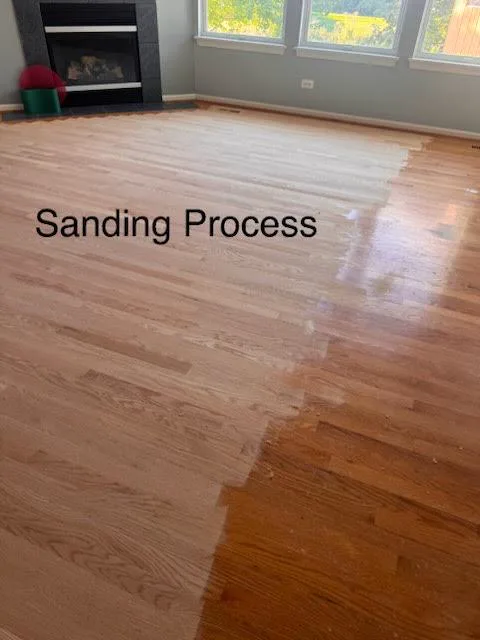
Floor size, condition, staining, and dust containment affect the quote. Request a free in-home written estimate based on your floor.
How Room Size and Layout Affect Your Estimate
Your project’s square footage is the starting point for an estimate. Large, open rooms may cost less per square foot because crews can work continuously. Small rooms and hallways need more work around the edges, which adds labor time.
| Room / Layout | Labor considerations |
|---|---|
| Entryway/Hall | Small spaces need more work around the edges. |
| Living Room | Room size and layout affect labor time. |
| Open Floor Plan | Open areas let crews work more continuously. |
| Entire Level | Total floor area and room layout affect the work required. |
Additional Project Factors That Impact the Cost to Sand and Refinish Engineered Hardwood Floors
Beyond square footage, several job-site variables influence your final quote:
- Board Repairs and Replacement: Deep gouges or water-damaged boards may require replacement before sanding, adding to the cost.
- Floor Condition: High spots on an uneven floor increase the risk of sanding through the veneer. Have a professional assess the floor before refinishing.
- Finish Selection: Finish choice affects the quote and drying schedule. Access Wood Flooring uses Bona Traffic HD and Loba Supra A.T., usually in satin.
- Stairs and Transition Pieces: Stair treads—the steps you walk on—need detailed work. Contractors may price them per step rather than by square footage.
- Room Preparation: Ask how the rooms need to be prepared before work begins.
Cost Comparison: Engineered Wood vs Solid Hardwood Refinishing
Solid hardwood floors and engineered floors share similar basic material costs for protective finishes and stains. Labor is a major part of the refinishing bill.
Engineered wood needs careful sanding to avoid cutting through its thin top layer. Solid wood generally offers more wood to work with.
How Do You Choose a Refinishing Method for Engineered Hardwood?
Have a professional check whether your floor can safely support full sanding or needs a screen and recoat instead. Your color goals, schedule, and concerns about dust and finish fumes also help guide the choice.
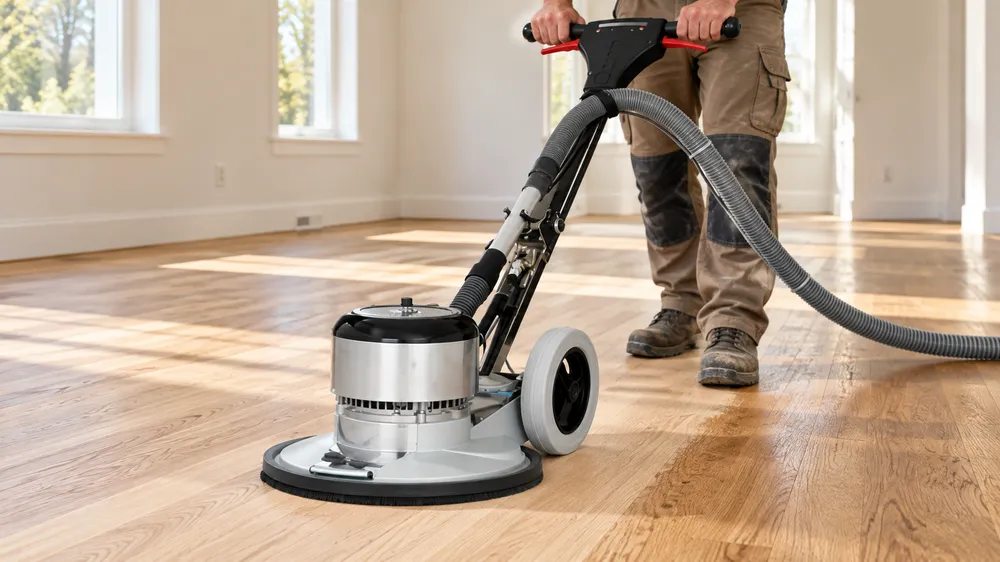
Refinishing engineered flooring is not a one-size-fits-all process. The best method depends on the look you want and your schedule. Your family’s sensitivity to dust and finish fumes also matters.
Changing Floor Color and Custom Staining
If your engineered wood has a sandable veneer of 3 mm or more, a color change may be possible. Have a professional check whether the floor can be sanded safely. Sanding to bare wood makes it possible to apply a different stain color. Ask for samples on your floor before choosing a shade.
Some engineered floors have a hard factory finish called aluminum oxide. Removing it can require special sanding materials and careful control of heat.
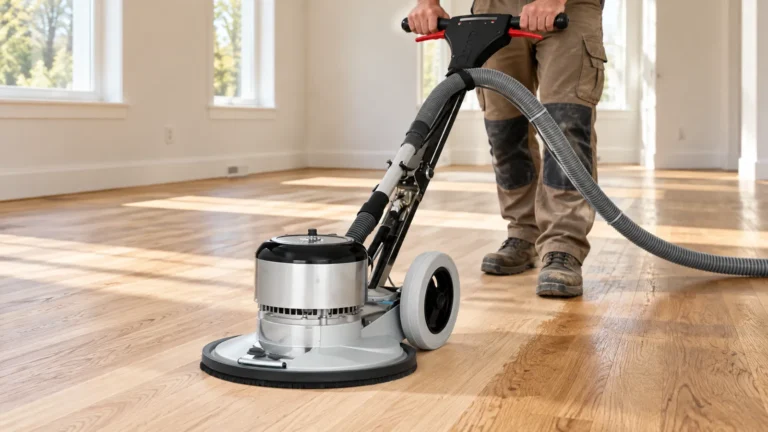
Dustless Refinishing vs Traditional Sanding Methods
Traditional sanding can spread fine wood dust through the home, including heating and cooling ducts. Dust-containment systems help collect dust during sanding.
- Traditional sanding: Uses machine collection bags, but some fine dust can escape.
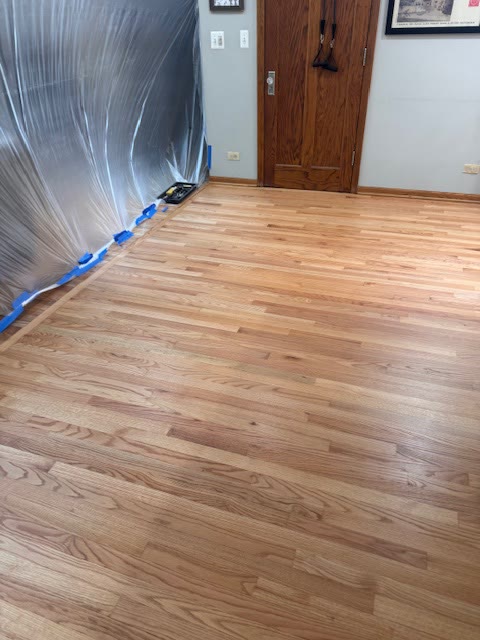
- Dust-contained sanding: Connects sanding equipment to a dust-extraction system to collect dust as it is produced.
If your home was built before 1978, tell the contractor about any painted floors or trim. Federal lead-safe work rules may apply when that paint is disturbed.
When Should You Replace Engineered Hardwood Instead of Refinishing It?
While refinishing is often the most practical route, there are instances where sanding is a waste of money—or structurally impossible.
A thin wear layer, severe damage, or separation of the floor’s layers may make replacement necessary.
Major Risks: Sanding Through the Veneer
The main risk in refinishing engineered wood is “burn-through.” This means sanding completely through the real wood top layer into the plywood or fiberboard base beneath.
When burn-through occurs, striped plywood or gray composite material becomes permanently visible. Stain will not color the exposed area evenly. A clear finish will not hide it. A burned-through board generally needs replacement. The extent of the damage helps determine whether individual boards or the whole floor should be replaced.
Cost-Benefit Analysis: Refinish vs Full Replacement
When evaluating whether to repair or replace, consider this comparison:
- Sanding & Refinishing: The quote depends on floor size, wear-layer condition, repairs, and finish choices. Refinishing can extend the floor’s useful life, preserve original features, and generate less construction waste.
- Full Floor Replacement: Replacement costs depend on flooring selection, old-floor removal, subfloor preparation, and installation work. Replacement may be needed for severe water damage, deep pet-urine damage, or separation of the floor’s layers. Failure of the supporting subfloor also needs assessment before new flooring is installed.
Request a free in-home written estimate to compare the options for your floor.
Resale value varies. For general cost comparisons, see this NerdWallet guide to hardwood floor refinishing.
What Should Homeowners Know About Refinishing Engineered Wood?
Color changes, wear-layer thickness, and drying times all affect your refinishing plan. Have a professional assess the floor and confirm which methods and return-to-use times apply.
Can you restain engineered hardwood without sanding down to bare wood?
To apply a lighter stain, the existing finish and stain generally need to be sanded away. A screen and recoat may refresh a dull finish. It lightly scuffs the existing clear coat rather than sanding into the wood. A professional can check finish compatibility and whether a tinted finish could slightly deepen the color. Hire a professional for this work, since incompatible coatings can fail and sanding can damage a thin veneer.
What should you do if your engineered wood wear layer is under 2mm?
If your veneer measures under 2 mm, avoid heavy sanding machines. Hire a specialist to check whether the existing finish can be screened and recoated. Screening lightly scuffs the finish with a fine abrasive pad before a new coat is applied. Boards scratched through to the core may need replacement with matching boards.
How long does the engineered wood refinishing and curing process take?
At Access Wood Flooring, sanding and refinishing usually takes about four working days. A buff and recoat usually takes about one day. Light foot traffic is generally permitted after about two hours, and furniture after about two days. Timing depends on the finish and conditions. These return-to-use times do not mean the finish is fully cured. Follow the care instructions provided at the final walkthrough, including when to return area rugs.
How Should You Plan Your Engineered Hardwood Refinishing Project?
Refinishing may be an option if your engineered floor has enough wood left to sand safely. Have a professional check the wear layer and any damage. Include repairs and finish choices when comparing estimates.
Planning a flooring update on Chicago’s North Shore or in the northwest suburbs? Our family-owned team at Access Wood Flooring can help. We specialize in solid hardwood and engineered wood flooring installation, hardwood repairs, and stair refinishing. We offer free in-home estimates with laser measurement and a detailed written estimate. Our sanding equipment collects dust as we work. We can also coordinate your floor and stair finishes. Get a free in-home estimate.