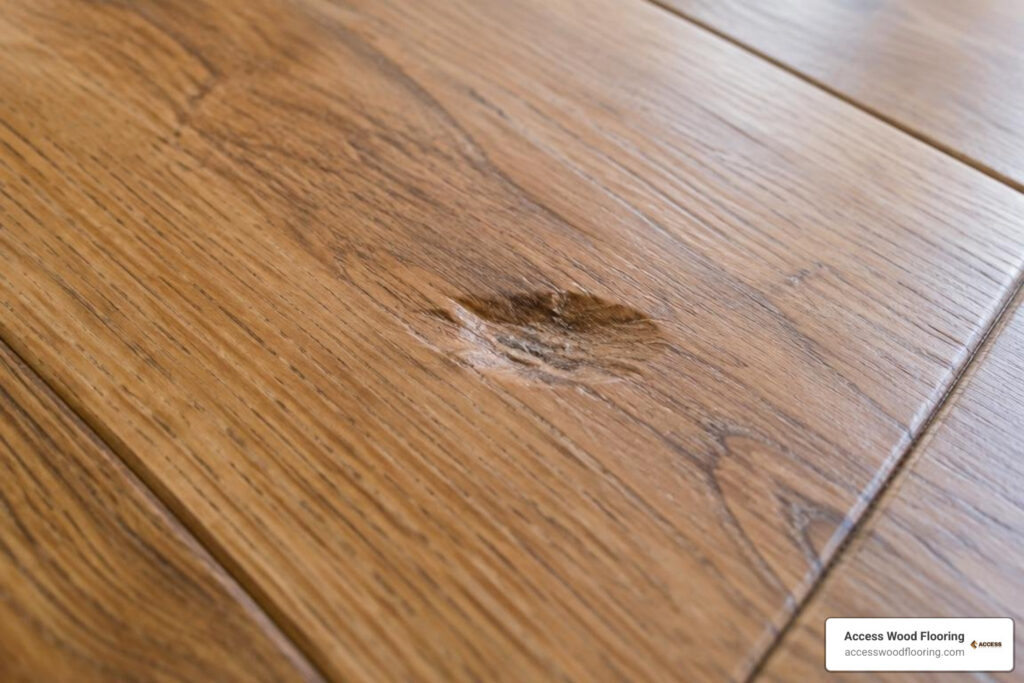
A dent in a hardwood floor is a spot where an impact pressed the wood fibers down without tearing them. Whether it can be improved depends on the wood, the finish and how deep the damage goes. A flooring professional can tell you in one visit if a spot repair, a replaced board or a refinish is the right fix.
Peter Dudzik, founder of Access Wood Flooring, has over 30 years of hands-on experience with wood floors. This guide explains how scratches, dents and gouges differ, what causes them and when it is time to call a professional.
Is it a scratch, a dent or a gouge?
The three look alike from a distance, but each damages the floor in a different way:
- Scratch: the clear protective finish or its color is worn through, and the wood underneath is not torn.
- Dent: an impact presses the wood fibers down and leaves a shallow depression, usually without breaking them.
- Gouge: an impact tears or splinters the wood and removes material from the board.
- Split or crack: the damage runs through the board, which usually means the board has to be replaced.
A simple check helps you describe the problem. Run a fingernail gently across the mark. If it catches only on a thin ridge, it is probably a scratch in the finish. If it dips smoothly into a shallow bowl, it is a dent. If it catches on rough edges or sinks into a gap, wood is missing.
What causes dents in hardwood floors?
Most dents come from everyday life. Common causes are:
- furniture legs and heavy appliances that sit or slide on the floor,
- dropped objects such as pots, tools or toys,
- high heels and pointed shoes,
- pet claws on a floor with a worn finish.
Species matters too. Softer woods such as pine and fir dent more easily than harder woods such as red oak and white oak. A worn finish also lets the wood take the impact directly.
Can you fix a dent in a hardwood floor yourself?
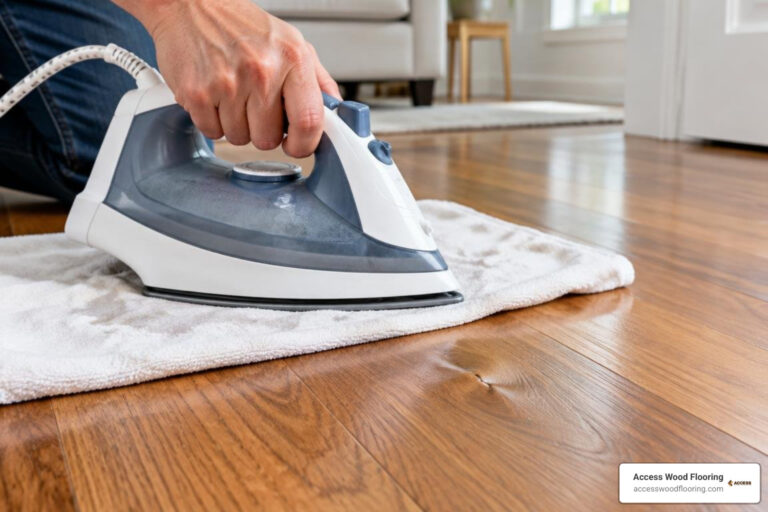
We do not recommend it. Online guides suggest steam, a hot iron, wax or filler, but these can do more harm than the dent. Heat and moisture can cloud or blister the finish, raise the grain or stain the board. Wax and filler rarely match the color and sheen of the surrounding floor, and the patch stays visible. A repair that goes wrong usually leaves a larger area to fix.
If you are unsure what you are looking at, take a few clear photos and have a flooring professional assess the floor before anything is applied to it.
What can a flooring professional do about a dent?
The right repair depends on what an inspection shows. The usual options are:
- Surface scratches: a buff and recoat refreshes a worn finish and usually takes about one day, with light foot traffic again after about two hours.
- Isolated damage: a spot repair of the finish or the wood, followed by color matching.
- Damaged boards: replacing the boards or lacing new boards into the existing floor, so the repair blends with the rest of the floor.
- Widespread wear: sanding and refinishing the room, which removes many shallow marks and gives the whole floor one color and sheen.
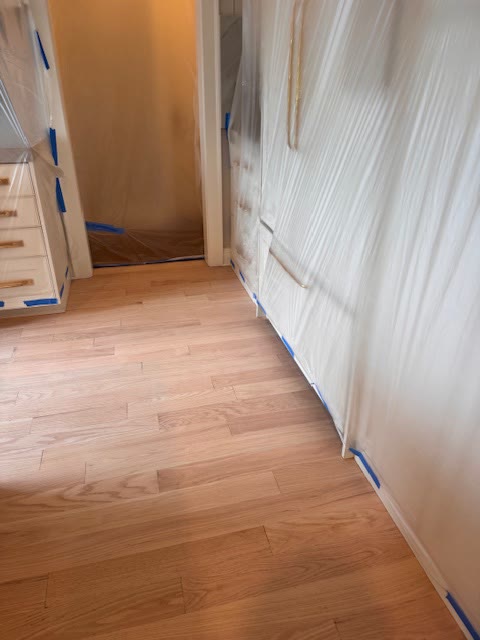
When a floor gets a new color, we apply stain samples about 12 by 12 inches on your own floor first, so you see the result on your wood before the job starts. Sanding is done with dust-containment equipment, and kitchen cabinets and doorways are protected with plastic and tape.
When is a dent a sign of a bigger problem?
Not every low spot is a dent. Have the floor inspected if you notice any of these:
- a spongy or soft spot, or boards that move when you walk on them,
- edges of boards that curl up or look crowned (cupping),
- dark stains or marks near a sink, dishwasher, door or window,
- widening gaps between boards.
These can point to moisture or movement under the floor. Repairing only the surface hides the cause, and the problem comes back.
How can you prevent dents in hardwood floors?
- Put felt pads under furniture legs and replace them when they wear out.
- Lift heavy furniture and appliances instead of sliding them.
- Use soft wheels or floor-safe casters on chairs.
- Keep pet nails trimmed and use area rugs in busy spots.
- Take off high heels and shoes with pointed or cleated soles indoors.
- Keep the finish in good shape. A recoat before the finish wears through protects the wood.
What should you know before choosing a repair?
Match the repair to the damage and to the whole floor. A small dent in a floor that is due for refinishing may be best handled during the refinish. A deep gouge or a split board needs the board repaired or replaced. Sanding a single spot is hard to blend into the rest of the floor, so the work is often planned for the whole room.
Not sure what your floor needs? Request a free in-home estimate. We measure your floors with a laser and give you a detailed written estimate with the work, the materials and an approximate schedule. Photos of the damage help us prepare before the visit.