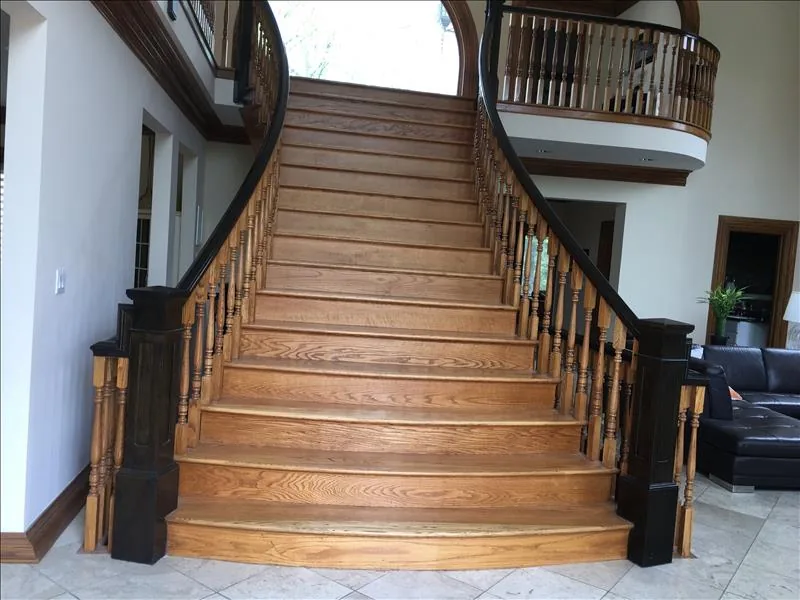
Refinishing sound hardwood beneath carpet can preserve your existing stairs. If the treads—the horizontal walking surfaces—or risers—the vertical boards between steps—are too damaged, replacement may be needed.
What Determines the Best Way to Redo Carpeted Stairs?
The condition of the wood and supports determines whether refinishing or replacement makes sense. A free in-home written estimate lets you compare the work your staircase needs.
Finding the right approach to an aging staircase means looking beyond surface updates. Carpet on busy stairs tends to mat, hold dirt and wear down along the nosing—the front edge of each step—over time.
A solid hardwood staircase can provide decades of use. Restored or new solid wood steps are durable and easy to clean. They can also match adjoining hardwood floors. When comparing ways to redo carpeted stairs, restoring sound wood beneath the carpet may offer long-term value.
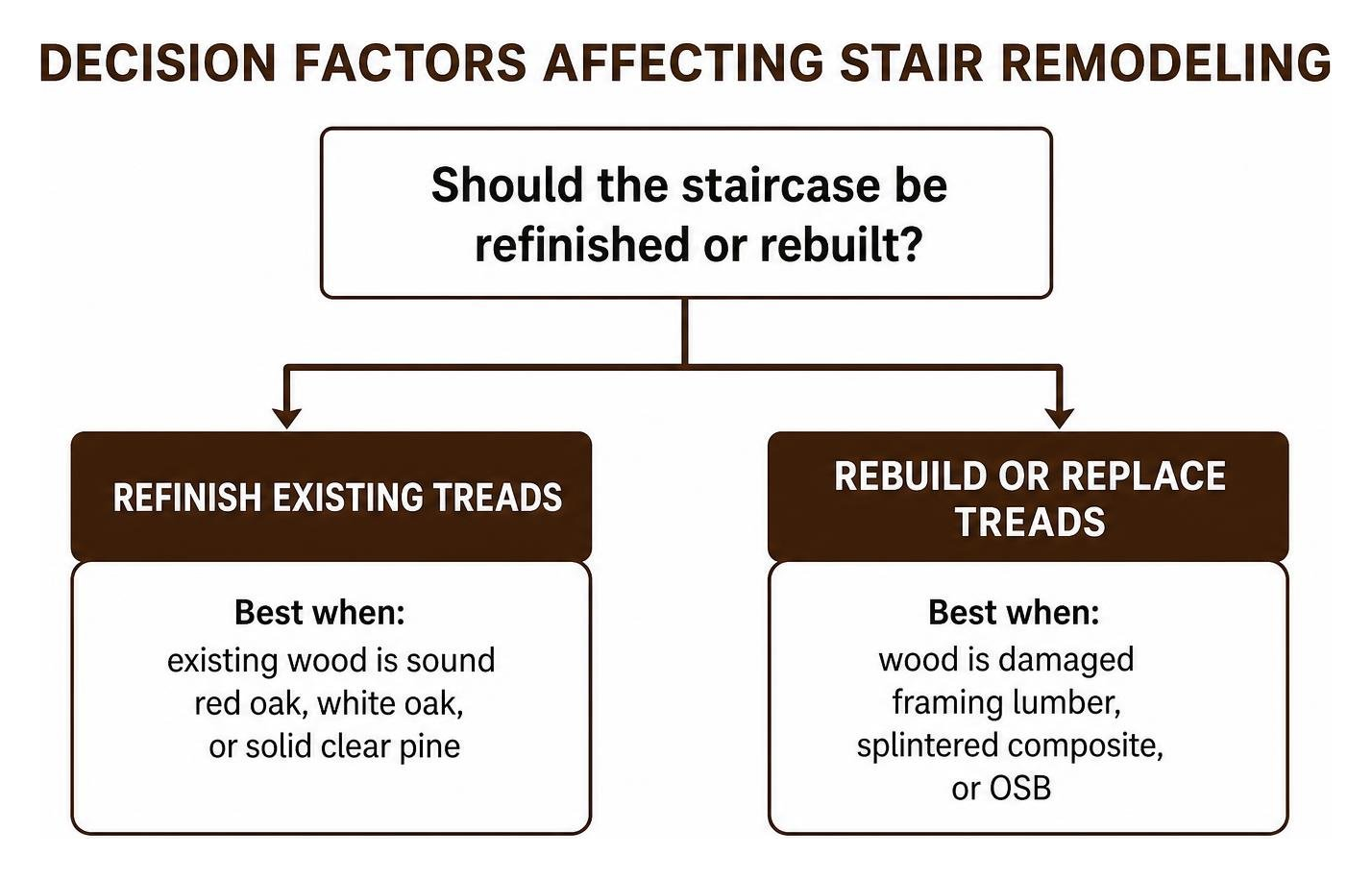
Several structural and aesthetic factors influence whether a staircase should be refinished or rebuilt:
| Evaluation Factor | Refinishing Existing Treads | Rebuilding or Replacing Treads |
|---|---|---|
| Existing Wood Species | Sound red oak, white oak, or solid clear pine | Damaged framing lumber, splintered composite, or oriented strand board (OSB, a panel made from bonded wood strands) |
| Fastener Damage | Minor staple punctures and small nail holes | Deep gouges, split nosings, or severe structural cracks |
| Architectural Layout | Straight stairs with sound stringers (the sloped supports beneath the steps) | Angled steps at turns that require custom fitting |
| Structural Stability | Firm, silent treads with tight stringer connections | Loose steps, excessive flexing under weight, or persistent subfloor squeaks |
| Long-Term Longevity | Decades of service with standard maintenance | Service life depends on materials, construction and maintenance |
We walk through each of these factors in person before recommending a direction. A short conversation about the age of the home, the builder, and any known water damage or past repairs helps guide the project evaluation.
Can Existing Treads Be Refinished Instead of Replaced?
If your existing staircase contains solid hardwood under the old carpet, restoring that wood provides a direct path forward. Have a professional check beneath the carpet for sound wood; exposed staples and tack strips can cause cuts.
Our team evaluates the structural soundness of each step to see if the wood can be salvaged. If the original construction consists of solid hardwood, professional stair refinishing removes ground-in dirt, eliminates old carpet adhesive, and smooths out minor imperfections. Refinishing sound treads preserves the original character of the home without tearing out the entire framework.
When builder-grade pine or soft structural framing sits beneath the carpet, standard sanding and staining may highlight uneven grain and deep fastener holes. In those cases, we determine whether selective board repairs or new solid oak treads are better suited for everyday use. The National Wood Flooring Association also publishes general guidance on wood species and finish durability that homeowners may find useful when weighing these choices.
What Might Be Beneath Your Stair Carpet?
Under stair carpet, you may find hardwood treads, pine, plywood or other construction panels. Removing the carpet, padding and tack strips—the narrow strips with pins that grip the carpet—reveals the material and its condition so we can assess the right approach.
Fastener removal often leaves behind hundreds of small staple punctures and perimeter nail holes from tack strips. Examining the raw steps also exposes underlying subfloor movement, cracked riser boards, and loose stringer connections that cause loud squeaks when walked upon.
Identifying Hardwood vs. Utility Pine Under Carpet
Homes built across Chicago’s North Shore and northwest suburbs showcase varying construction methods depending on their age. Older residences often feature solid oak treads beneath carpeting, while newer tract homes frequently utilize utility pine or construction plywood.
- Select Hardwood (Red Oak or White Oak): Displays prominent, open grain patterns with natural density. These treads sand smoothly and accept custom stain colors uniformly.
- Utility Pine: Softer wood with visible knots, tight vertical grain lines, and natural yellow tones. It dents easily under heavy impacts and requires careful sealing before finishing.
- Builder-Grade Plywood or OSB: Structural wood panels used as a base beneath the finished stair surface. These materials cannot be sanded or stained and must be covered with new solid wood treads.
Addressing Hidden Structural and Fastener Damage
Removing decades of carpeting frequently uncovers split nosings, deep wood gouges, and loose steps. Attempting to sand over compromised treads without addressing these flaws can weaken the staircase over time.
Our team secures loose framing, tightens stringer connections, and performs targeted solid hardwood floor repair by fitting new matching boards into the existing woodwork where needed. Addressing structural creaks, stabilizing stringers, and replacing split wood before applying protective finishes helps reduce squeaks and improve stability for everyday use.
What Affects Stair Remodeling Costs?
Stair remodeling costs depend on the layout, materials and condition of the staircase. Landings, railings and finishing requirements also affect the work involved.
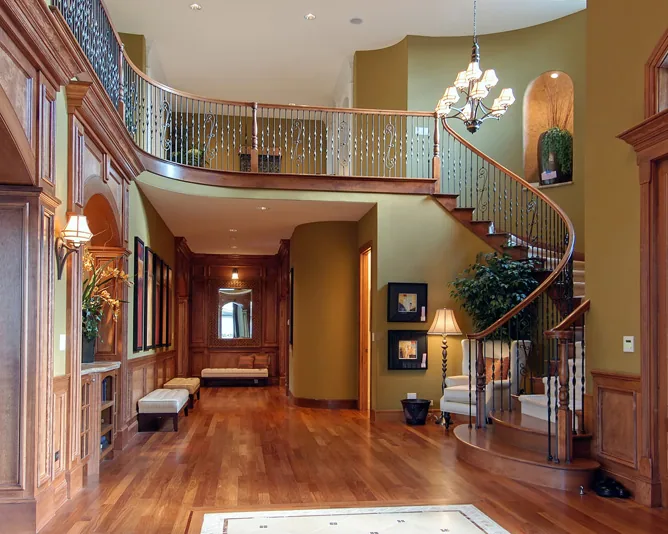
Because every residential staircase has unique architectural details, remodeling costs vary based on design complexity, material requirements, and site conditions. The number of treads and risers, the condition of the existing stringers, and whether damaged wood can be repaired instead of replaced can change the scope of work. Existing rail posts, trim details, curved edges, and transitions to nearby flooring also affect the fitting and finishing required. Rather than relying on generic estimates, we visit your home for a free estimate, take laser measurements and provide a detailed written estimate.
Staircase Layout, Landings, and Railings
The physical shape of your staircase plays a major role in project planning:
- Straight Stair Runs: Straight stairs between closed walls allow straightforward measurements and board fitting.
- Open Stringers: Steps with exposed sides need finished tread edges that wrap around the exposed side. We sand both the top and side edges.
- Winder Steps and Custom Landings: Angled steps that turn corners need custom cuts and edges marked and cut by hand to fit the surrounding thresholds.
- Balusters (Vertical Railing Supports) and Handrails: Fitting new wood treads around existing posts or replacing old balusters requires careful carpentry. We handle complete custom stairs and railings so the parts work together and feel secure.
Sanding, Staining, and Finishing Requirements
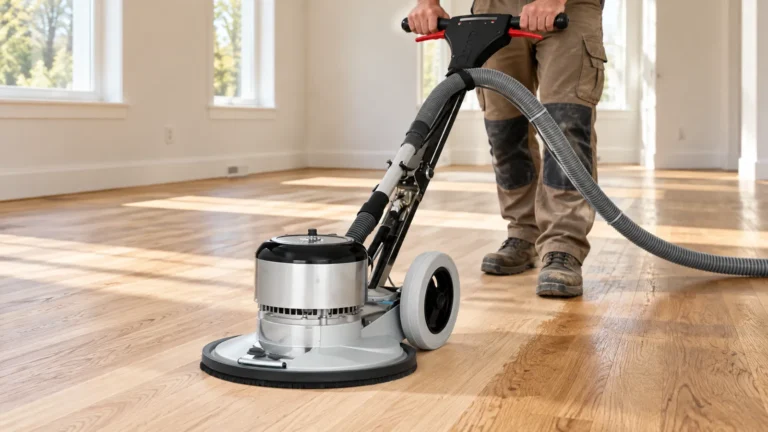
Refinishing treads requires specialized machinery designed for vertical risers and narrow steps. Handheld equipment must be paired with high-efficiency vacuum systems to keep the home clean throughout the process.
We protect kitchen cabinets and doorways with plastic and tape before work begins. We use dustless hardwood floor sanding systems, including the Oneida Vortex DCS and Bona Portable DCS 2.0, to capture dust at the tool head. For our custom hardwood floor staining service, we apply samples about 12 by 12 inches directly on your sanded floor. You can compare colors in your home’s light as we work toward a match with adjoining rooms. We then protect the steps with durable commercial-grade finishes, such as Bona Traffic HD or Loba Supra A.T., to protect the wood from everyday wear.
What Should Homeowners Know Before Redoing Carpeted Stairs?
The material beneath the carpet and the condition of the stair supports guide the project. Finish choice and proper care also matter, but no finish makes stairs slip-proof.
What is typically found under carpet on stairs?
Most carpeted staircases conceal either solid hardwood treads, utility pine framing, or rough plywood subflooring. You will also find dense patterns of industrial staples, perimeter tack strips with sharp metal pins, and dried carpet adhesive along the tread edges.
How do you fix slippery wooden stairs after removing carpet?
No finish makes wood stairs slip-proof. We use finishes such as Bona Traffic HD or Loba Supra A.T., typically in satin for a low-shine appearance. At the final walkthrough, we explain proper cleaning and which products to avoid because they can leave a film.
Is it better to replace individual damaged treads or the entire staircase?
If the overall staircase framing is sound and only two or three treads have deep cracks or splits, replacing only the compromised boards resolves the structural issues without requiring a full staircase rebuild. During an in-home consultation, a flooring professional measures each step, checks the stringers and risers, and evaluates the framework before recommending the right plan. This assessment helps determine whether targeted tread replacement or broader staircase work is the more practical long-term solution.
How Can You Plan Your Staircase Update?
Start planning your staircase update with an in-home assessment of the treads, risers and supports. Preserving sound structural wood and replacing damaged components helps improve the staircase’s stability and appearance.
Access Wood Flooring is a family-owned hardwood flooring company founded in 1996 and based in Hoffman Estates, Illinois. It serves homeowners across Chicago’s North Shore and northwest suburbs. Our family team handles every phase of the project, from dust-contained sanding to custom color matching and protective clear coats. We invite you to request a free in-home written estimate with laser measurement through our contact page.