An 18mm engineered wood floor can offer long-term value when its hardwood top layer, finish and installation suit your home. Compare those features rather than choosing by overall thickness alone.
How do you choose 18mm engineered wood flooring for long-term value?
Compare the hardwood top layer, finish and installation requirements, not just the board’s overall thickness. Check that the flooring suits your rooms and any underfloor heating system before ordering.
Choose 18mm engineered wood flooring with enough hardwood for your plans and a durable finish. Check that its height fits your doorways and stairs. For a busy hallway or living room, compare the wear layer—the real-wood top layer—and the finish rather than board thickness alone. If you have underfloor heating, choose a product the manufacturer approves for your system.
I’m Peter Dudzik. I founded Access Wood Flooring in 1996 and have over 30 years of hands-on experience. I’ll explain what to compare when choosing 18mm engineered wood flooring.
Plan the board height when coordinating floors and stairs. Refinishing depends on the remaining hardwood top layer, not overall board thickness. If enough hardwood remains, professional sanding may restore a worn surface instead of requiring replacement. Engineered wood offers real-wood character with less humidity-related movement than solid wood. Both still need proper care.
When you compare products, look beyond the overall thickness. The hardwood wear layer, the quality of the layered plywood core, and the protective finish all affect performance over time. Ask how the selected product handles everyday wear and seasonal humidity changes. A free in-home estimate with laser measurement can help you plan quantities and doorway clearances. It also gives the installer a chance to review subfloor conditions before you order materials.
What should you compare when choosing 18mm engineered wood for busy rooms?
Compare the board’s construction, finish and suitability for the room. Subfloor preparation and installation also affect how firm the floor feels and how it sounds underfoot.
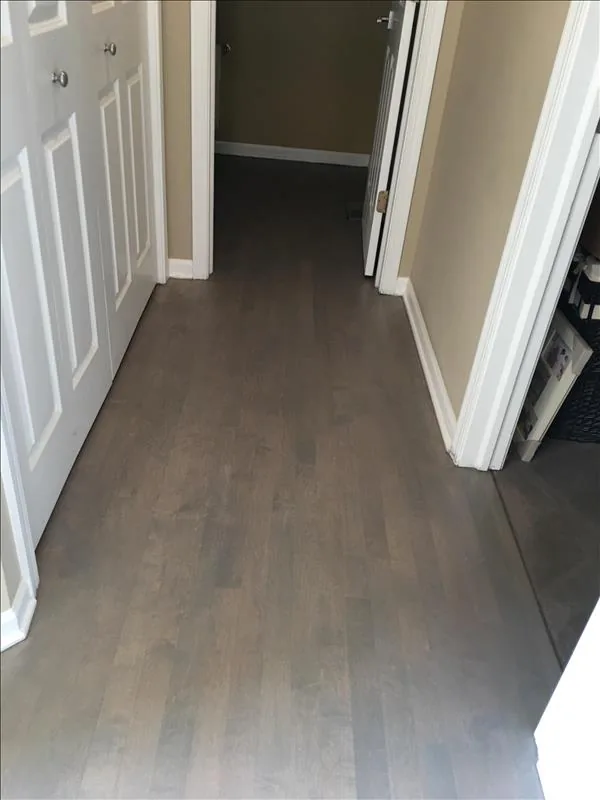
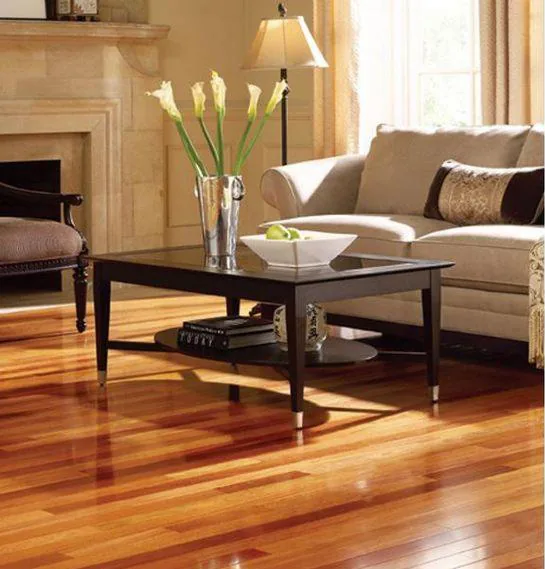
For busy kitchens, hallways and family living rooms, compare more than board thickness. An 18mm engineered wood floor can feel substantial underfoot, much like solid hardwood. Compare the product’s construction as well as its thickness.
Board thickness, subfloor preparation and installation method all affect sound and firmness underfoot. A floating floor rests on underlayment rather than being attached to the subfloor. Ask your installer how the selected product will feel and sound in your home.
In older Chicago North Shore homes, have the installer check for uneven or settled subfloors. A thicker board does not replace proper subfloor preparation. The board height can also help align floors between rooms. Check how it meets stair treads, landings and existing trim.
What Defines 18mm Engineered Wood Flooring Construction?
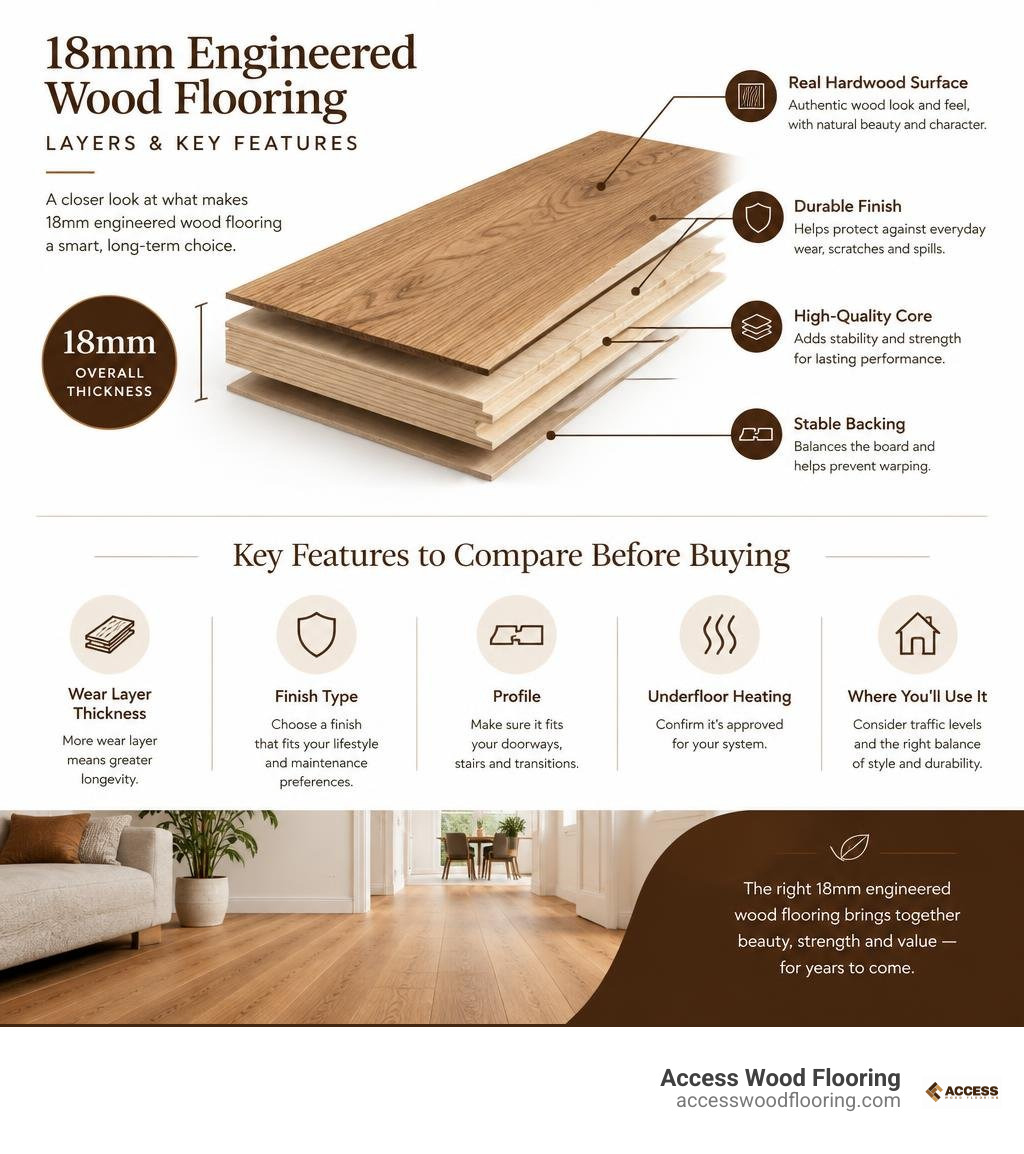
An 18mm engineered board has supporting layers that help limit wood movement as humidity changes. Some cores use plywood or layers of hardwood. In a cross-ply core, the wood grain runs in alternating directions in neighboring layers. Check the selected product’s construction.
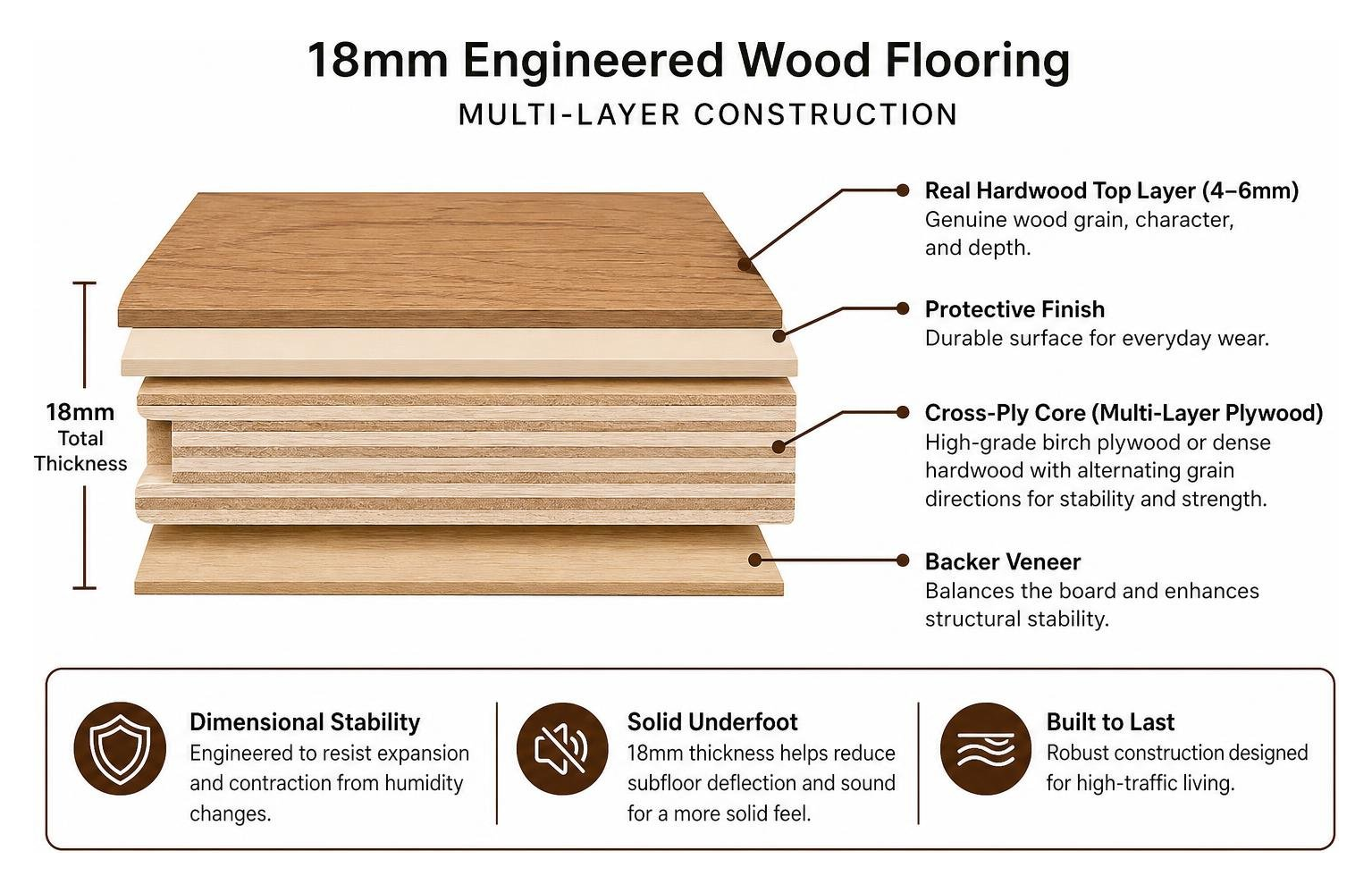
On top of the supporting layers sits a real hardwood veneer, or thin top layer. Check its thickness in the product specifications. For comparison, Vitula’s specifications list 4mm or 6mm hardwood top layers. Those boards are 13mm, 16mm or 21mm thick overall, not 18mm. The hardwood provides the visible grain and character. The layered core helps limit movement as indoor humidity changes.
The quality of the core matters as much as the thickness of the wear layer. Well-bonded plywood helps boards resist warping. Core construction and indoor humidity both affect gaps and cupping, where board edges rise above the center. A good core does not remove the need to control indoor moisture.
Comparing 18mm vs 15mm and Solid Hardwood Profiles
Homeowners often compare 18mm boards with 15mm boards or solid wood planks. An 18mm board is 3mm thicker than a 15mm board. That added thickness can improve firmness, but it does not replace proper subfloor preparation.
Engineered wood generally expands and contracts less than solid hardwood as indoor humidity changes. Both have a real-wood surface. When blending new boards into an existing floor, check both the overall height and the remaining hardwood top layer. Overall thickness alone does not determine how much wood can be sanded away.
| Flooring Profile | Wear Layer | Resistance to Humidity-Related Movement | Refinishing Potential | Expected Lifespan | Underfoot Feel |
|---|---|---|---|---|---|
| 15mm Engineered | Check the product specification | Depends on construction and indoor conditions | Depends on the remaining hardwood top layer | Depends on the product, use and care | Depends on the product and installation |
| 18mm Engineered | Check the product specification | Depends on construction and indoor conditions | Depends on the remaining hardwood top layer | Depends on the product, use and care | Depends on the product and installation |
| 18mm Solid Hardwood | Solid wood above the tongue-and-groove joint | More prone to humidity-related movement | Depends on the wood remaining above the joint | Depends on use and care | Depends on the product and installation |
Which styles and finishes can you choose for 18mm engineered wood?
You can choose straight or geometric layouts and a range of surface textures and finishes. Compare samples alongside your existing trim and stairs, and check each finish’s care requirements.
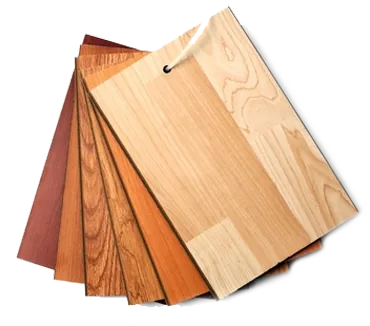
Options include straight planks, wide boards and geometric patterns. Finishes include lacquer and hardwax oil. Check the hardwood top-layer thickness rather than assuming it from the 18mm overall thickness. European oak offers neutral tones. American walnut offers a darker color.
Options include low-sheen lacquers hardened with ultraviolet light and hardwax oil finishes made with oils and waxes. Compare each product’s care requirements. Unfinished boards allow for custom hardwood floor staining in your home. Stain samples can help you choose a color that coordinates with wood trim and stairs.
Finish choice affects both appearance and day-to-day maintenance. A matte lacquer tends to hide fine scratches and dust better than a high-gloss surface, while a hardwax oil finish can be spot-repaired more easily in busy areas. If you are matching new flooring to existing woodwork, an unfinished or lightly finished board gives you the most control over the final color and sheen.
Classic Straight Plank and Wide-Format Boards
Straight planks suit both modern and traditional homes. Some 18mm planks are 180mm to 220mm wide or wider. Their layered construction helps limit movement compared with wide solid wood boards. Check the selected product’s width and installation requirements.
Compare edge details in product specifications. Options include slightly sloped edges on two or four sides to outline each plank. Wire-brushing removes some of the softer wood to emphasize the grain. The resulting texture can help hide minor surface marks.
Wide-format boards can make a compact room feel larger by reducing the number of visible seams. They require a flat, well-prepared subfloor to prevent uneven edges where boards meet. An 18mm board’s thickness does not replace proper subfloor preparation.
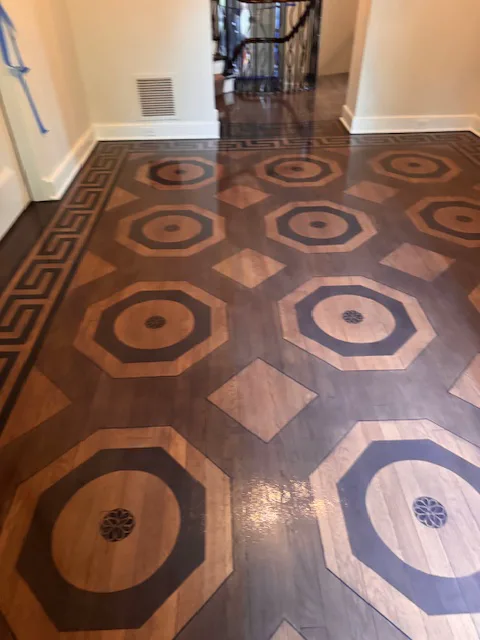
Parquet and Herringbone Geometric Layouts
For dining rooms or entry halls, consider 18mm parquet blocks in a geometric pattern. Herringbone uses staggered zigzags. Chevron forms pointed V shapes.
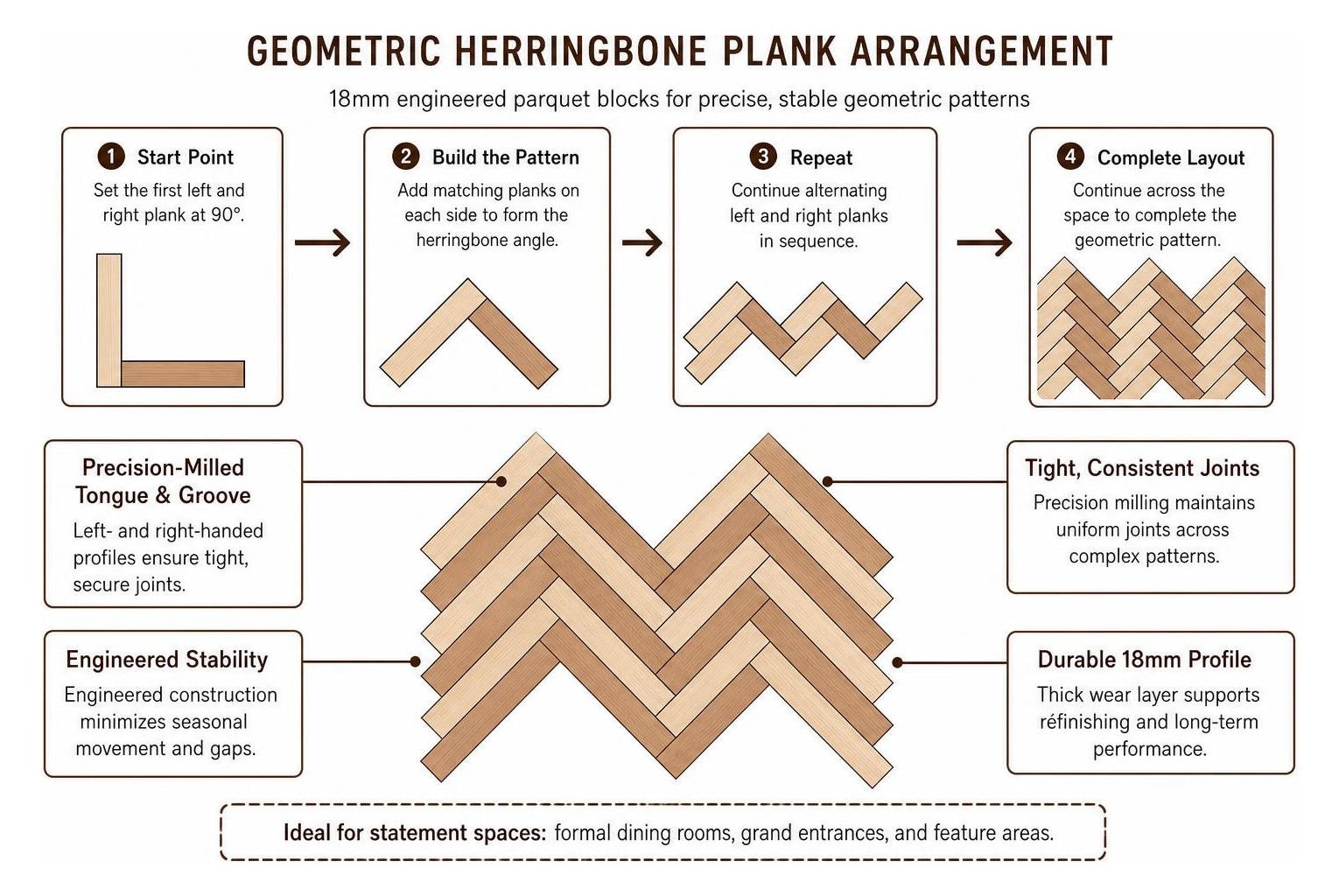
Engineered parquet blocks have matching ridges and channels along their edges, called tongues and grooves. Some patterns use left- and right-handed blocks. These edges help align the pattern, but they do not prevent all seasonal gaps.
Geometric layouts can help define areas within an open-plan home. Herringbone in a dining area can contrast with straight planks in the living space. Matching board heights can create a visual boundary without a step between areas. Engineered blocks help limit movement, but sunlight and heating conditions still need consideration.
What should you check before installation, heating or refinishing?
Before installation, check the subfloor and the product’s installation requirements. For underfloor heating, confirm manufacturer approval; for refinishing, have a professional assess the remaining hardwood and floor condition. Some boards can be glued to the subfloor. Others can be installed as a floating floor over sound-reducing underlayment. Hire a professional for hardwood installation. The installer can plan moisture protection, gaps around the walls that allow wood to move, and transitions at doorways.
Before installation, the subfloor should be checked for flatness, dryness and structural soundness. The installer may need to level high spots and secure loose subfloor panels. They should also check that the added board height works with doorways and adjoining floors. Taking these steps early helps prevent squeaks, hollow spots and uneven transitions later.
Can 18mm Engineered Wood Flooring Work with Underfloor Heating?
Yes, 18mm engineered wood flooring can be used with underfloor heating (UFH), provided specific criteria are met:
- Thickness and Heat Transfer: Check the flooring and heating manufacturers’ limits for overall thickness and wear-layer thickness. These affect how easily heat passes through the floor.
- Temperature Limits: Follow the approved temperature limit and measurement location for the selected system and flooring. Do not assume one limit applies to every product.
- Installation Method: A full-spread glue-down installation bonds the boards across the subfloor. Use this method only when approved for the flooring and heating system.
- Manufacturer Approval: Check the specific product data sheet to confirm approval for underfloor heating before installation.
A glue-down method can help the floor respond evenly to temperature changes. Fully bonded boards can transfer heat more evenly. This can help limit differences in wood movement between areas. Before work begins, confirm that the adhesive and board construction are approved for the heating system. If underlayment is used, check its approval too.
Sanding Potential and Long-Term Surface Maintenance
Check the hardwood top-layer thickness rather than assuming it from the board’s 18mm overall thickness. A thick hardwood top layer may allow more than one professional sanding instead of replacement. Suitability depends on the wood remaining and the floor’s condition. Dust-contained hardwood floor sanding uses equipment to capture sanding dust.
After sanding exposes bare wood, floor refinishing adds a new protective finish. You can also change the stain color or choose a different sheen, from matte to glossy.
To maximize the life of your wood floor between sanding cycles, follow these maintenance best practices:
- Place heavy-duty dirt-trapping mats at all exterior entryways.
- Fit protective felt pads beneath all furniture legs and chairs.
- Maintain indoor relative humidity levels between 35% and 55% year-round.
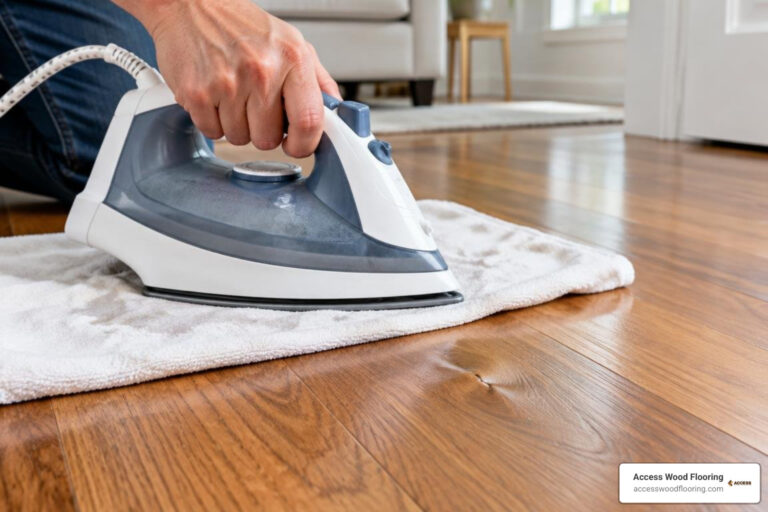
- Clean weekly using a dry microfiber mop and a pH-neutral hardwood spray cleaner; avoid wet mops or steam cleaners.
- Wipe up spills promptly to prevent moisture from sitting on the surface or seeping into joints.
- Lift furniture rather than dragging it when rearranging rooms.
- Use blinds or curtains to limit prolonged direct sunlight that can fade or dry out the wood.
- Schedule a professional inspection if you notice gapping, cupping, or finish wear in high-traffic areas.
What should homeowners know before choosing 18mm engineered wood?
Compare the product’s construction, room suitability and installation requirements, not thickness alone. Refinishing potential depends on the remaining hardwood, while cost depends on the selected materials and work required.
How many times can an 18mm engineered board be refinished?
The number of refinishing cycles depends on the floor’s construction, remaining hardwood top layer and condition. Access Wood Flooring assesses the actual floor before recommending sanding.
The exact number of refinishing cycles depends on how aggressively the floor is sanded and how well it is maintained between treatments. Floors that are cleaned regularly and protected from grit tend to need less aggressive sanding, which preserves more of the wear layer for future restoration.
Is 18mm engineered flooring suitable for kitchens and high-traffic areas?
It can be, depending on the product. The layered core helps limit wood movement as indoor conditions change. Check that the selected product is approved for your kitchen or other busy rooms. Wipe up spills promptly to protect the finish.
Standing water is a concern in kitchens, along with everyday wear. Choose a product approved for kitchen use and follow its care instructions. Clean spills quickly and maintain the finish. Engineered wood generally moves less than solid wood, but it is not immune to moisture damage.
What affects the cost of 18mm engineered wood flooring?
Material costs vary by wood species, grade, plank width, finish and pattern. Request an estimate based on your selected product and rooms.
Installation costs vary based on subfloor preparation, adhesive requirements, and the complexity of the layout. A free laser-measured in-home estimate can provide a more accurate picture of total project cost, including materials, labor, and any necessary subfloor work.
Is 18mm engineered wood a good long-term choice for your home?
An 18mm engineered wood floor offers a real hardwood surface and can feel substantial underfoot. Its layered construction helps limit movement as indoor humidity changes. Compare wear-layer thickness, layout options and refinishing suitability before choosing a product. These details matter more to long-term value than overall thickness alone.
For North Shore homeowners, engineered wood can be an option for older homes and busy family spaces. Plan its height and finish alongside any stairwork. If enough hardwood remains, sanding and refinishing may restore the floor or change its color. Access Wood Flooring can assess whether refinishing is suitable.
Contact Access Wood Flooring to discuss options for your home. Schedule a free in-home estimate with laser measurement and a detailed written estimate.