An 18mm engineered oak floor pairs a real oak surface with a layered core. Compare its wear layer, finish, and approved installation methods before choosing a product.
Is 18mm Engineered Oak Flooring Right for Your Home?
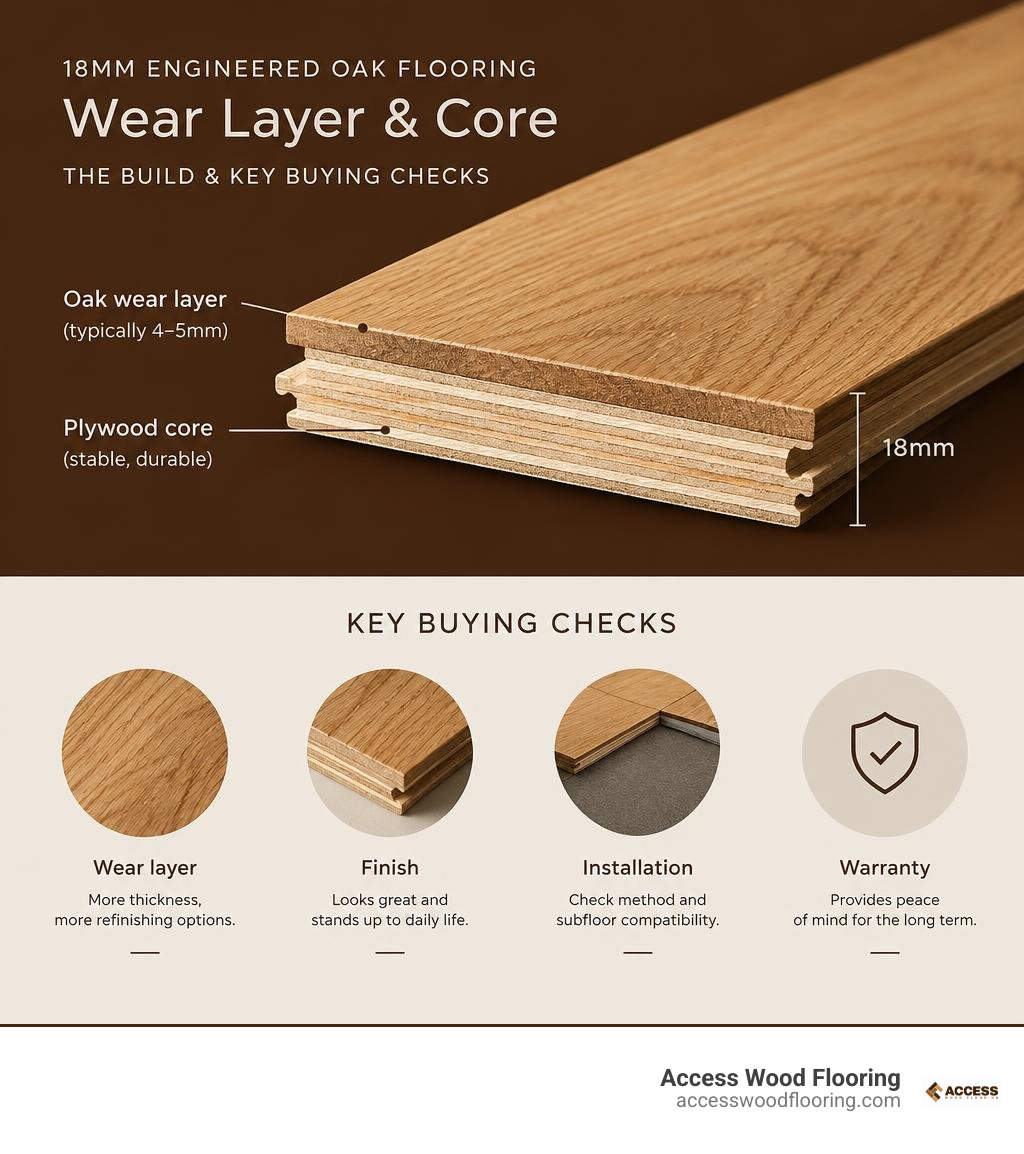
18mm engineered oak flooring is worth considering if you want the look and feel of oak with better resistance to seasonal movement than solid wood. Its oak surface sits over a layered core, but thickness alone does not tell you how long it will last. Check the wear layer—the solid oak surface—as well as the finish, installation requirements, and warranty before comparing prices.
A 4-5mm wear layer, for example, leaves more room for future refinishing than a thinner one.
For a North Shore renovation, also check how the new floor will meet existing stairs and whether the specific product is approved for your subfloor or underfloor heating.
I’m Peter Dudzik. With over 30 years of hands-on flooring experience, I look closely at specifications and long-term costs. I’ll use that approach to help you evaluate 18mm engineered oak flooring, starting with how the board is built.
How Is 18mm Engineered Oak Flooring Built?
An 18mm plank has a substantial feel, but its construction matters as much as its total thickness. Engineered wood flooring has a thin layer of real hardwood bonded to a supporting core.
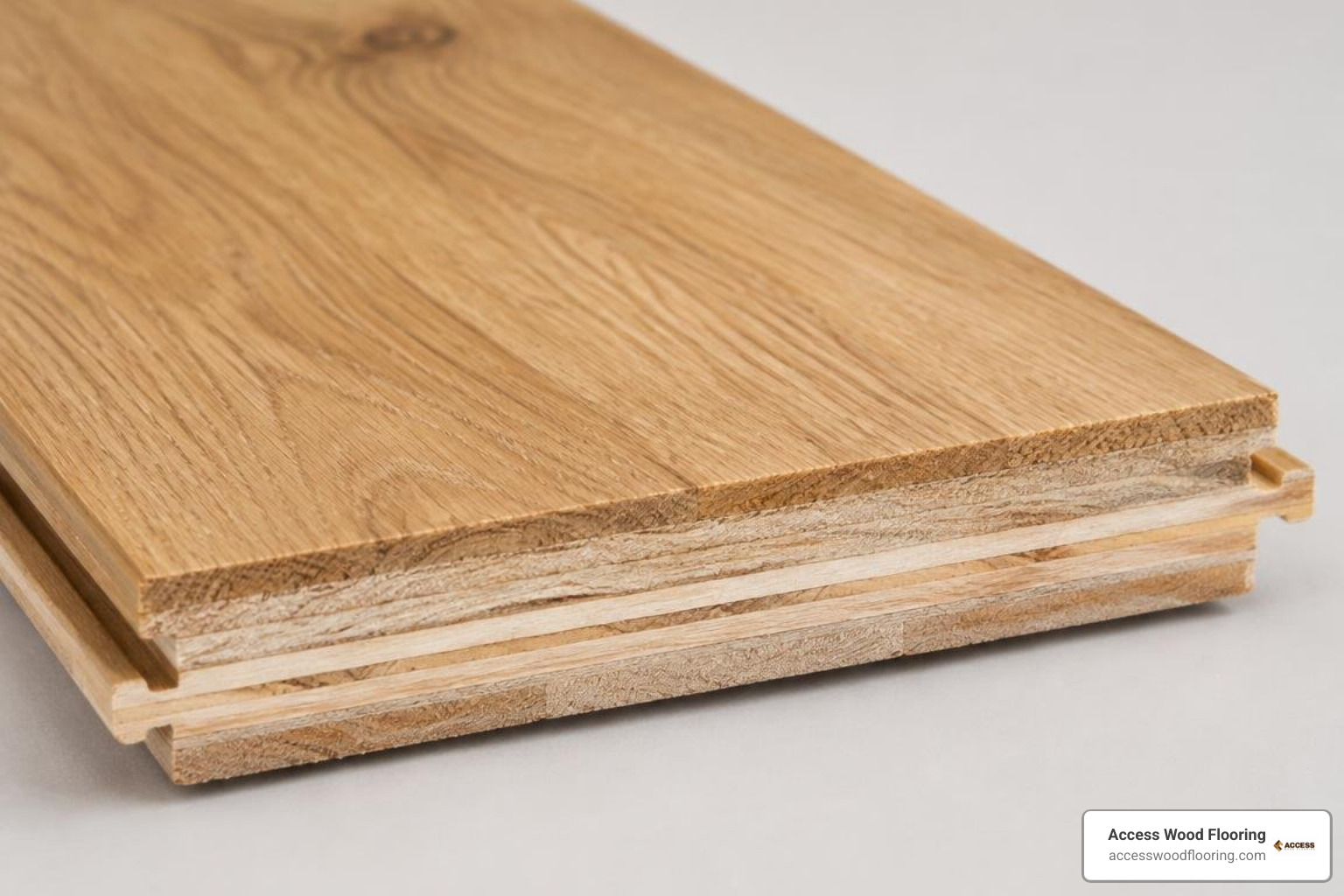
The core is usually formed from multi-ply Baltic birch or dense poplar plywood. The wood grain runs at right angles in neighboring layers. This helps limit bending and twisting as humidity changes.
Tongue-and-groove (T&G) boards have a projecting edge that fits into a slot on the next board. Check the product instructions for approved installation methods over wood or concrete subfloors.
Wear Layer Thickness and Sanding Lifespan
An engineered plank’s durability depends in part on its wear layer, the solid oak layer on top. In 18mm boards, this hardwood layer typically ranges between 4mm and 6mm.
Before recommending hardwood floor sanding, a professional should assess the floor’s construction, remaining wear layer, and condition. Board thickness alone does not establish how many times it can be refinished.
When your interior style changes or foot traffic leaves surface scuffs, floor refinishing may help restore the floor without replacing it. A full refinish involves sanding down to bare wood, so a professional should first assess whether the floor has enough wear layer remaining.
| Wear Layer Thickness | Sanding Allowance | Expected Lifespan | Typical Application |
|---|---|---|---|
| 3mm | Less sanding allowance; professional assessment needed | Not established by thickness alone | Residential use; check product requirements |
| 4mm | More allowance than 3mm, subject to construction and condition | Not established by thickness alone | Residential use; check product requirements |
| 5mm | More allowance than thinner layers, subject to construction and condition | Not established by thickness alone | Residential use; check product requirements |
| 6mm | More allowance than thinner layers, subject to construction and condition | Not established by thickness alone | Residential use; check product requirements |
Dimensional Profiles and Bevel Options
Board dimensions change how large a room feels:
- Plank Widths: Standard boards start around 125mm. Wide-plank designs reach 189mm, 240mm, or custom widths up to 400mm.
- Plank Lengths: Options include random lengths of 300mm to 1200mm, which spread joints across the room. Some collections offer long boards of a fixed length, from 2000mm to 4000mm. Compare the available sizes in the manufacturer’s technical specifications. Check thickness separately; not every size is offered in an 18mm board.
- Edge Details: Square edges create a flat, continuous surface. Small sloped edges, called micro-bevels, define individual planks on two or four sides.
What Are the Advantages of 18mm Engineered Oak?
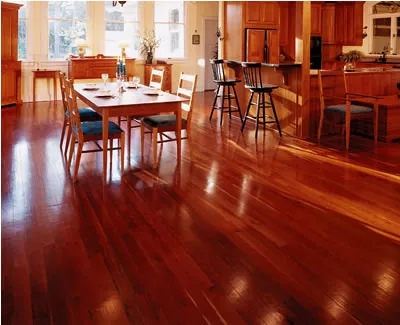
An 18mm engineered oak board combines a real oak surface with a layered core that helps limit seasonal movement. It can feel firm underfoot, but performance also depends on the subfloor and approved installation method.
Solid Wood Feel and Seasonal Movement
An 18mm board can feel firm underfoot, but thickness alone does not prevent bending or a hollow sound. A flat subfloor and the approved installation method also matter.
If an unexpected leak or localized surface gouge occurs, targeted hardwood floor repair can address individual boards without destabilizing surrounding planks.
Compatibility with Underfloor Heating
Some engineered wood products are approved for underfloor heating (UFH), including hot-water and electric systems. Solid oak can move more as conditions change, which may cause gaps. Check the flooring manufacturer’s heating requirements before choosing a product.
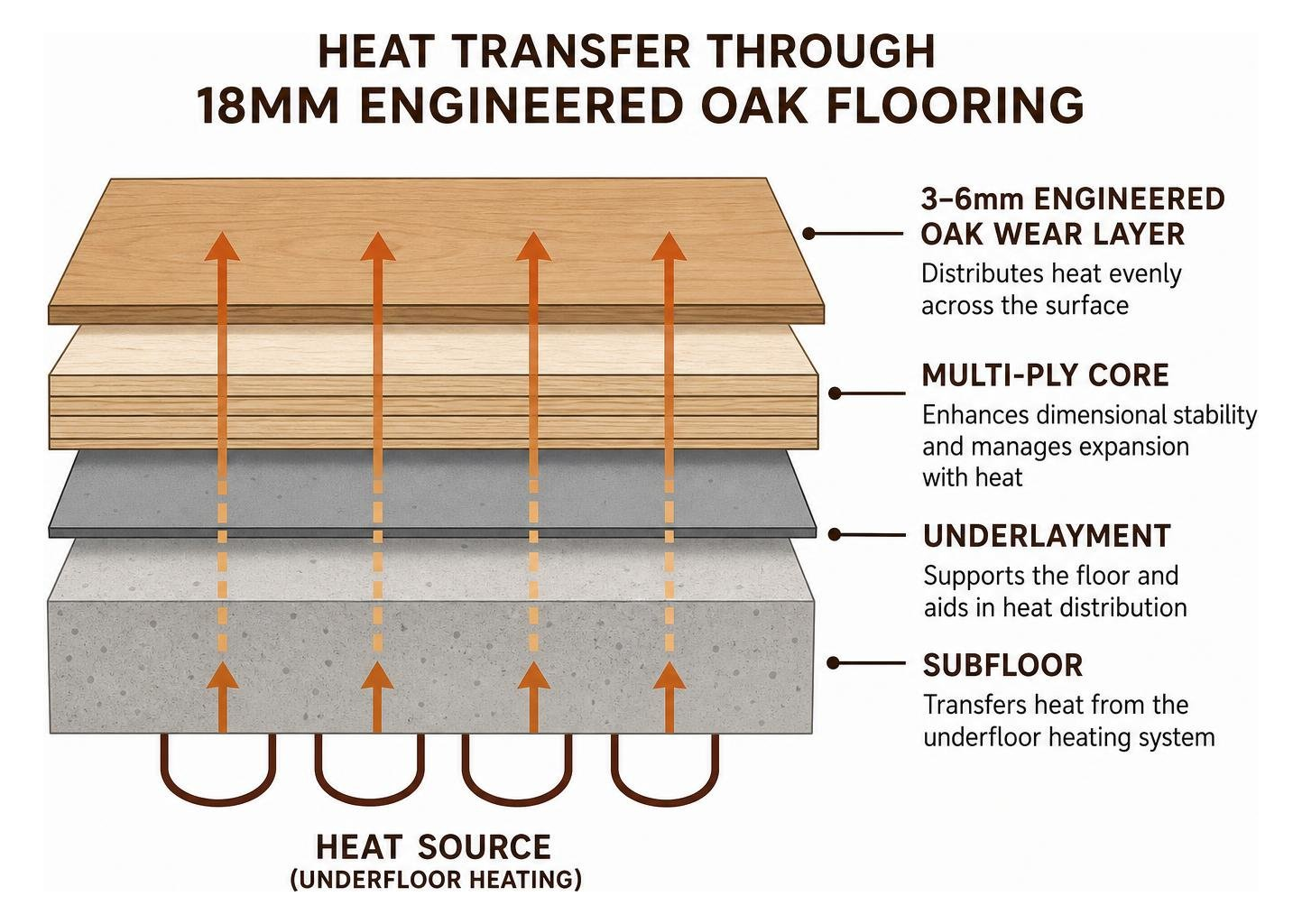
A layered core helps limit movement as temperatures change. Heating performance still depends on the selected flooring and installation. Follow the manufacturer’s temperature and humidity limits. Check whether these guidelines apply to your product:
- Keep the specified surface temperature at or below 27°C (80°F).
- Introduce heating gradually at the start of each cold season.
- Maintain indoor relative humidity between 35% and 55%.
How Do Oak Grades and Finishes Affect Your Floor?
European and American oak comes in several grades. These describe knot frequency, grain patterns, and differences in the lighter wood near the outside of the tree, called sapwood. The finish affects surface protection, appearance, and upkeep.
Selecting Grades for 18mm Engineered Oak Flooring
- Prime / Select Grade: Has clean, straight grain with little color variation and a few tiny knots.
- Classic / Natural Grade: Balances character and uniformity. It features moderate grain patterns, small amounts of lighter sapwood, and firmly attached knots up to 15–20mm.
- Rustic / Character Grade: Shows natural oak growth marks, including larger filled knots, grain swirls, and noticeable color differences.
| Grade Category | Knot Size Allowance | Grain & Color Variation |
|---|---|---|
| Prime | Max 5mm (rare pin knots) | Highly uniform, straight grain |
| Classic | Max 15–20mm | Moderate natural variation |
| Rustic | 30mm+ (filled or firmly attached knots) | High contrast, rich character |
Protective Finishes: UV Lacquer vs. Hardwax Oil
The surface finish protects the wood fibers from everyday wear and defines its appearance:
- UV-Cured Lacquer: Several coats of polyurethane are hardened under ultraviolet light to form a protective barrier over the oak. Satin, matte, and extra-matte options offer spill resistance with little daily upkeep.
- Hardwax and Natural Oils: Oils penetrate the wood. Hardwax oil also leaves a water-repellent wax at the surface. Brushed and oiled textures make the natural grain easier to feel. Depending on the finish, small areas may be repaired without sanding the whole room.
What Preparation Does Your Floor Need Before Installation?
An 18mm engineered floor needs a dry, structurally sound subfloor that meets the manufacturer’s flatness requirements. Your installer should also check which installation method and moisture protection the product requires.
Follow the manufacturer’s instructions for letting planks adjust to the room’s conditions before installation. Subfloors must be dry and structurally sound. Check the required flatness; a specification may call for no more than 3mm of variation over a 2-meter span.
Professional Installation Methods for 18mm Engineered Oak Flooring
Depending on your home’s construction, three main installation methods are used during a professional hardwood floor installation:
- Full Glue-Down Method: Planks are bonded directly to concrete or plywood with a flexible wood-floor adhesive approved for the product and subfloor. This can provide a solid, quiet feel and help heat pass through the floor over underfloor heating.
- Hidden Nailing or Screwing: Fasteners go through the board’s tongue at an angle. They attach to the wood subfloor, or to supporting floor beams called joists when the product is approved for that use.
- Floating Installation: Where approved by the manufacturer, the board joints are glued together over a dense, sound-reducing underlayment. Use the required moisture barrier.
Subfloor Compatibility and Soundproofing
- Concrete Slabs: Test for moisture before installation. Use the approved liquid moisture barrier or vapor barrier to protect the flooring from moisture below the slab.
- Plywood or Oriented Strand Board (OSB): Secure panels so they do not squeak, and sand uneven joints flush before laying the new floor.
- Expansion Gaps: Wood moves as conditions change. Follow the product’s spacing requirements around walls, thresholds, and radiator pipes. A specified perimeter gap may be 10mm to 15mm.
What Affects Cost and How Much Flooring Should You Order?
Wear layer thickness, wood grade, and finishing processes influence flooring cost. The amount you order also depends on room area, cuts, layout, and pack sizes. Request a free in-home written estimate for your project.
Budgeting and Pricing Drivers
The price of 18mm engineered oak varies based on several manufacturing specifications:
- Wear Layer Thickness: A 5mm or 6mm wear layer generally costs more than a 3mm or 4mm layer because it uses more oak.
- Wood Grade: Prime grade boards generally cost more than rustic boards because each log produces fewer boards that meet the grade.
- Finishing Processes: Repeated surface texturing and hand-scraping add production steps. So do reactive stains, which change the color by reacting with the wood.
Calculating Floor Area and Extra Material
To order the correct amount of flooring:
- Multiply the length by the width of each room to calculate floor area.
- Ask your installer how much extra flooring is needed for cuts and offset board joints.
- Allow for additional waste when the room has angled walls or curved bays, or when the floor uses a herringbone pattern.
- Round up your total area to match complete pack sizes.
What Else Should You Check Before Choosing 18mm Engineered Oak?
Check whether the selected product suits the room and what its warranty requires. For future sanding, have a professional assess its construction, condition, and remaining wear layer rather than relying on total thickness.
How Many Times Can 18mm Engineered Oak Be Sanded?
There is no fixed sanding count based on an 18mm board’s thickness. A professional must assess its construction, remaining wear layer, and condition. Professional dust-contained sanding removes wood, so the floor must have enough oak remaining for the work.
Is an 18mm Plank Suitable for Kitchens and High-Traffic Areas?
Yes. Its structural stability makes it well-suited for kitchens, hallways, and living rooms. For kitchen areas, a UV-lacquered or well-maintained hardwax oil finish protects against occasional spills.
What Should I Check in the Manufacturer’s Warranty?
Check the selected product’s warranty for its coverage, exclusions, installation requirements, and claim process. Do not assume that one product’s terms apply to all 18mm engineered flooring.
How Can You Choose the Right Floor for Your Home?
An 18mm engineered oak floor offers a real oak surface over a layered core that helps limit seasonal movement. Compare the wear layer, approved installation methods, and heating requirements. The right choice depends on your home and the specific product.
Restoring a historic home or choosing materials for a new build? Our team at Access Wood Flooring can help. We offer professional installation, dust-contained sanding, and tailored finishes. Get a free in-home written estimate.