Allow about four working days for professional hardwood floor sanding and refinishing. Light foot traffic is usually possible about two hours after the final coat, and furniture can generally return after about two days, depending on the finish and site conditions.
What Is the Typical Hardwood Floor Refinishing Timeline?
Professional hardwood floor sanding and refinishing typically takes about four working days. Light foot traffic is usually possible about two hours after the final coat, and furniture can generally return after about two days, depending on the finish and site conditions.
A standard professional floor refinishing project typically takes about four working days for sanding, staining, and applying protective finish coats. Most flooring professionals can sand up to 1,000 square feet per day, though project scope, repairs, and drying conditions can alter the total turnaround time. Homeowners should plan for several additional days after project completion before replacing furniture and area rugs.
Use these milestones to plan living arrangements and household access. We review the schedule and finish-specific care instructions with you.
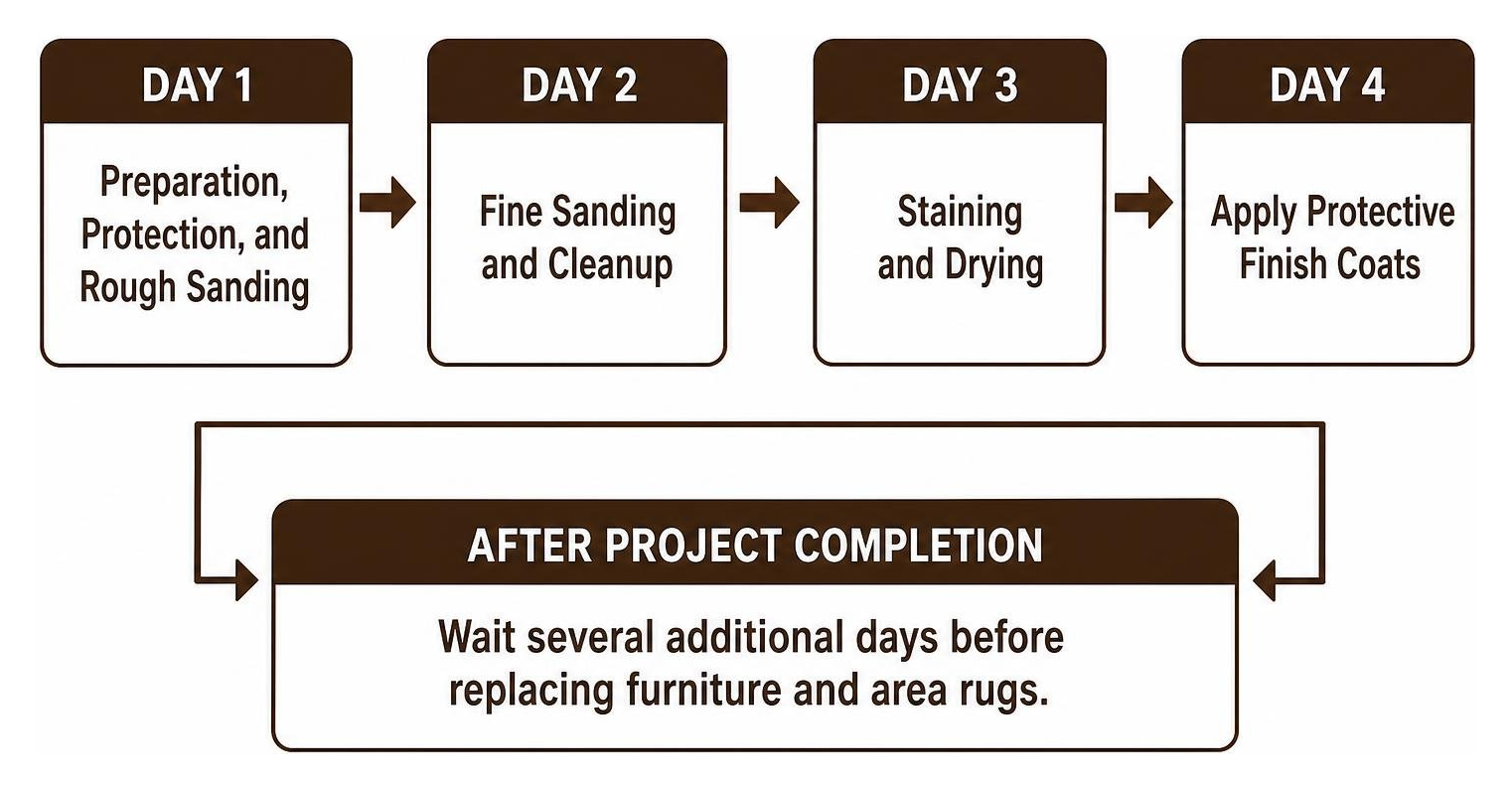
Step-by-Step Hardwood Floor Refinishing Timeline from Prep to Final Coat
A complete refinishing project follows a planned sequence to help the finish adhere and provide a durable surface:
Day 1: Preparation, Protection, and Rough Sanding
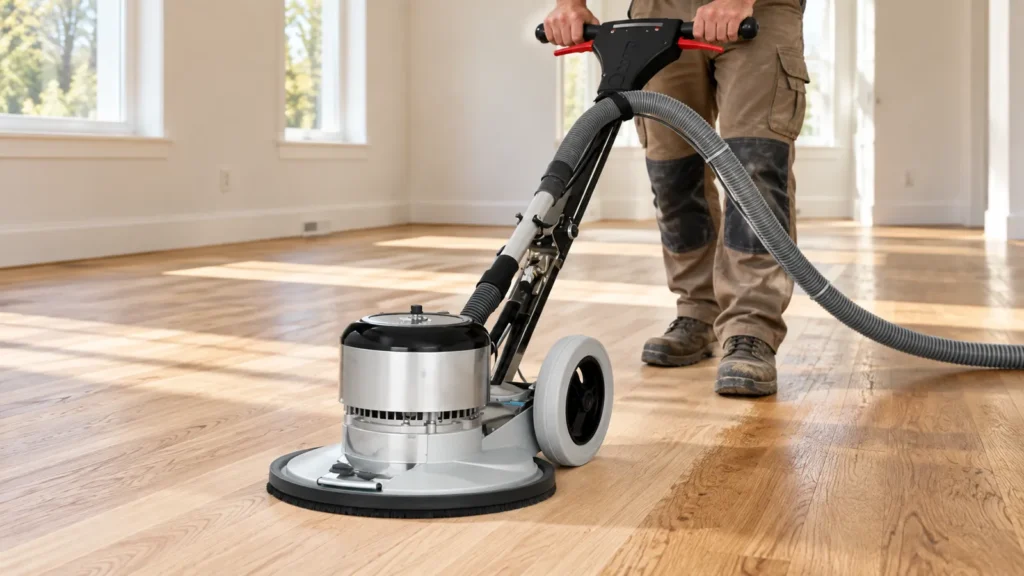
We begin by sealing doorways and kitchen cabinets with plastic sheeting and tape to contain airborne particles. Using high-powered equipment connected to our dust containment floor sanding systems—specifically the Oneida Vortex DCS and Bona Portable DCS 2.0—we strip away the old finish. The initial coarse sanding pass levels the boards and removes surface imperfections.Day 2: Medium and Fine Sanding, Stain Application
Our team completes the hardwood floor sanding sequence using progressively finer sandpaper, never skipping steps to avoid sanding scratches. If you choose hardwood floor staining, we apply about 12-by-12-inch test samples directly onto your raw wood floor so you can confirm the exact color under your home’s natural lighting. Once approved, the stain is applied evenly across the entire surface and allowed to dry.Day 3: Sealer and Initial Finish Application
After the stain dries thoroughly, we apply the initial protective coats. Between coats, we lightly sand as the finish manufacturer’s instructions require. This smooths raised wood fibers and helps the next coat adhere.Day 4: Final Protective Topcoat and Walkthrough
We apply the final commercial-grade topcoat—such as Bona Traffic HD or Loba Supra A.T.—in your chosen level of shine, usually satin. Once dry, we conduct a final walkthrough with you and provide specific post-care guidelines.
Professional vs. DIY Hardwood Floor Refinishing Timeline Differences
DIY refinishing can take longer because learning, corrections, and cleanup add time. Unfamiliar sanding equipment can leave drum marks or gouges that take time to correct.
Dust control varies with the equipment used. Dust left on the floor can interfere with the new finish. Before attempting DIY refinishing, schedule a professional visit to assess the floor and discuss the risks.
What Key Factors Impact How Long Floor Refinishing Takes?
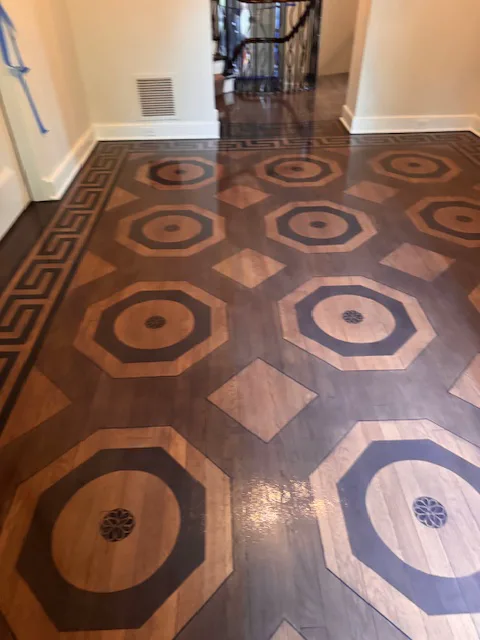
Refinishing timelines vary based on room layout, structural repairs, wood species, temperature, and humidity. Closets, hallways, stairs, and detailed borders require extra sanding along walls, in corners, and around detailed features. Indoor moisture can also slow drying between coats.
Addressing damaged boards is another important consideration. If pet stains, water damage, or gaps require board replacement, a hardwood floor repair adds prep time. This can involve lacing in new boards—fitting new solid wood planks among the existing boards. Reviewing what affects the cost of hardwood floor refinishing can also help you understand how structural issues and project size influence overall planning.
Finish Selection: Water-Based vs. Oil-Based Polyurethane
The finish you choose affects the project schedule. Water-based polyurethane, a protective floor coating, often dries faster than oil-based polyurethane. Odor and levels of volatile organic compounds (VOCs)—chemicals that evaporate into the air—depend on the product.
| Finish Feature | Commercial Water-Based Polyurethane (e.g., Bona Traffic HD) | Traditional Oil-Based Polyurethane |
|---|---|---|
| Dry Time Between Coats | 2 to 4 hours | Up to 24 hours; follow product instructions |
| Coats Applied Per Day | Multiple coats may be possible; follow product instructions | Depends on the product’s required drying time |
| Light Foot Traffic | After about 2 hours | 24 hours |
| Furniture Replacement | About 2 days (48 hours) | Follow finish-specific instructions |
| Full Chemical Cure | About 7 days; varies by product | Up to 30 days |
| Odor & Volatile Organic Compounds (VOCs) | Check the product’s safety and technical information | Check the product’s safety and technical information |
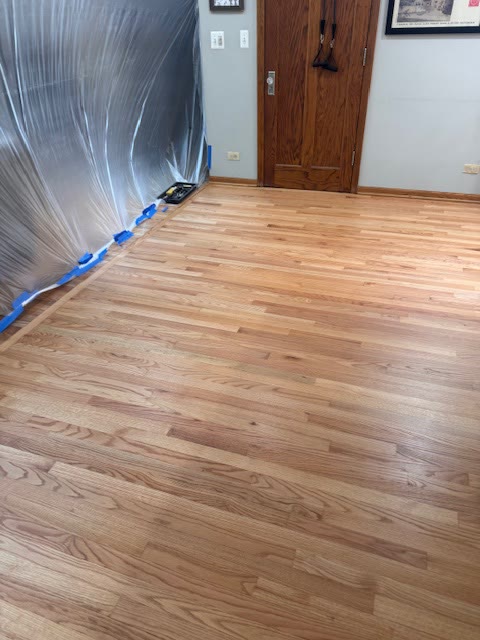
Some water-based finishes allow more than one coat per day. We follow the manufacturer’s instructions for drying time and coat thickness.
Standard Refinishing vs. Maintenance Recoating
Not every worn floor requires full sanding down to bare wood. If your existing finish looks dull or shows minor surface scuffs but the color remains intact, a professional screen and recoat is a fast alternative.
This process, also known as floor recoating, lightly sands the existing topcoat before a fresh protective layer is applied. A buff and recoat typically takes about one working day. Return-to-use timing depends on the finish and site conditions. For smaller touch-ups, read about professional hardwood floor repairs and discuss the right scope with our flooring team.
Drying vs. Curing: When Can You Walk, Add Rugs, and Move Furniture?
With our finish systems, light foot traffic is usually possible after about two hours, and furniture can generally return after about two days. Wait for finish-specific guidance before adding rugs, because a dry surface is not necessarily fully cured.
Drying and curing are different stages. During drying, water or solvents evaporate, leaving the surface firm to the touch. During curing, the finish forms chemical bonds and hardens to its full strength. This can take days or weeks, depending on the product.
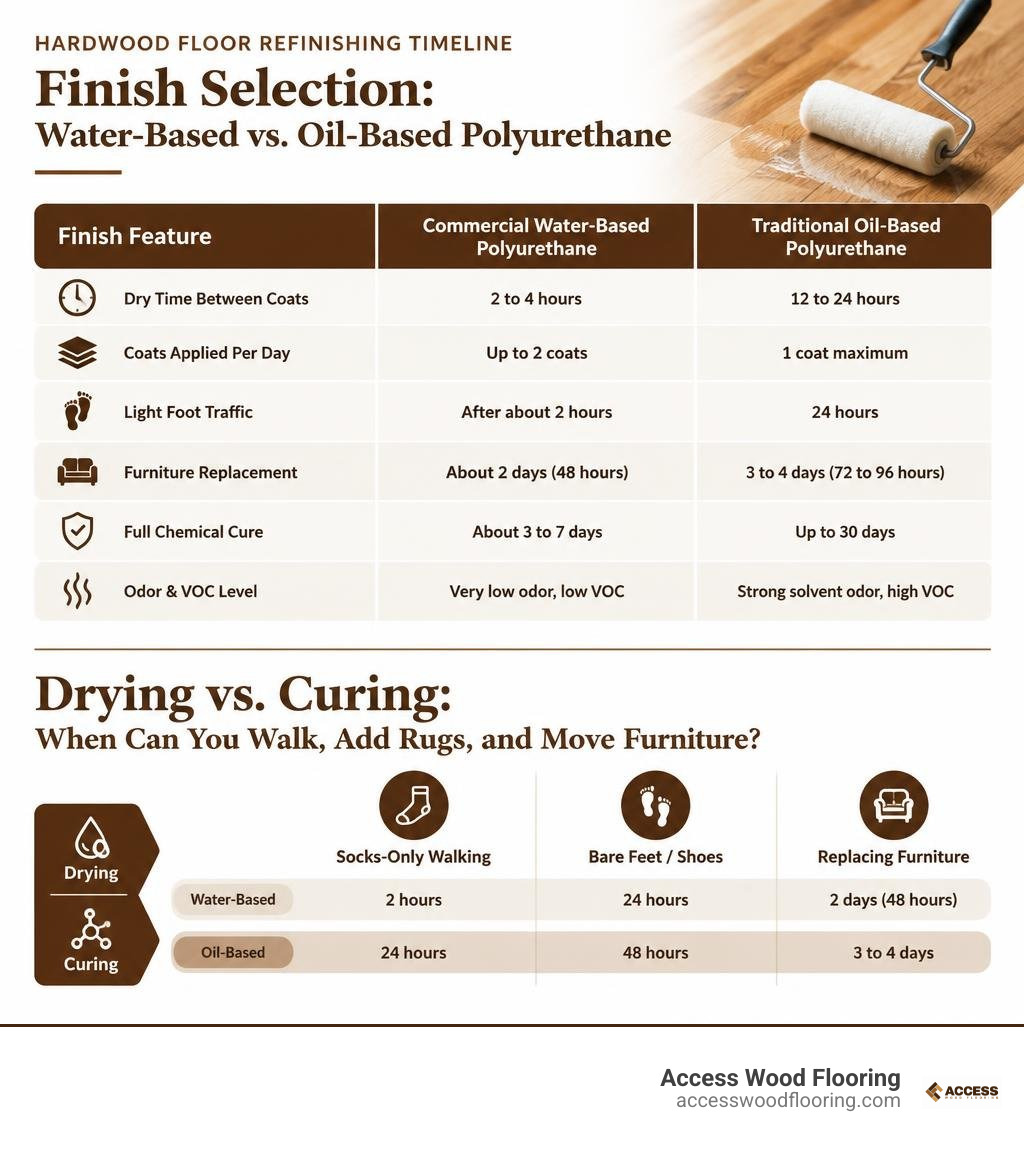
| Stage / Activity | Commercial Water-Based Polyurethane | Traditional Oil-Based Polyurethane |
|---|---|---|
| Socks-Only Walking | About 2 hours after final coat | 24 hours |
| Bare Feet / Shoes | Follow finish-specific care instructions | Follow finish-specific care instructions |
| Replacing Furniture | About 2 days (48 hours) | Follow finish-specific instructions |
| Allowing Pets | Ask your contractor when pets can return; keep claws trimmed | Ask your contractor when pets can return; keep claws trimmed |
| Area Rugs & Runners | Wait for finish-specific approval before covering the floor | Wait for finish-specific approval before covering the floor |
| Full Cure Reached | About 7 days | Up to 30 days |
Preventing early surface stress during the chemical curing window protects the floor from premature wear.
Best Practices for Moving Furniture and Protecting New Floors
Moving furniture back onto newly refinished floors requires careful planning to prevent gouges and scratches:
- Attach Felt Pads: Apply clean, heavy-duty felt pads to the bottom of all chair legs, tables, sofas, and heavy decor before setting them down.
- Lift, Never Drag: Lift furniture pieces completely off the floor. Dragging or rolling items can mark the finish before it reaches full hardness.
- Skip Plastic Sliders: Avoid hard plastic moving sliders, which can trap grit underneath and scratch fresh finish coats.
- Hold Off on Rugs: Wait until the finish has fully cured and you have finish-specific approval before adding area rugs, rubber-backed mats, or runners. Covering the floor too soon can interfere with drying and curing and may affect the finish.
Can You Refinish Floors One Room at a Time or Stay in the House?
Whether you can stay home depends on room access, the finish system, and ventilation requirements. Discuss the work area and the product’s safety instructions with your contractor before deciding to remain on site.
You must stay off wet floors and follow the finish-specific waiting period before walking on them. If the project covers your main entryway, kitchen, or only access hallway, staying off-site during work and initial drying may be more convenient.
Refinishing one room at a time is an option if you need to isolate spaces using plastic containment barriers. That phasing a home project room by room extends the overall multi-day schedule, as each section requires dedicated setup, sanding, and dry times.
What Else Should You Know About Hardwood Refinishing Timelines?
The floor’s remaining wood, condition, and finish system affect whether and when it can be refinished. A professional assessment helps establish a suitable schedule.
How many times can hardwood floors be refinished?
A standard 3/4-inch solid hardwood floor can typically be refinished 5 to 8 times over its lifetime when worked on by skilled professionals. Engineered wood floors with a thick top layer of real wood can generally be sanded and refinished 2 to 4 times. Very thin wood surface layers may rule out sanding. A professional should check whether the existing finish is suitable for a screen and recoat.
How often should hardwood floors be refinished?
Most residential hardwood floors require refinishing every seven to ten years under normal living conditions. Homes with active pets, young children, or high foot traffic near exterior entryways may benefit from refinishing every five to seven years.
Water that no longer beads on the surface can be a sign of finish wear. Have a professional assess the floor before deciding whether it needs refinishing.
How long does floor stain take to dry before topcoating?
Floor stain generally takes 12 to 24 hours to dry under normal indoor conditions. High humidity or cooler temperatures can extend drying to 36 hours or longer, depending on the product. We follow the stain manufacturer’s drying instructions before applying clear coats to help prevent peeling or cloudiness.
How Can You Plan Your Hardwood Refinishing Project?
Plan living arrangements around about four working days of refinishing work. Confirm room access and finish-specific waiting periods for walking, furniture, and rugs with our team before work begins.
Access Wood Flooring serves residential homeowners across Chicago’s North Shore and northwest suburbs, including Lake Forest, Winnetka, Wilmette, Glencoe, Kenilworth, Highland Park, Lake Bluff, Evanston, Northbrook, Glenview, Deerfield, Lincolnshire, Barrington, Palatine, Arlington Heights, Schaumburg, and Hoffman Estates.
To explore our full range of residential services—including wood floor refinishing, staircase matching, and custom installations—or to arrange your free in-home consultation with laser measurements and a detailed written estimate, contact our family team today.