A recoat refreshes a lightly worn finish, while full sanding addresses deeper wear and allows a stain-color change. We assess your floor before recommending the right approach for your North Shore home.
Does My Floor Need Full Sanding or Just a Recoat?
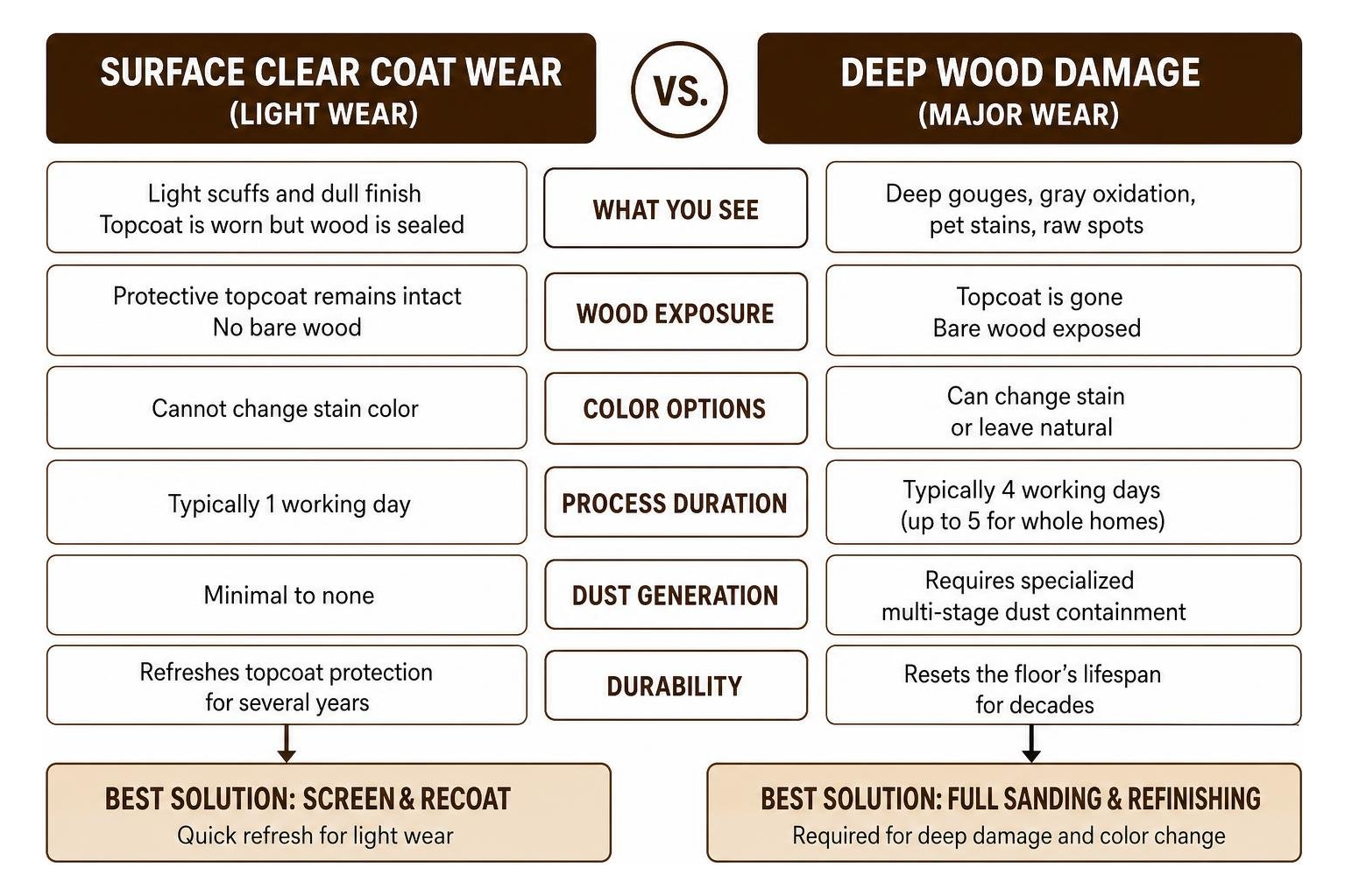
A recoat may be enough when the protective finish is intact and has only light surface scuffs. Deep scratches, bare wood, or a desired stain-color change may call for full sanding.
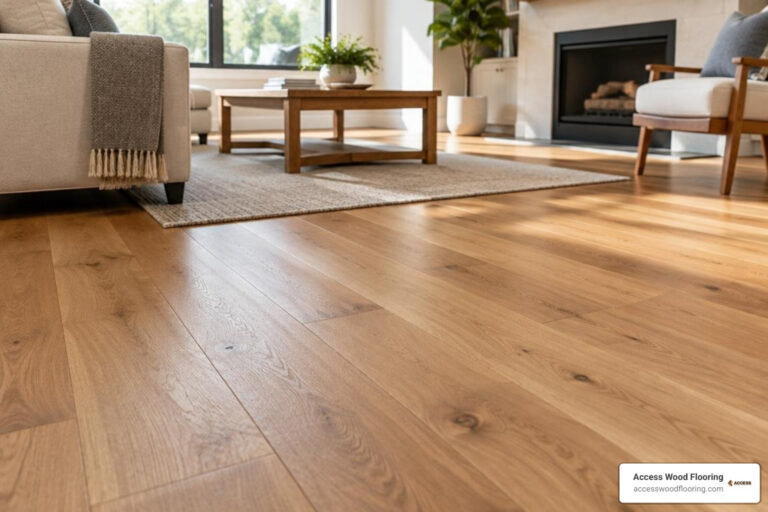
Wood floor restoration can involve recoating or full sanding. A buff and recoat refreshes a dull finish. Full sanding addresses deeper wear and allows a color change. If your floor’s protective finish is intact with only light surface scuffs, a one-day screen and recoat can restore shine without removing wood. Deep scratches, gray areas, pet stains, or bare wood may call for full sanding. Some damage may also need board repairs. Access Wood Flooring offers hardwood floor refinishing North Shore homeowners can rely on, beginning with an assessment to recommend the right level of work. Our team helps homeowners restore and protect their wood floors.
| Factor | Buff and Recoat (Screen & Recoat) | Full Sanding and Refinishing |
|---|---|---|
| Wear Level | Light surface scuffs, dull finish, intact topcoat | Deep gouges, bare wood, gray areas, pet stains |
| Wood Exposure | Wood is completely sealed; no bare spots | Bare wood exposed to open air and moisture |
| Color Change | Cannot change the stain color | Allows a new stain color or a natural finish, within the wood’s limits |
| Process Duration | Typically 1 working day | Usually about 4 working days; larger projects may take longer |
| Dust Generation | Minimal to none | Requires specialized multi-stage dust containment |
| Durability | Renews protection against everyday wear. | Renews the finish and removes surface wear |
When Your Floor Needs Full Sanding and Refinishing
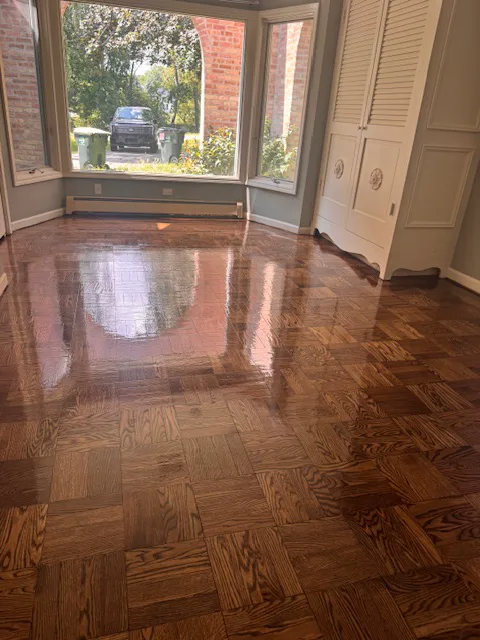
When the clear protective finish wears away, bare wood is exposed to wear and moisture. Look for dull, grayish areas in busy hallways or kitchen work zones. Graying can be a sign that unprotected wood has been affected by moisture, dirt, and exposure to air.
Deep scratches that catch your fingernail, dark pet urine stains, or boards with raised edges from past plumbing leaks need more than a surface treatment. Wood floor refinishing may remove the damaged surface and expose clean wood. Moisture problems must be addressed first, and some stains or damaged boards may need repairs rather than sanding alone.
A full floor refinishing plan is also needed to change your floor’s stain color. For example, you might want to move from golden oak to a muted brown or natural tone. For engineered wood flooring, we check the thickness of the wear layer—the real wood on top—to see whether it can be safely sanded.
When a Quick Recoat Is Sufficient
Full sanding is often unnecessary if the floor still has an even color and no bare spots, gray patches, or deep moisture rings. Chairs, vacuum wheels, and pets can leave tiny scratches in the finish. These scatter light and make the floor look cloudy.
In these circumstances, our screen and recoat service offers an efficient alternative. During this one-day procedure, we lightly roughen the existing finish with buffing screens. This helps the new finish stick. Periodic floor recoating restores an even shine, covers shallow scuffs, and renews the protective finish before the wood itself is damaged.
How Will You Refinish My Hardwood Floors?
We assess your floor, make any needed board repairs, and sand with dust containment. We then sample stain colors on your floor and apply the selected stain and protective finish.
Floor Assessment and Board Repairs
We use a laser to measure the floor area. We also assess the floor’s condition and remaining wood before recommending work.
If our team identifies split planks, splintered edges, or severe board damage, we perform targeted hardwood floor repair before bringing in heavy machinery. We match the wood species and board width as closely as possible, then lace replacement boards into the existing floor, fitting them into a staggered pattern. We explain how closely the repaired area can match.
Bare Wood Sanding and In-Home Stain Sampling
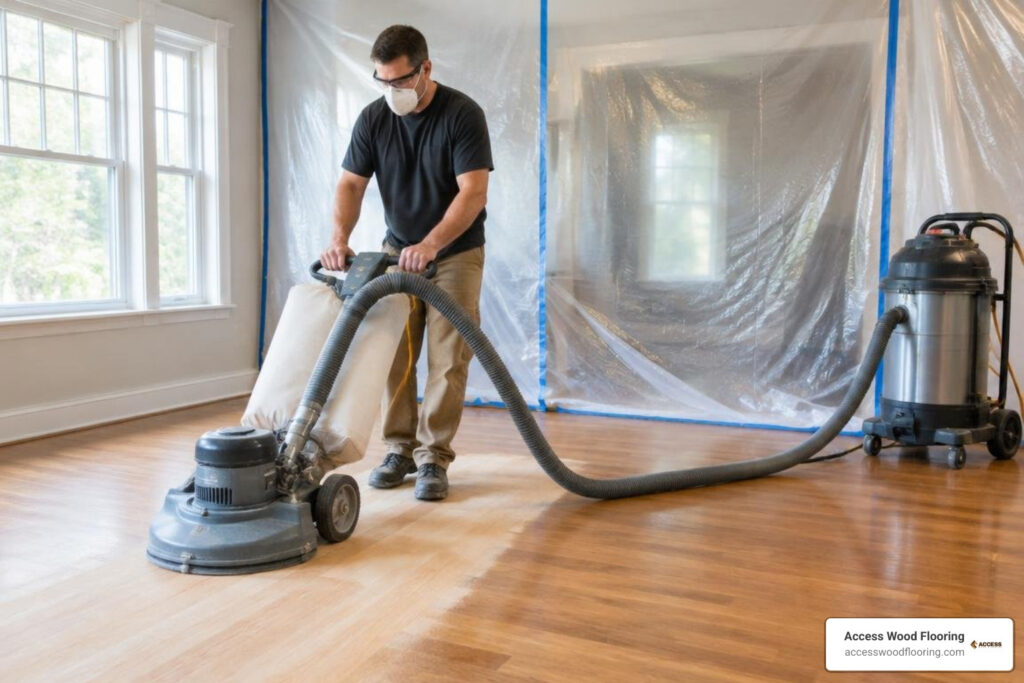
Once repairs are complete, we sand the floor in stages. Our sanding equipment connects to dust collectors such as the Oneida Vortex DCS and the Bona Portable DCS 2.0. Our dust containment floor sanding systems collect dust where the sandpaper meets the floor. This reduces airborne dust, though some dust can still settle nearby.
Our team makes multiple passes of hardwood floor sanding. We start with coarse sandpaper and move to finer sandpaper and sanding screens. This sequence levels uneven board edges, removes old, yellowed finishes, and leaves a smooth, bare surface.
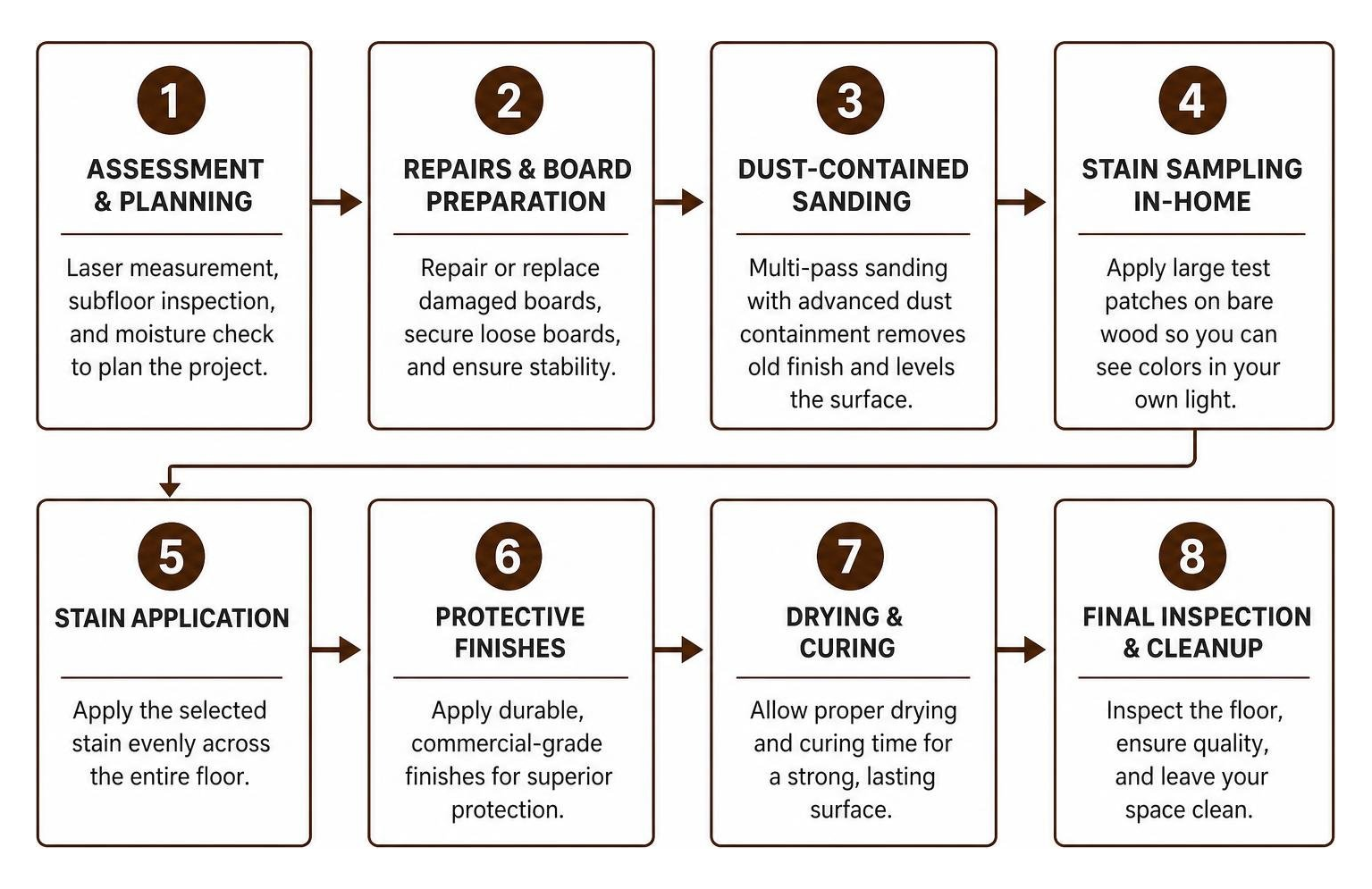
A small store swatch may look different from stain on your own floor. After sanding to bare wood, we apply stain samples directly to your floor. Each sample is about 12 × 12 inches. You can compare colors, including a custom blend of Classic Gray and Provincial, in daylight and under your evening lights.
Protective Commercial Finishes and Sheen Selection
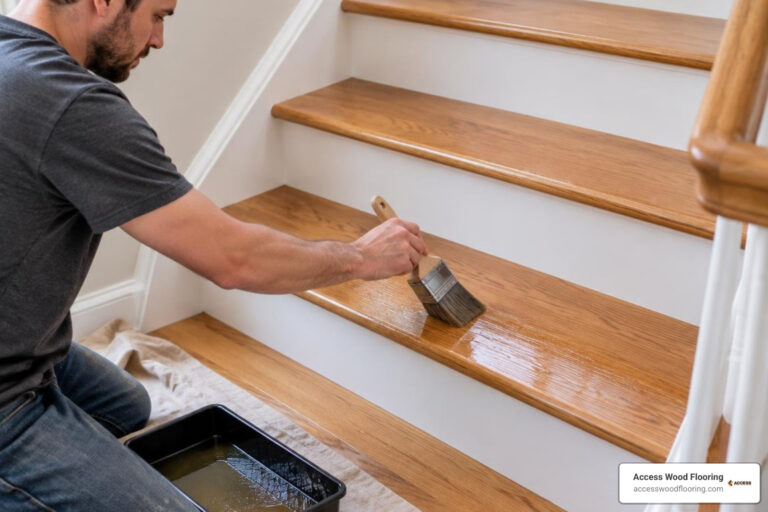
After your stain dries, we apply a protective finish. We use commercial-grade finishes such as Bona Traffic HD and Loba Supra A.T. to protect the floor from everyday wear.
You can choose how shiny the finish looks:
- Satin: Our most popular North Shore option, with a soft glow.
- Semi-Gloss: A shinier finish that highlights the natural wood grain.
For homes with more than one story, we coordinate stair treads (the steps), risers (the vertical faces between steps), and landings with the adjoining floors. Explore our full lineup of services.
How Long Will Refinishing Take, and Can I Stay Home?
Sanding and refinishing typically takes about four working days, while a buff and recoat takes about one day. Whether you can stay home depends on the layout and which rooms are being refinished.
Project Timelines and When You Can Use Your Floors
A standard sanding and refinishing project on an average residential layout takes approximately four working days. Larger projects may take longer. In contrast, buffing and recoating projects are generally completed in a single day.
These are general return-to-use times. They depend on the finish and conditions in your home. At the final walkthrough, we explain when you can use the floor and provide care instructions.
- Light Foot Traffic (Stocking Feet): Usually permitted about 2 hours after finish application, depending on the finish and conditions.
- Furniture Replacement: Furniture can usually return after about 2 days. Use protective felt pads beneath furniture legs.
- Rugs and Pets: Ask our team when rugs and pets can return. Follow the instructions for your finish, and keep pets’ nails trimmed to help prevent scratches.
Preparing Your Home for Hardwood Floor Refinishing
Proper preparation ensures our crew can work efficiently while protecting your personal belongings. We recommend clearing the work zone of small decor, plants, breakables, and low-hanging draperies before our arrival.
Our dust containment systems collect most sanding dust as it is made. We also protect kitchen cabinets and doorways with plastic sheeting and painter’s tape. Whether you can stay home depends on the layout and which rooms are being refinished. We discuss room access before work begins. If you have a pressing moving deadline, urgent projects can often be scheduled to start within about a week.
What Affects the Cost of Refinishing My Floors?
Cost depends on the floor area, wood condition, needed repairs, and selected finish. Request a free in-home written estimate for your project.
Refinishing can preserve your home’s existing wood floors. Solid hardwood can often be restored more than once, depending on its condition and remaining thickness.
Project pricing reflects the total square footage, the existing condition of the wood, the need for custom board repairs, and your selected finish system. To ensure clarity, we provide free in-home estimates with laser measurement and a detailed written estimate of the work, materials, and finish products before work begins.
You can see real-world examples of our craftsmanship in our gallery and read direct feedback from local homeowners in our testimonials.
What Else Should I Know Before Refinishing My Floors?
Not every floor can be sanded, and refinishing alone will not permanently fix seasonal gaps. Stain can soften red oak’s warm appearance, but some undertones will remain.
Can Every Wood Floor Be Sanded and Refinished?
No. Suitability depends on how the floor is built, how much wood remains, and how often it has been sanded:
- Solid Hardwood: Solid hardwood can often be sanded more than once, depending on its condition and remaining thickness. Enough wood must remain above the tongue-and-groove joint where the boards fit together.
- Engineered Hardwood: These planks have a real wood top layer over a layered core. Some have thicker top layers, such as 3mm to 6mm, that may allow sanding. The floor still needs an assessment. Floors with very thin top layers may be limited to recoating, if the existing finish is compatible.
For additional wood flooring information, visit the National Wood Flooring Association.
Will Refinishing Fix Gaps Between Floor Boards?
Refinishing alone will not permanently eliminate wide gaps between boards caused by seasonal humidity shifts. During North Shore winters, dry indoor heating pulls moisture from wood planks, causing them to shrink and reveal small gaps. When humid summer air returns, the boards expand and close those spaces naturally.
Filling gaps that open and close with the seasons with rigid wood filler often leads to cracking and crumbling. This happens as the floor expands and contracts throughout the year. We assess whether gaps relate to seasonal movement, installation, or damage before recommending a treatment.
Can You Make Orange Red Oak Floors Look Modern and Neutral?
Yes. Older oil-based floor finishes react with oxygen and can turn yellowish-orange as they age. Combined with red oak’s natural warm, pinkish tones, this can make the floor look dated.
During our bare-wood preparation, we strip away these aged amber coats entirely. We sample stain colors on your floor. A soft brown or neutral mid-tone can soften the red appearance, while a clear water-based finish stays lighter than many older oil-based finishes. Red oak will still retain some warm undertones.
How Do I Get Started With My Floor Refinishing Project?
Start by requesting a free in-home estimate. We assess your floor and recommend an approach that fits its condition. A one-day recoat or full sanding and refinishing can help protect your wood floors.
Access Wood Flooring provides dust-contained sanding and a detailed written estimate before work begins. Our team answers calls directly or returns messages within about an hour.
Learn more on our main page. Ready to restore your wood floors? Request a free in-home estimate.