Minor scratches can often be concealed with a finish-compatible touch-up product or color-matched wax. Have a flooring professional assess exposed core material or widespread wear before attempting repairs.
How Can You Fix Scratches in Engineered Hardwood Floors?
The repair depends on whether damage affects the finish, wood veneer, or core. DIY products can leave a color mismatch or interfere with a later coating, and sanding can expose the core. Arrange an in-home professional assessment before attempting repairs.
Wax can conceal a deep gouge, but it does not repair damage to the core. A flooring professional can assess whether the plank needs replacement.
I’m Peter Dudzik, owner of Access Wood Flooring. I’ve spent over 30 years sanding, refinishing, and repairing hardwood floors, including fixing scratches in engineered hardwood floors where protecting the thin wood layer matters.
How Can You Assess Scratch Damage on Engineered Wood?
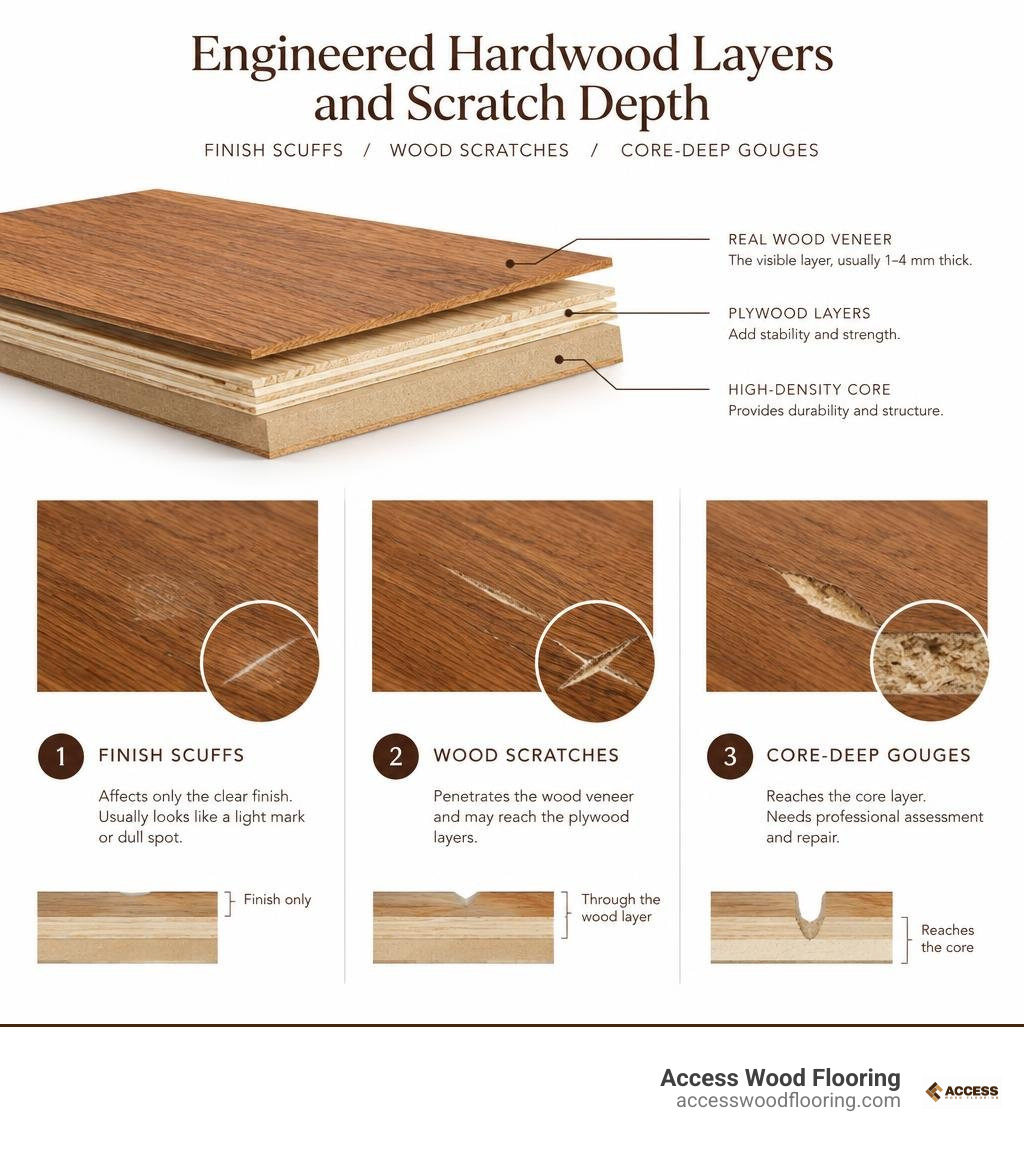
Check whether the scratch affects only the clear finish, reaches the thin real-wood top layer (veneer), or exposes the core underneath. Engineered flooring has a veneer over layers of plywood or compressed wood fibers, so scratch depth determines the repair approach. For a manufacturer overview of common scratch repairs, see From the Forest’s engineered hardwood scratch guide.
We generally divide scratches into three severity levels:
- Surface Scuffs: These marks affect only the protective topcoat. The clear coat might look cloudy or show a faint white line, but the stain and wood grain underneath remain intact.
- Moderate Scratches: These go through the polyurethane or factory finish and penetrate the top layer of real hardwood. You may see a color change where the raw wood is exposed.
- Deep Gouges: These occur when heavy furniture drags across a room or a sharp object cuts clean through the veneer. If you see horizontal plywood grain, fiberboard, or a pale backing material, the scratch has cut through the wood veneer, also called the wear layer.
| Scratch Severity | Typical Damage | Possible Cosmetic Treatment | Professional Recommendation |
|---|---|---|---|
| Surface Scuff | Clear finish scuffed; wood intact | A compatible touch-up product may reduce visibility after professional assessment | Floor recoating for widespread wear |
| Moderate Scratch | Finish breached; veneer wood exposed | Color-matched cosmetic concealment, subject to finish compatibility | Spot repair or isolated board touch-up |
| Deep Gouge | Cut through veneer into core material | Cosmetic concealment cannot restore damaged core material | Board replacement or fitting new boards into the existing rows |
Identifying Scratch Depth: Finish vs. Real Wood Layer
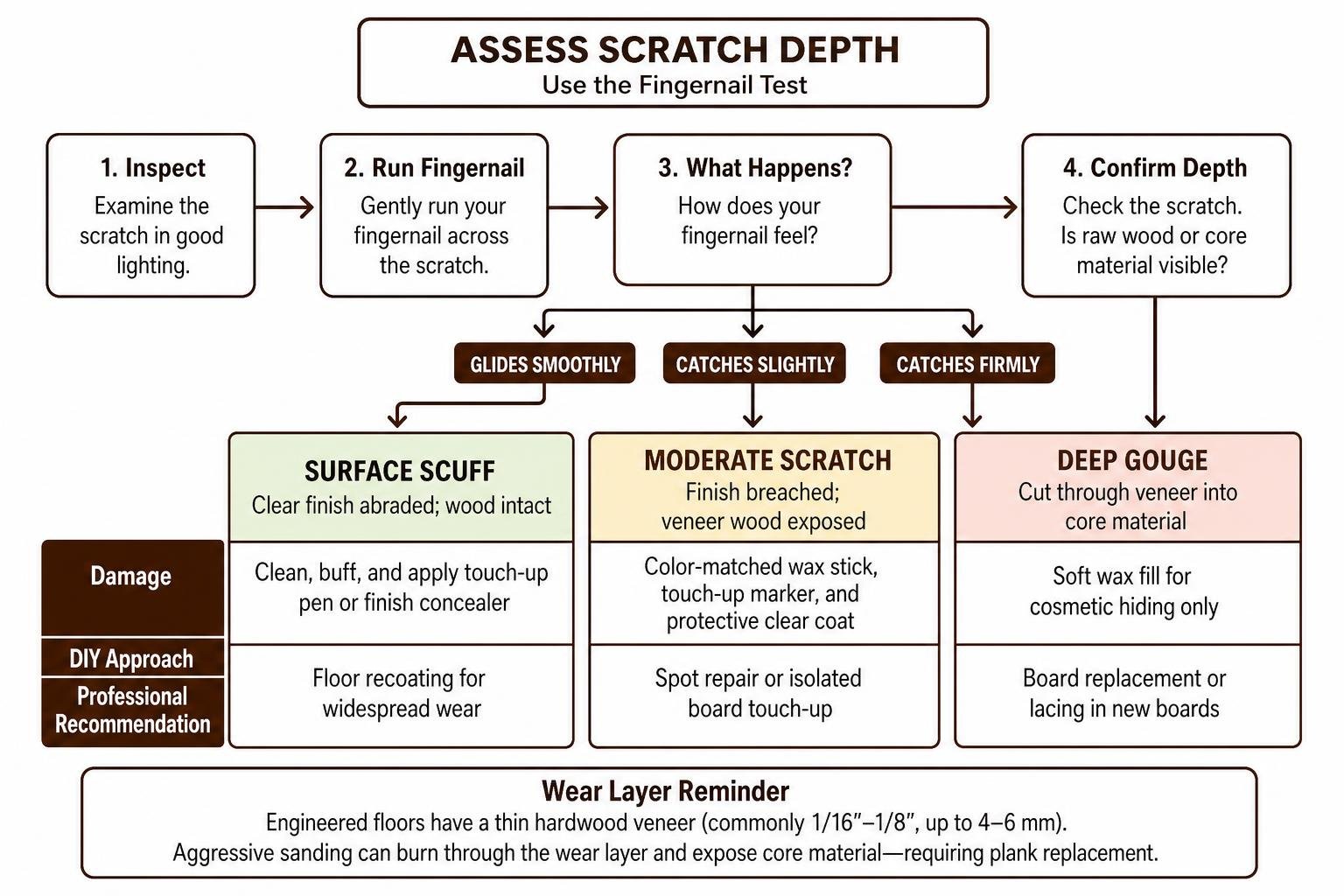
A quick way to check damage depth is the fingernail test. Gently run your fingernail across the scratch.
A mark that does not catch a fingernail may be shallow, but this test alone cannot establish which layer is damaged. A professional can assess whether treatment may reduce its visibility.
A slight catch indicates a groove, but does not by itself prove that the scratch reaches the veneer.
Visible plywood or fiberboard indicates damage through the veneer. A color difference or a firm fingernail catch alone does not establish that the core is exposed.
Understanding Wear Layer Limitations on Engineered Planks
Standard engineered wood flooring consists of a real hardwood veneer bonded under heat and pressure to a core. The core is plywood with alternating grain directions or high-density fiberboard (HDF), made from compressed wood fibers.
Wear-layer thickness varies by product. Check the manufacturer’s specifications and have a professional assess how much wood remains before considering sanding.
Aggressive sanding can cut through a thin veneer and expose the core. Stain cannot recreate the missing hardwood layer, and plank replacement may be necessary. Understanding your floor’s wear layer is an important step before considering any physical repair.
How Can Professionals Treat Minor Scratches Without Sanding?
A professional may recommend compatible touch-up products or cosmetic fillers for isolated scratches. DIY repairs can leave visible patches or keep a new coating from bonding properly, so schedule an in-home visit to assess the finish and damage first.
Professional Assessment Before Scratch Repair
Loose grit can cause additional scratches during repair, and incompatible products can complicate later recoating.
During an in-home visit, a flooring professional can assess scratch depth, the existing finish, and past cleaning products before recommending treatment.
Professional Treatment of Surface Scuffs
Superficial scuffs often happen from shoe heels, pet claws, or toys. When damage is limited to the finish, treatment may not require sanding to bare wood.
A professional can determine whether isolated touch-ups or a screen and recoat would suit the floor. Wax and some polish products can interfere with a new coating, so product compatibility matters.
Limits of Cosmetic Fillers for Veneer Scratches
When the scratch cuts through the finish into the wood veneer, a finish-compatible, color-matched wax stick may help conceal the damage. Wax fills the physical void without requiring you to sand down the surrounding veneer.
A cosmetic fill may remain visible and does not restore a damaged core. A professional visit can establish whether concealment is reasonable or the plank needs replacement.
Can Engineered Hardwood Floors Be Sanded or Recoated?
Homeowners frequently ask if they can sand their engineered hardwood just like solid wood flooring. Sanding may be possible if enough veneer remains and the boards are in suitable condition. A professional screen and recoat may refresh finish wear without sanding down to bare wood.
Veneer Thickness Risks and When to Avoid Sanding
Standard residential drum sanders remove wood with each pass. A thin or previously sanded veneer may not tolerate further sanding. A professional should assess the remaining wood, floor condition, and manufacturer’s guidance rather than rely on a single thickness cutoff.
Even on floors with thicker veneers, DIY sanding carries major risks:
- Existing Veneer Separation: Areas where the veneer is separating from the core need professional assessment before sanding.
- Uneven Dips: Poor sanding technique can leave dips or visible sanding marks.
- Core Exposure: Sanding over uneven subfloors can cause the machine to dig deeply into high spots, exposing the plywood core beneath.
If moderate damage is spread across multiple boards, avoid spot-sanding by hand. Instead, consult a contractor who uses professional hardwood floor sanding techniques appropriate for the remaining wear layer, along with dust-containment systems to control sanding dust.
Refreshing Worn Finishes with a Screen and Recoat
If your engineered floor has many superficial surface scratches, tiny scratches from pet claws, or dull traffic paths, you may not need to sand down to raw wood. A professional screen and recoat may refresh the finish without removing the wood veneer.
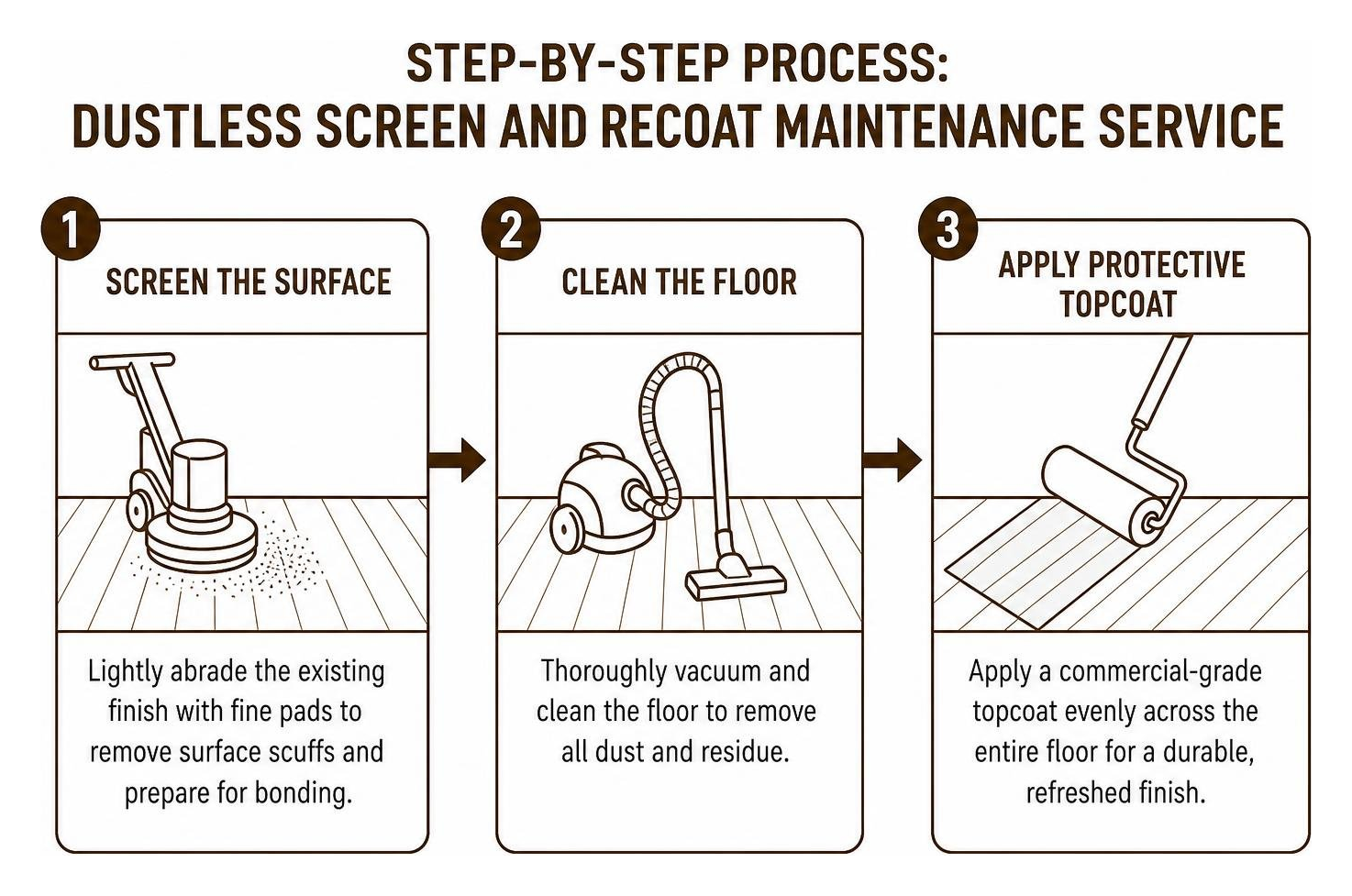
During this process:
- The existing finish is lightly abraded (screened) using fine pads to remove surface scuffs and prepare the surface for bonding.
- The floor is vacuumed and cleaned to remove all residue.
- A commercial-grade topcoat, such as Bona Traffic HD or Loba Supra A.T. (typically in a satin sheen), is applied across the entire floor.
A screen and recoat can refresh the sheen and add protection without sanding to bare wood. The work typically takes about one day, but it will not repair deep scratches or damage below the finish.
How Can You Prevent Scratches on Engineered Hardwood?
Engineered hardwood can last for decades, but preventing scratches is easier than repairing them. Use felt furniture pads, keep grit off the floor, lift heavy items, and keep pet nails trimmed.
Protecting Floors from Furniture, Pets, and Footwear
- Felt Furniture Pads: Attach heavy-duty wool or felt pads to the bottom of all chair, table, and couch legs. Check these pads every few months, as grit can embed in the felt and create scratches.
- Never Drag Heavy Furniture: When rearranging furniture or moving appliances, lift the items completely or use thick moving blankets and specialized hard-surface floor glides.
- Pet Nail Maintenance: Keep dog and cat nails trimmed and filed smoothly. Sharp claws compress and scratch wood finishes when pets run through hallways.
- Entry Mats and Shoes-Off Policy: Place high-quality doormats both outside and inside all exterior doors. Sand, small pebbles, and salt act like sandpaper under shoes. Instituting a shoes-off policy prevents grit and high heels from damaging the finish.
Optimal Indoor Climate and Routine Floor Care
Wood expands and contracts with changes in temperature and humidity. Engineered planks expand and contract less than solid wood, but they are not immune to extreme climate swings.
- Maintain Stable Humidity: Keep indoor humidity within the range recommended by your flooring manufacturer. Use a whole-house humidifier during dry winter heating months and air conditioning or a dehumidifier in the summer as needed. Stable humidity helps limit drying, cracking, and gaps where board edges can be vulnerable to chipping.
- Gentle Cleaning Routine: Sweep or vacuum using a bare-floor brush attachment once or twice a week. Clean high-traffic zones using a microfiber mop lightly misted with a pH-neutral hardwood floor cleaner (neither acidic nor alkaline).
- Avoid Wet and Steam Mops: Never use steam mops or soaking wet string mops on engineered floors. Steam can force moisture into the small beveled edges between boards and the core layers. This can cause the veneer to peel, swell, or separate from the core. For a complete breakdown of safe maintenance habits, check out our cleaning tips guide.
When Should You Hire a Professional for Engineered Floor Scratches?
Call a flooring professional when scratches expose the core across several boards, the finish has worn through, or boards show water damage, chips, or splits. Wax sticks and touch-up markers are better suited to isolated cosmetic scratches.
Consider calling a professional when:
- The Wear Layer Is Breached Across Large Areas: Wax does not restore exposed core material, and cosmetic repairs across multiple planks may remain visible.
- Water Damage or Cupping (Raised Board Edges) Occurs: Moisture stains, dark board edges, or buckling planks require structural inspection.
- The Finish Has Worn Down to Raw Wood: In heavy traffic paths where the protective coat has completely vanished, a professional wood floor refinishing or recoating assessment is necessary.
- Planks Are Chipped or Split: Damaged planks may need to be carefully extracted and replaced without harming surrounding boards.
Addressing Severe Core Damage, Veneer Separation, and Board Replacement
When a gouge ruins an engineered plank beyond the reach of cosmetic fillers, the standard fix is board replacement.
Board replacement is a precision task. A professional removes the damaged board and fits a matching spare plank. The installation method determines how the replacement is secured. Matching the surrounding floor may also require nearby finish work.
What Should Homeowners Know About Engineered Floor Scratch Repairs?
Many minor scratches can be concealed without sanding, but the repair must suit the scratch depth and floor finish. Follow the repair product’s curing instructions and keep indoor humidity stable.
Can scratches on engineered hardwood floors be repaired without sanding?
Some scratches can be concealed without sanding, but the options depend on damage depth and finish compatibility. DIY products can leave visible patches or interfere with future recoating. Schedule a professional visit to determine whether touch-ups, recoating, or board replacement are appropriate.
How long does wood filler take to cure on engineered flooring?
Drying, curing, coating, and foot-traffic requirements vary by product. A professional should follow the selected product’s instructions rather than assume a universal waiting time.
Will indoor humidity fluctuations make floor scratches worse?
Humidity changes can cause engineered wood to expand and contract, but they do not necessarily worsen a surface scratch. Follow the flooring manufacturer’s humidity guidance. Have a professional assess new cracks, gaps, or veneer separation.
How Can a Professional Help Restore Scratched Engineered Hardwood?
Dealing with scratches on engineered hardwood requires a gentle approach to protect the real wood veneer. A flooring professional can assess the damage and recommend touch-ups, recoating, or board replacement based on scratch depth and the remaining wood layer.
Access Wood Flooring is a family-owned hardwood flooring company founded in 1996 and based in Hoffman Estates, IL. We serve homeowners across Chicago’s North Shore and northwest suburbs. Owner Peter Dudzik brings more than 30 years of hands-on experience to every home. We specialize in precision hardwood floor repair, dust-contained sanding, screen and recoat services, and custom refinishing using commercial-grade finishes like Bona Traffic HD and Loba Supra A.T.
If your wood floors have suffered scratches, gouges, or finish wear, let our family team help restore them. We provide free in-home estimates using laser measurements and supply detailed written proposals tailored to your home.
To schedule your free in-home estimate, contact us online at Access Wood Flooring.