Revive Tired Hardwood Floors: Choosing Between a Recoat, a Full Refinish and a New Stain
A screen and recoat refreshes worn finish without changing the wood color. Full sanding is the better choice when wear reaches the wood or you want a new stain color.
Does Your Hardwood Need a Screen and Recoat or Full Sanding?
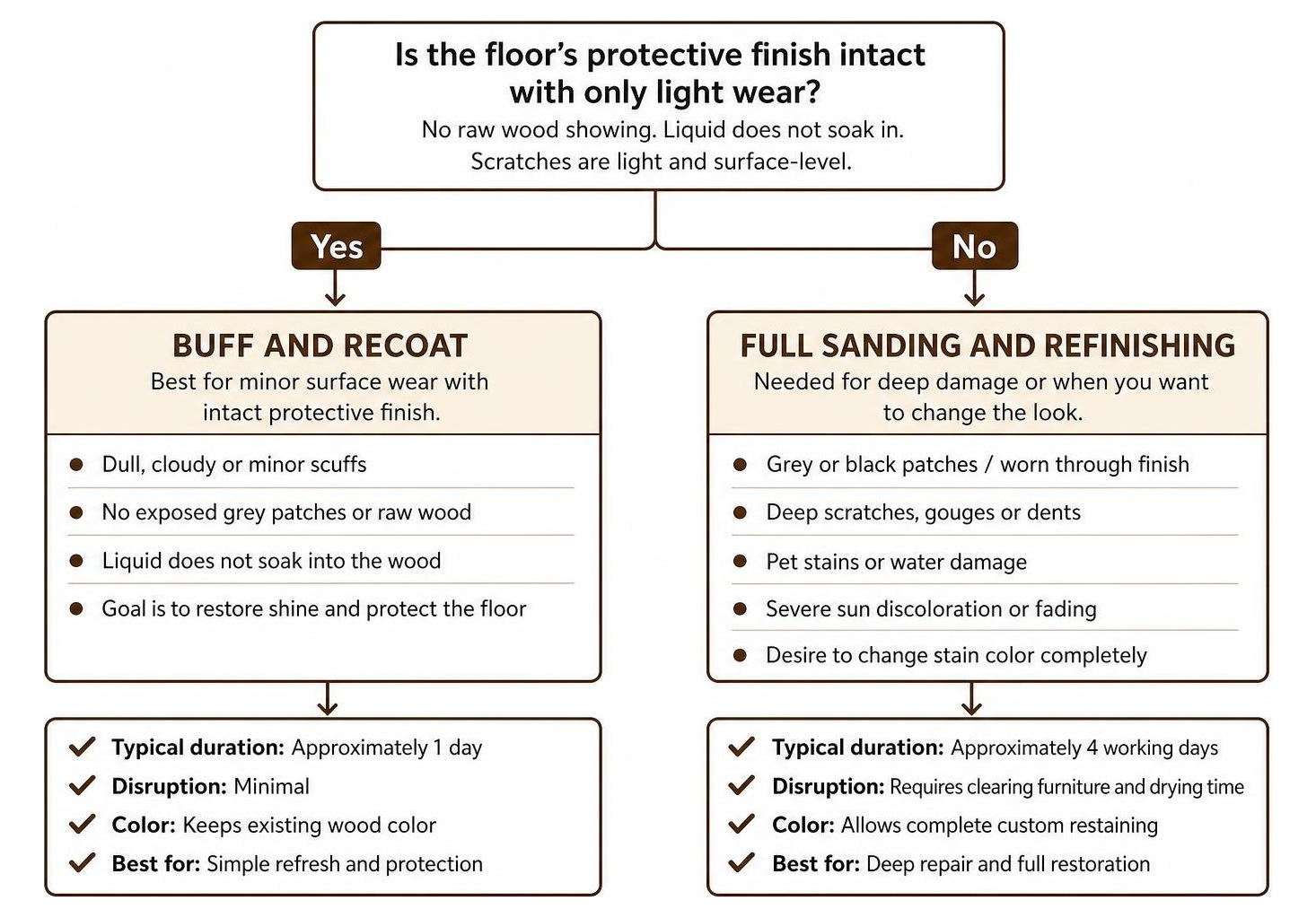
A screen and recoat suits floors with dull or lightly scuffed finish that still covers the wood. Full sanding may be needed for exposed wood, deep damage, or a color change. We inspect the floor before recommending either service.
A routine screen and recoat maintenance process refreshes the polyurethane, the clear protective finish over the wood. We lightly roughen that finish with buffing pads so the new coat can grip it. We then vacuum, wipe away remaining dust, and apply a fresh protective coat. This process does not alter the color of your wood and will not remove deep gouges. It restores an even sheen and reinforces your floor against daily wear.
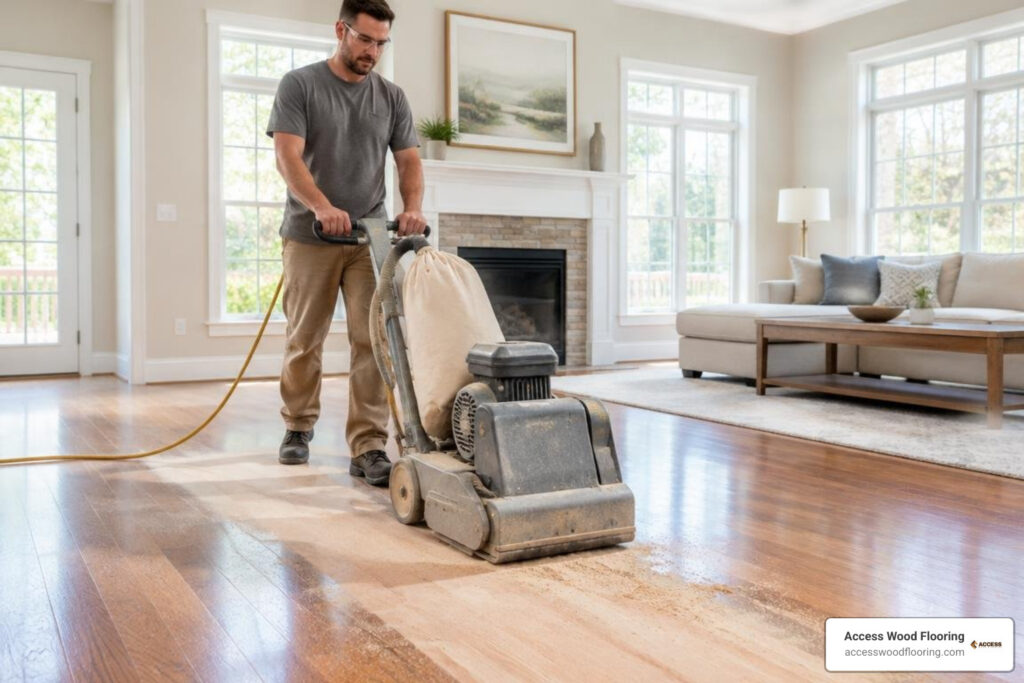
Full sanding, by contrast, removes all existing finish, stain, and a thin layer of wood. This exposes bare wood, flattens uneven board edges, and eliminates scratches, stains, and sun discoloration.
| Floor Condition Factor | Screen and Recoat | Full Sanding and Refinishing |
|---|---|---|
| Primary Target | Top protective polyurethane coat | Bare wood, stain layer, and deep damage |
| Typical Project Duration | Approximately 1 day | Approximately 4 working days |
| Color Alteration | Keeps existing wood color | Allows complete custom restaining |
| Surface Scratches | Masks superficial surface haze | Erases scratches penetrating the wood |
| Deep Pet & Water Stains | Cannot fix or conceal | Sanded out or repaired with new boards |
| Downtime for Homeowner | Minimal disruption | Requires clearing furniture and drying time |
When a Buff and Recoat Is Sufficient
A buff and recoat is suitable when your polyurethane finish has grown dull, cloudy, or marked by minor surface scuffs from shoes and pets, but the protective layer remains intact. As long as liquid does not soak into the timber and there are no exposed gray patches of raw wood, our floor recoating process can restore a clean satin appearance.
This approach is an efficient way to prolong the lifespan of your floor. Because it does not involve cutting into the wood, it preserves the wear layer—the wood available for future sanding. A buff and recoat is typically completed in just one day, allowing you to return to your normal routine quickly.
When Full Sanding and Refinishing Is Necessary
When damage penetrates through the polyurethane into the wood fibers, a recoat will no longer help. New finish cannot adhere properly over bare wood or contaminated areas, and applying clear coats over deep scratches only highlights the imperfections underneath.
You will need professional floor refinishing if you observe:
- Gray or black patches where foot traffic has worn away the topcoat and exposed bare wood to moisture and dirt.
- Deep gouges or dents from dropped objects or heavy furniture dragged across the room.
- Dark pet stains or localized water damage from potted plants and plumbing leaks.
- Severe discoloration or fading caused by direct ultraviolet sunlight.
- A desire to change your stain color completely, such as transitioning from an ambered golden tone to a modern natural or neutral finish.
What Affects the Cost to Sand and Refinish Wood Floors?
Floor area, room layout, wood species, remaining wood thickness, and damage affect the work required. Stairs, repairs, and finish choices also influence cost. General evaluation guidelines from Realtor.com emphasize that wood species density, existing finishes, and subfloor stability directly impact labor requirements.
The species of wood on your floor plays a significant role:
- Red Oak and White Oak: These are the most common hardwoods found in residential homes. They sand predictably, take stain evenly, and offer excellent durability. White oak is slightly harder and features tighter grain lines, which can affect how custom stain colors look.
- Maple and Hickory: Both are hard woods, but their grain structures differ. Maple needs careful sanding and stain preparation to avoid uneven color. Water-popping means lightly wetting the sanded wood to raise its grain before staining.
- Pine and Softwoods: Older homes often feature historic pine. Because softwoods are less dense, they need a carefully chosen sequence of sandpaper grits. This helps avoid sanding the softer spring-growth wood lower than the surrounding grain.
The thickness of the remaining wood also matters. Solid hardwood can typically be sanded multiple times over its life, as long as enough wood remains above the interlocking edges that join the boards.
How Layout and Room Dimensions Impact the Cost to Sand and Refinish Wood Floors
Square footage is only the starting point when evaluating a project. The layout and flow of your home determine how our equipment moves across the floor and how much detailed handwork is required.
- Open Floor Plans vs. Compartmentalized Rooms: Wide, continuous spaces allow large belt sanders to run smoothly and efficiently. Small rooms, narrow hallways, and walk-in closets need more work with smaller edge sanders and sanders that move in small circles near baseboards.
- Transitions and Doorways: Blending new finishes into adjoining rooms that are not being refinished requires precise stopping points and threshold transitions.
- Staircases: Stairs cannot be sanded with standard floor machines. Each tread (the surface you step on), riser (the upright face), and return (the tread’s finished side edge) needs smaller tools. Handrails, stringers (the sloping stair supports), and wrought-iron railing spindles also need detailed preparation to coordinate with the adjoining floors.
How Surface Damage and Wear Modify the Cost to Sand and Refinish Wood Floors
If your floor has sustained localized damage over the years, preparation goes beyond standard sanding passes. Moisture from old radiator valves, refrigerator ice lines, or exterior doors can cause rot or cupping, where board edges rise above the center.
When individual boards are split, stained through their entire thickness, or warped, we provide specialized hardwood floor repair before sanding begins. We carefully remove the damaged planks and lace in matching unfinished solid wood boards in a staggered pattern. We aim to blend the repair with the surrounding floor as closely as possible.
Additionally, historic movement and seasonal contraction can create wide gaps between boards. We assess the cause of the gaps before recommending a treatment. Refinishing alone may not fix them.
What Should You Know About Sanding, Stain, and Protective Finishes?
Dust-contained sanding reduces airborne dust, stain changes the wood’s color, and a protective finish helps resist wear. We take great care to protect your home environment, sealing doorways and kitchen cabinets with plastic and tape before any machinery is turned on.
Dust Containment Systems vs. Traditional Sanding
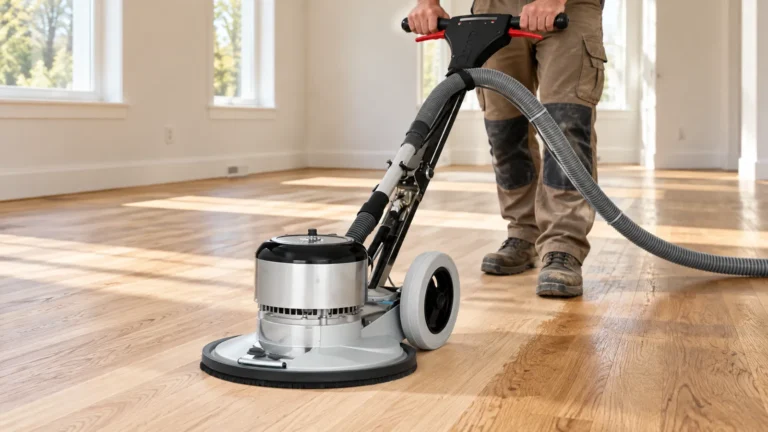
Traditional floor sanding without proper containment generates fine airborne wood dust that can drift through heating and air-conditioning vents, settle on walls, and linger on surfaces for weeks. We greatly reduce airborne dust by using dust containment floor sanding systems.
We connect our primary sanders and edge tools directly to high-powered external vacuums, such as our Oneida Vortex DCS and Bona Portable DCS 2.0 units. They collect wood dust where the sanding happens. Dust containment helps provide:
- Less airborne wood dust during sanding.
- Less dust spreading to nearby surfaces.
- Less dust landing in wet finish.
No sanding process is completely dust-free.
Custom Color Changes and Stain Application
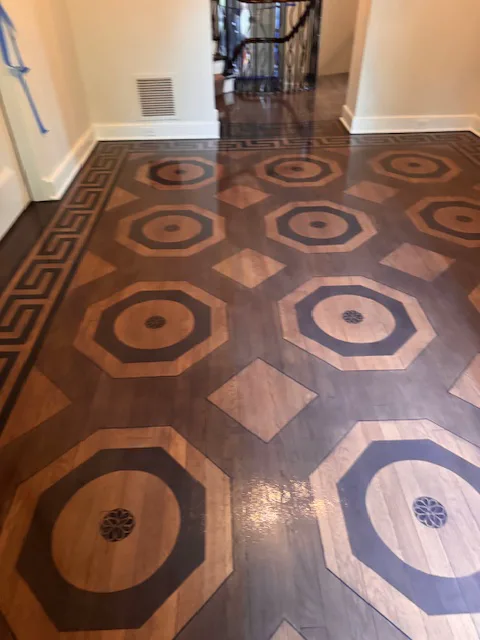
Applying a new color allows you to update your home’s aesthetic while celebrating the natural grain of your wood. Whether you prefer a warm classic tone, a rich dark hue, or a pale Scandinavian clear coat, consistent application is essential.
Through our dedicated hardwood floor staining process, we do not rely on small paper swatches. Instead, we apply generous 12×12 inch stain samples directly onto your freshly sanded wood floor. This allows you to view the colors under your home’s actual lighting conditions before we apply the final stain across the entire area.
We apply premium finishes such as Bona Traffic HD or Loba Supra A.T., usually in satin, a soft sheen. Drying and return-to-use times depend on the finish and conditions in your home. To see how these options fit within our full suite of residential offerings, explore our comprehensive services page.
Should You Refinish or Replace Your Hardwood Floors?
Refinish when enough sound wood remains. Consider replacement when the floor is too thin to sand or too damaged to repair. Refinishing uses less new wood and avoids removing sound flooring. See the refinishing cost factors on The Spruce for more detail.
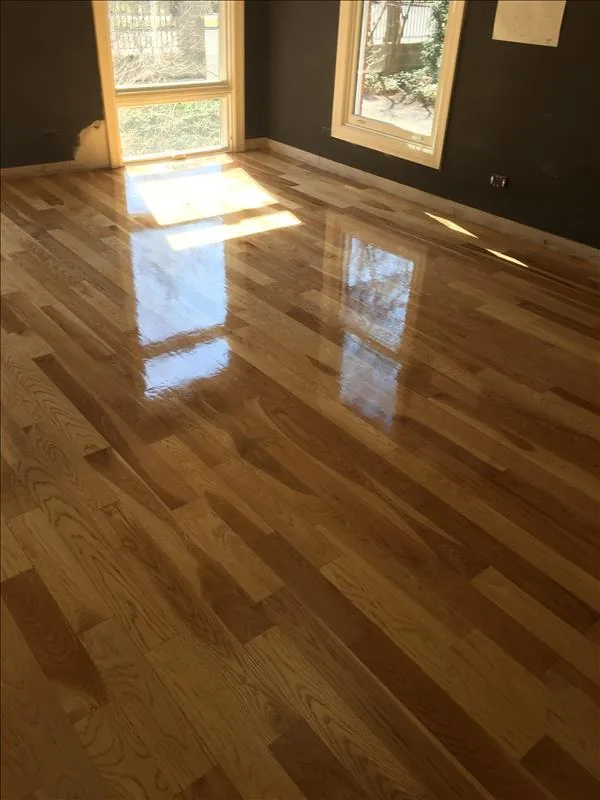
When you restore your existing solid wood, you preserve tight-grained, mature timber that is rarely found in modern production lumber. Refinishing eliminates the need for demolition debris, keeps sound materials out of waste streams, and enhances your home’s enduring character. Real estate experts consistently note that well-maintained original hardwood floors deliver strong buyer appeal and property value retention.
What Should Homeowners Know Before Refinishing Hardwood?
A typical sanding and refinishing project takes about four working days. Whether your floor can be sanded depends on its construction, remaining wood, and condition.
How long does the refinishing process take from start to finish?
A standard residential sanding and refinishing project typically takes about four working days. This schedule allows for sanding with successively finer sandpaper, sanding along edges, applying custom stain, and adding several protective finish coats. Each coat needs time to dry.
A screen and recoat is much faster, usually finishing in a single day. Light foot traffic in socks is generally permitted after about two hours following the final coat, while furniture can be carefully returned after approximately two days, depending on the finish, humidity, and temperature. At the final walkthrough, we explain drying times, when furniture can return, and how to care for your floor.
Can engineered hardwood flooring be sanded and refinished?
Engineered hardwood can often be sanded and refinished, but it depends entirely on the thickness of its top real-wood wear layer. High-quality engineered planks with a thick wear layer can be sanded down and restained similarly to solid wood.
However, products with very thin veneers cannot withstand heavy machine sanding without exposing the plywood core beneath. During our initial visit, we assess the floor’s construction, remaining wood, previous sanding, and condition before recommending a plan.
How often should residential hardwood floors be refinished?
There is no fixed refinishing or recoating schedule for every floor. Timing depends on the floor’s condition, foot traffic, pets, and care. Routine recoating replenishes the protective clear coat before foot traffic, pets, or spills reach the raw timber.
How Can You Choose the Right Service for Your Floor?
Start with an in-home assessment to find out whether your floor needs recoating, full sanding, or repairs. We can also discuss stain colors and dust containment based on your floor’s condition and your goals.
At Access Wood Flooring, we personally inspect your wood species, measure your rooms with precision laser tools, and provide clear guidance tailored to your home. We answer calls directly or usually return them within about an hour. Urgent jobs can usually start within about a week. We invite you to schedule your free in-home written estimate by visiting our contact page.