How Is Wood Floor Damage Repaired?
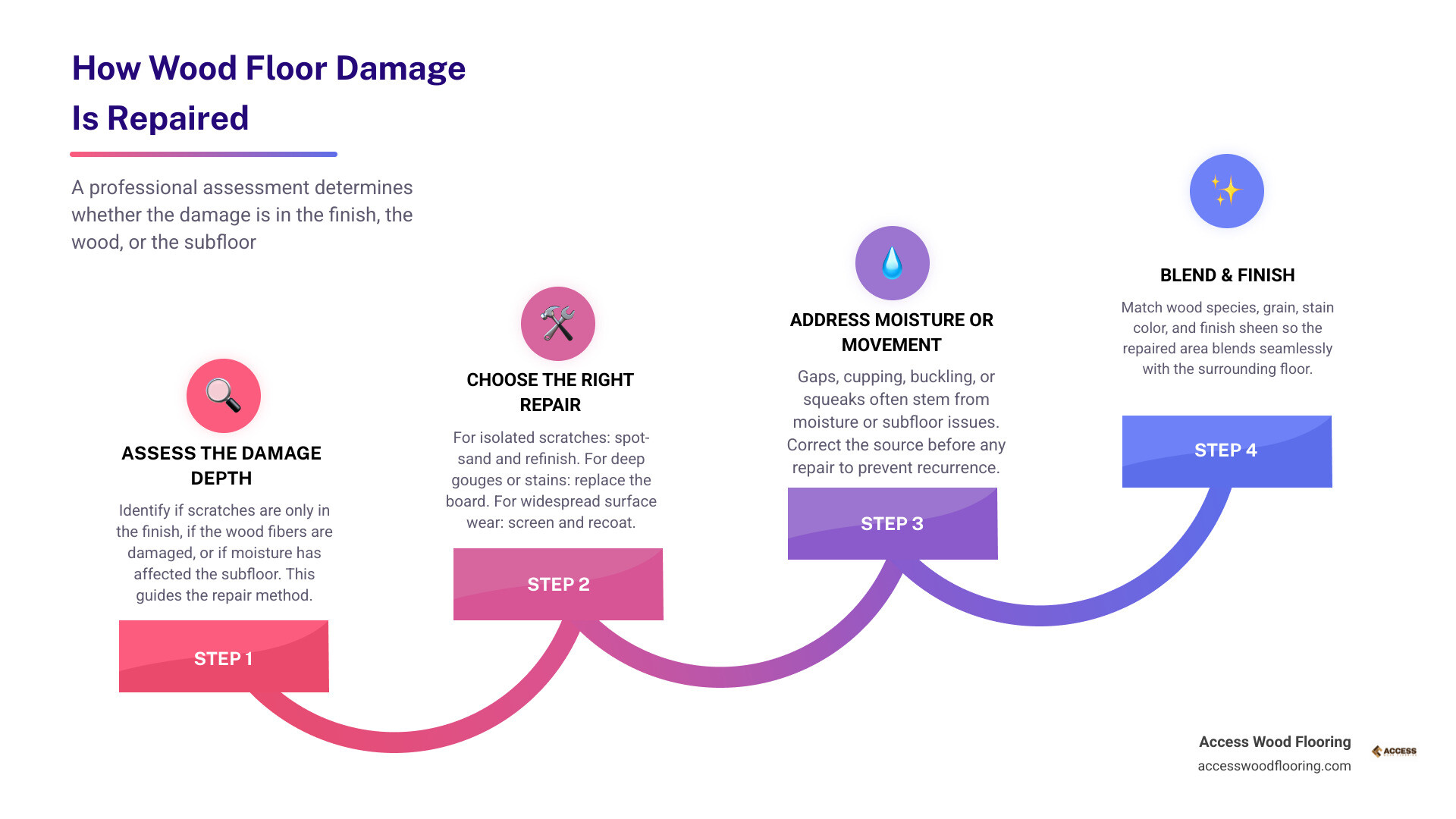
Wood floor repair starts with finding out whether the damage is in the finish, the wood, or the floor beneath it. A professional may spot-sand and refinish an isolated scratch, replace a deeply damaged board, or recommend a screen and recoat for widespread surface wear. Gaps and loose boards need a closer look because moisture or movement may be the cause.
I’m Peter Dudzik, owner of Access Wood Flooring, and I’ve worked in wood floor repair, installation, and refinishing for over 30 years. I’ll explain how a professional chooses the right repair and what to expect during an in-home assessment.
What does wood floor repair address?
Wood floor repair can address damage to the finish, the wood itself, or the floor’s support beneath the boards. Identifying which layer is affected helps us choose between a localized repair, refinishing, or board replacement.
What does wood floor repair involve for scratches, dents, and stains?
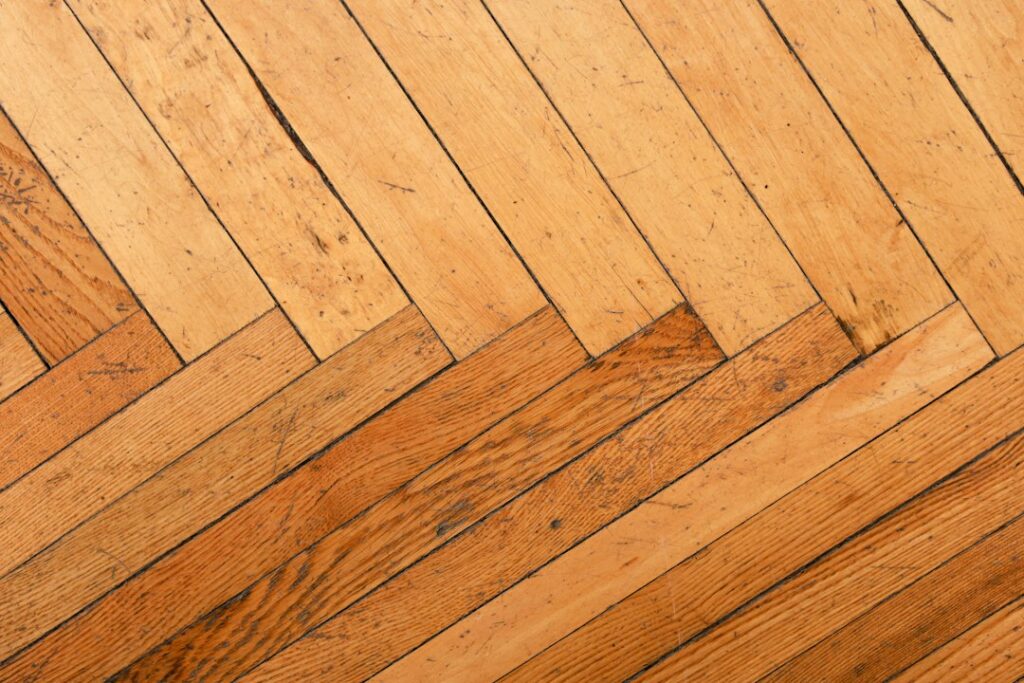
Light scratches often affect only the protective finish. Deeper scratches, dents, and gouges can break into the wood fibers, making a surface touch-up less effective. Water stains may also be limited to the finish or may have penetrated the wood.
Common causes of scratches and gouges include grit and debris tracked in on shoes, pet nails, furniture legs moved without protective pads, dropped objects, and high heels. Grit can act like sandpaper underfoot and wear the finish over time. Heavier impacts from dropped objects or furniture can dent or gouge the wood itself.
For minor surface wear, we assess whether spot sanding and refinishing can blend the affected area with the surrounding boards. A successful repair depends on matching the existing wood, stain color, and finish sheen. If the damage reaches into the wood, we may need to remove damaged material, fill or replace the affected section, and apply a compatible finish.
White or cloudy water marks can indicate moisture trapped in the finish. Dark stains may mean water has reached the wood and reacted with its natural compounds. In either case, the moisture source should be addressed before refinishing. A dark stain that has penetrated deeply may not come out with surface work alone.
What causes floorboard gaps, cupping, buckling, and squeaks?
Seasonal changes in indoor humidity can make solid hardwood shrink and expand. Small gaps during a dry winter can be normal; gaps around 1/16 inch may close as humidity rises. Persistent or wider gaps need assessment, especially if they appeared after a leak or remain through seasonal changes.
Cupping occurs when the edges of a board rise higher than its center, often because the underside has absorbed more moisture than the top. Buckling is more severe: boards lift or pull away from the subfloor. Leaks, damp crawl spaces, wet cleaning, or moisture below the floor can contribute to either condition.
Loose boards can result from fasteners loosening over time, subfloor movement or deflection, seasonal expansion and contraction, and moisture changes that reduce the holding power of the floor. Repeated foot traffic over a weakened area can make looseness worse.
Squeaks may come from boards rubbing together, loose fasteners, or movement between the subfloor and joists. The sound alone does not reveal the cause. We look for movement and consider the floor construction and access below before recommending a repair. For more background on hardwood cracks and squeaks, see the American Hardwood Information Center.
How does a professional assess and repair a wood floor?
We assess the damage before choosing a repair. That means identifying the wood and finish, checking for moisture, and determining whether the issue involves the surface, individual boards, or the subfloor.
The assessment also considers the extent of the damage and whether a local repair can blend into the surrounding floor. A repair plan may include spot sanding, refinishing, board replacement, lacing in new boards, or a screen and recoat. If moisture is involved, we first look for its source and whether the floor has stabilized.
How does wood floor repair handle a damaged or loose board?
A board with deep damage, severe warping, or decay may need to be replaced. For a localized repair, we remove only the affected board or boards when possible, check the area beneath them, and fit replacement wood into the existing floor.
Matching is a key part of the work. We consider the species, grain, age, stain color, and sheen so the repair sits naturally with nearby boards. New wood can look different from an older floor, so stain and finish choices may need to be adjusted on site. In some cases, lacing new boards into the existing pattern helps avoid a distinct patch.
Loose boards also call for a check of the support below. Securing a board without understanding why it moves can leave the underlying problem unresolved. The right approach depends on the floor’s construction and whether there is access beneath it. Our guide to small, localized floor repairs explains when a limited repair may be appropriate.
When is spot sanding, a screen and recoat, or full refinishing appropriate?
Spot sanding may work for a small area of surface damage when the surrounding finish can be blended. A screen and recoat is used when the finish has widespread scuffs or dullness but remains sound and bonds well to a new coat. It refreshes the surface without sanding down to bare wood.
Full sanding and refinishing may be needed for extensive wear, deep scratches, or stains that have reached the wood. It can also change the floor’s color. Solid hardwood can typically be sanded three to five times over its life, but the remaining wood thickness and condition matter. Sanding too far can expose the joints between boards.
The finish already on the floor affects what can be applied next. We assess its condition and compatibility before recommending a coating. Learn more about our screen and recoat service.
Can engineered hardwood be repaired or refinished?
Engineered hardwood can often be repaired, but sanding options depend on the thickness of its real-wood wear layer. A finish-only repair or board replacement may be possible even when the veneer is too thin for full sanding.
If the veneer is damaged, aggressive sanding can expose the layers beneath it. We assess the wear layer and the damage before recommending refinishing. Where sanding is not suitable, a localized repair or replacement of an affected board may be considered.
How do you decide between repair, refinishing, and replacement?
The choice depends on how much of the floor is damaged, whether the boards remain sound, how much usable wood is left, and whether moisture or subfloor movement is still present. A professional assessment helps avoid refinishing a floor that needs a structural repair—or replacing boards when a surface treatment may be enough.
| Option | Often considered when | What it addresses |
|---|---|---|
| Targeted repair | Damage is limited to a small area or a few boards | Localized scratches, gouges, loose boards, or damaged planks |
| Refinishing | Wear or damage affects a larger surface area | Worn finish, broader scratches, or color changes |
| Replacement | Boards are extensively damaged or cannot be restored | Severe deterioration or a floor with insufficient material for sanding |
When should a floor be repaired instead of refinished or replaced?
Repair is often suitable when damage is isolated and the surrounding floor is in good condition. Refinishing may make more sense when the finish is worn across a broad area or the floor needs a consistent new color. Replacement may be needed when boards are badly deteriorated, the subfloor has serious damage, or the floor has too little usable wood left for sanding.
Moisture-related damage needs special care. If a leak or dampness remains, new boards or finish may be affected again. We also consider whether a replacement can be matched closely enough to blend with the existing floor. These repair-versus-replacement considerations can help frame the decision.
What affects the scope of a professional repair visit?
The scope depends on the number and location of damaged boards, the type of wood and finish, the condition of the subfloor, and whether the moisture source has been resolved. Matching an older floor can also take more assessment than repairing a newer, uniform surface.
We begin with an in-home assessment and laser measurement, then provide a detailed written estimate. The estimate explains the recommended work and the factors that affect its scope. There is no reliable way to determine the right repair from a photo alone when moisture, movement, or hidden damage may be involved.
Why can quick-fix products make floor damage harder to repair?
A touch-up product may not match the wood or finish. Some fillers remain visible, and an incompatible coating can interfere with later refinishing. Surface products may also hide signs of a leak or other moisture problem without resolving it.
Sanding or coating an area without checking the surrounding finish can create a patch that differs in color or sheen. For damage beyond a minor surface mark, an assessment can help prevent a small issue from becoming harder to blend or correct.
What should homeowners know before and after a repair?
A professional repair begins with an assessment and a clear plan for the affected area. Before work starts, we explain what needs to be protected, how the repair will be finished, and what to expect while coatings dry.
How can homeowners reduce future hardwood floor damage?
Stable indoor humidity helps limit seasonal movement. Prompt attention to plumbing leaks and other moisture is also important. For everyday care, use dry cleaning methods suited to hardwood, avoid excess water, and place protective pads beneath furniture that could scratch the floor.
Regular checks can help catch loose boards, new gaps, or finish wear before the damage spreads. If the floor changes after a leak or begins to cup or buckle, have it assessed rather than covering the signs with a surface treatment.
What should homeowners expect during a professional repair?
We start with an in-home assessment, laser measurement, and a detailed written estimate. When staining is part of the work, we apply samples on the homeowner’s floor so color can be judged beside the existing boards.
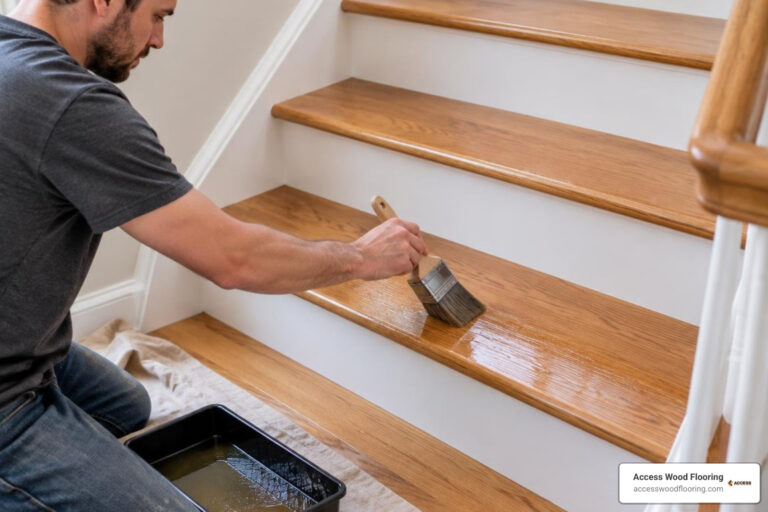
Before sanding or refinishing, we protect kitchen cabinets and doorways with plastic and tape. The repair may involve board replacement, lacing in new wood, spot sanding, or refinishing, depending on the assessment. We use dust-contained sanding and finishes such as Bona Traffic HD and Loba Supra A.T., usually in satin.
We explain drying and access expectations for the chosen work. Sanding and refinishing generally take about four working days, while a buff and recoat generally takes about one day. Light foot traffic is typically possible after about two hours, and furniture can usually return after about two days. We finish with a walkthrough and care instructions.
Frequently Asked Questions about Wood Floor Repair
The right repair depends on what caused the damage and how far it extends. These answers explain what a professional may check before recommending a solution.
Can one damaged hardwood board be replaced without replacing the whole floor?
Yes. A single board may be replaced if the surrounding floor is sound and the damage is confined to that area. The new board must be fitted and finished to blend with the existing floor. Matching can be challenging because wood color and finish change over time, so we assess the floor before confirming the approach.
How are squeaky hardwood floors assessed and repaired from above or below?
We first locate where the movement occurs and determine whether it comes from the board, fasteners, subfloor, or support below. If there is access beneath the floor, the repair may focus on the subfloor or joist connection. From above, the options depend on the floor’s construction and the location of the squeak. The goal is to address the movement without creating a visible finish problem.
How can homeowners tell whether water-damaged boards are ready for repair?
The moisture source must be addressed, and the floor needs time to dry and stabilize before repair decisions are made. Cupping, buckling, and dark stains can indicate different levels of damage, but appearance alone cannot confirm that the wood is ready for sanding or replacement. We assess moisture and board condition before recommending the next step. Sanding too early can leave an uneven floor if the boards later flatten as they dry.
Conclusion
A lasting repair starts with identifying whether damage is limited to the finish, has reached the wood, or involves movement or moisture beneath the boards. We assess the cause and condition before recommending localized repair, refinishing, or replacement.
Access Wood Flooring is a family-owned hardwood flooring contractor based in Hoffman Estates, Illinois. We serve residential homeowners in Chicago’s North Shore and northwest suburbs, including Lake Forest, Winnetka, Wilmette, Evanston, Northbrook, Glenview, Barrington, Palatine, Arlington Heights, Schaumburg, and nearby towns.
For an in-home assessment and detailed written estimate, contact us to schedule a free estimate or learn about our hardwood floor repair services.