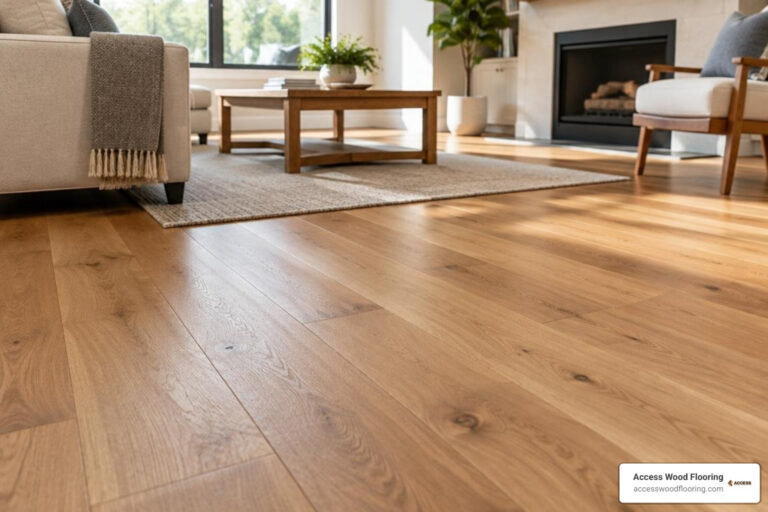
14mm engineered wood flooring is a strong middle-ground choice for many home renovations. The 14mm measurement is the board’s total thickness, not the thickness of its real-wood surface.
Is 14mm Engineered Wood Flooring Right for Your Home?
Compared with 10mm and 12mm boards, a 14mm board may offer a thicker surface that can be refinished. Compared with 18mm and 20mm boards, it adds less floor height.
Check the wear-layer thickness, core construction, and installation requirements before choosing a product; total thickness alone does not tell you how long it will last.
I’m Peter Dudzik, owner of Access Wood Flooring, and I’ve spent over 30 years installing and refinishing hardwood floors. I help homeowners assess whether 14mm engineered wood flooring fits their space, including its floor height and future refinishing options.
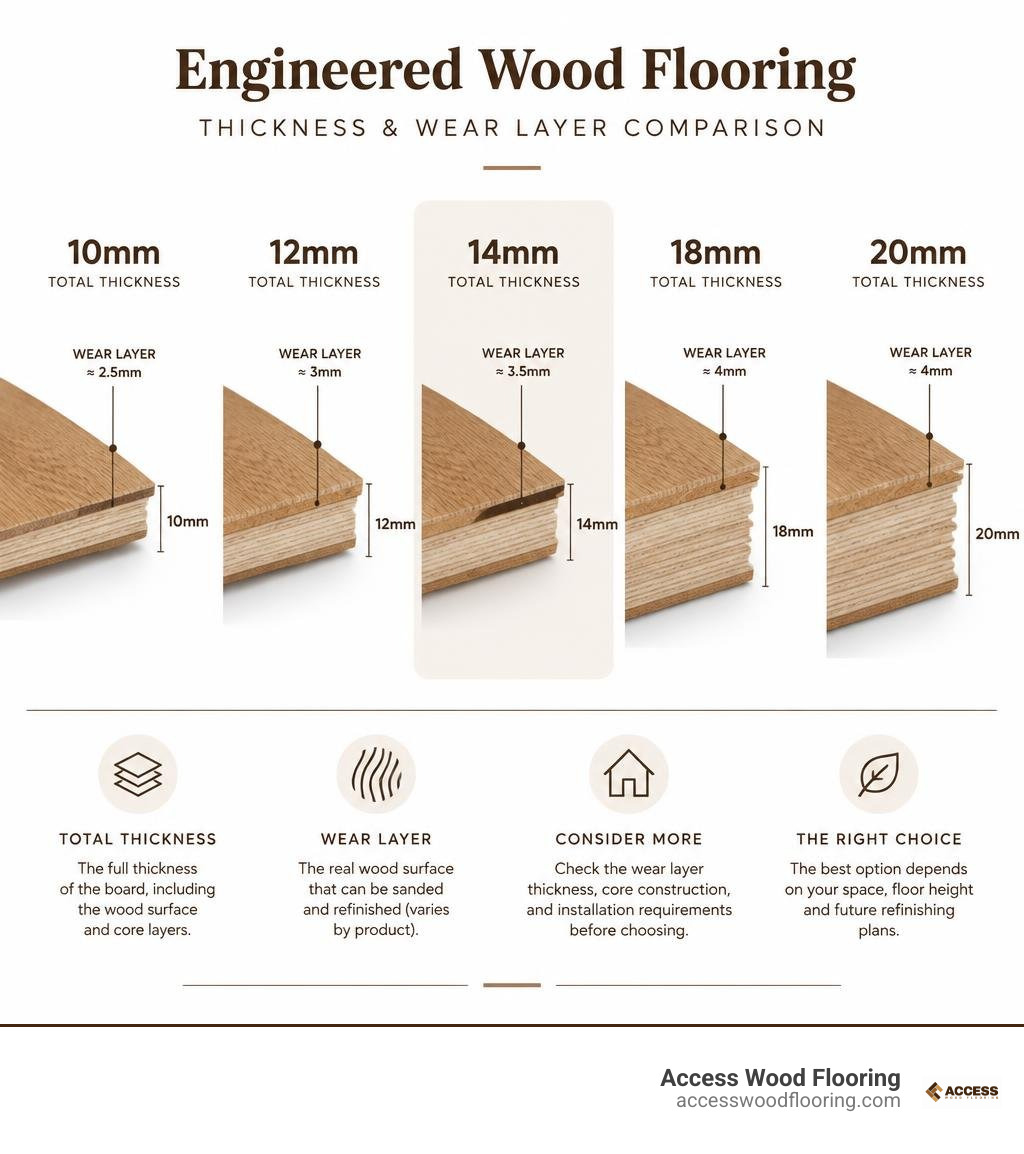
14mm engineered wood flooring definitions:
How Can 14mm Engineered Wood Flooring Fit a Home Renovation?
A 14mm engineered wood floor may suit a renovation where finished floor height matters. Check door clearances, adjoining floors, and the product’s installation requirements before choosing it. For radiant heating, confirm that the specific flooring and installation method are approved by the manufacturer.
When remodeling North Shore homes from Evanston to Lake Forest, we check the finished floor height. Thicker flooring may require adjustments at doors and transitions to adjoining rooms. A 14mm board is roughly 9/16 inch thick. Whether it meets an adjacent floor evenly also depends on the subfloor and any adhesive or underlayment.
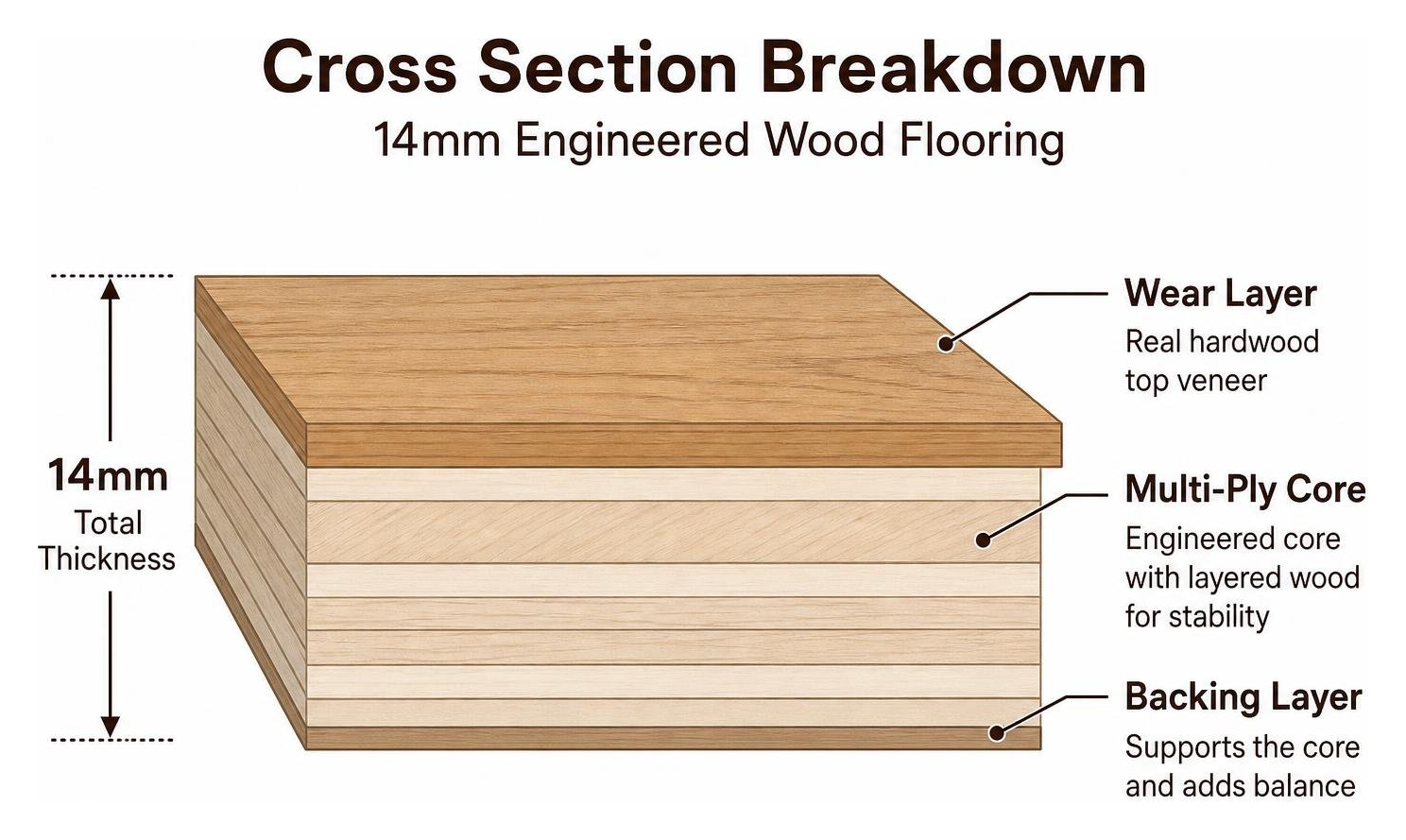
Structural Anatomy of 14mm Engineered Wood Flooring
The performance of any engineered plank depends on how its layers work together. High-grade 14mm boards balance a real hardwood top veneer with an engineered core that counteracts the natural movement of wood caused by changes in indoor humidity.
Understanding engineered hardwood wear-layer thickness and construction helps you compare these construction features:
- Wear Layer: The real hardwood surface, which may be oak. Its thickness varies by product; examples of 14mm boards include 2mm and 3.4mm wear layers. This surface shows the wood’s grain, knots, and color.
- Core Layer: Construction and thickness vary. Plywood cores use layers with alternating grain directions. High-density fiberboard (HDF) cores use compressed wood fibers held together with resin.
- Backing Layer: Some products include a bottom layer that helps balance the board. Check the manufacturer’s construction details.
Wood moves more across its grain than along its length as moisture changes. Alternating the grain direction in plywood cores helps limit movement, but does not eliminate gaps or changes in board shape. Crowning means the board’s center rises above its edges.
Sourcing and Environmental Considerations
Engineered flooring uses a thinner hardwood surface over a separate core, rather than hardwood through the board’s full thickness. Its environmental impact also depends on sourcing and manufacturing.
Core materials and emissions certifications vary by product. Ask for the manufacturer’s sourcing information and emissions documentation. A formaldehyde emissions standard does not establish that a product releases no volatile organic compounds (VOCs).
How Does 14mm Compare to Other Engineered Flooring Thicknesses?
A 14mm board falls between lower-profile 10mm and 12mm boards and thicker 18mm and 20mm options. Thinner boards reduce floor height, but total thickness does not establish how much wood is available for sanding. Thicker boards add height; compare their actual wear layers and installation requirements before choosing them.
| Board Profile | Wear Layer | Refinishing Potential | Subfloor Requirement | Floor-Height Consideration |
|---|---|---|---|---|
| 10mm | Check product specification | Depends on remaining wear layer and professional assessment | Flatness and support must meet product requirements | Lower profile |
| 12mm | Check product specification | Depends on remaining wear layer and professional assessment | Flatness and support must meet product requirements | Lower profile |
| 14mm | Check product specification | Depends on remaining wear layer and professional assessment | Flatness and support must meet product requirements | Middle profile |
| 18mm | Check product specification | Depends on remaining wear layer and professional assessment | Flatness and support must meet product requirements | Adds more height |
| 20mm | Check product specification | Depends on remaining wear layer and professional assessment | Flatness and support must meet product requirements | Adds more height |
The Chêne Zenitude Bois flotté, Diva 139 illustrates why product specifications matter: its 14mm version has a 3.4mm French oak top layer and an HDF core.
Thin vs Moderate: 10mm and 12mm Compared to 14mm
A 10mm or 12mm board reduces finished floor height compared with a 14mm board. Check its actual wear-layer thickness rather than assuming its refinishing limits from total thickness. All boards need a subfloor that meets the manufacturer’s flatness requirements.
A 14mm plank’s core and wear-layer thickness vary by product. A thicker remaining wear layer may leave room for professional sanding, but a contractor must assess its condition and sanding history. Minor finish wear may be suitable for recoating instead.
Heavy Duty Profiles: Comparing 14mm with 18mm and 20mm
When comparing 18mm engineered oak flooring, check the actual wear-layer specification. A 6mm wear layer is comparable to the usable wood above the interlocking edge joint on a traditional 3/4-inch solid plank. Not every thicker engineered board has that much usable wood. For a historic home, have a professional assess the existing floor structure and confirm the product’s support requirements before installation.
For homes with 3/4-inch plywood or concrete subfloors, thicker boards can add cost and affect installation requirements. A 14mm board may help limit added floor height, but check clearances at doors, trim, and heating registers for the complete flooring assembly.
Where Can You Use 14mm Engineered Flooring, and Can It Be Refinished?
A 14mm engineered floor may suit living rooms, hallways, bedrooms, or a dry finished basement, depending on the product’s requirements. Its layered core helps limit movement from humidity changes, but does not protect it from ground moisture. Service life and refinishing options depend on the wear layer, finish, installation, and care.
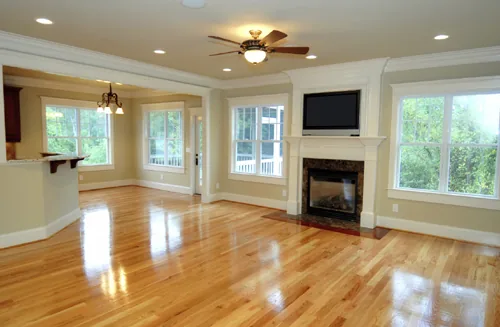
Wear Layer Longevity and Professional Refinishing Limits
Homeowners frequently ask if engineered hardwood can be sanded down like solid wood. The answer depends on the thickness of the top veneer. Before scheduling any major restoration work, you should always check your veneer thickness before paying to refinish engineered hardwood.
- 3mm to 3.5mm Wear Layer: May allow professional sanding, depending on the remaining thickness, condition, and past sanding. A professional must assess it first. Recoating may be an option when the existing finish is compatible.
- 2.5mm Wear Layer: Do not assume it can be fully sanded. Ask a professional about recoating a compatible finish or replacement if needed.
- Dust-Contained Sanding: Access Wood Flooring uses dust-containment systems such as the Oneida Vortex DCS and Bona Portable DCS 2.0. These systems collect sanding dust. A professional must still assess how much wood can be removed safely.
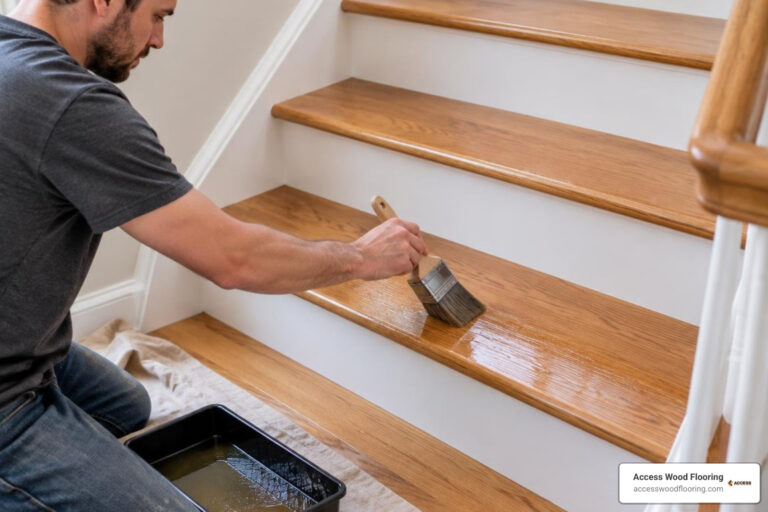
For light finish wear or dullness, full sanding down to bare wood may be unnecessary. A professional buff and recoat lightly abrades a compatible existing finish and adds a fresh protective coat, such as Bona Traffic HD or Loba Supra A.T., usually in satin. The work takes about one day and does not involve full sanding of the wood. It may improve light finish wear, but will not remove deep scratches in the wood.
Thermal Efficiency Over Radiant Heat Systems
For water-based or electric in-floor heating, check the flooring’s resistance to heat flow and its manufacturer’s approval for the system. Wood movement is driven mainly by moisture changes. Heating can change indoor humidity, so moisture control remains important.
Some 14mm engineered products are approved for radiant heating. Suitability depends on the specific flooring, heating system, and installation method, not thickness alone. Follow the manufacturer’s temperature, moisture, and installation limits; a layered core reduces movement but does not eliminate it.
Which Designs and Installation Methods Can Work in Your Home?
Depending on the product, 14mm engineered flooring is available in plank, herringbone, and chevron formats. The installation method must suit the flooring, subfloor, and any radiant heating. Proper preparation helps limit movement and unwanted sound.
Patterns and Finishes in 14mm Engineered Wood Flooring
Modern manufacturing allows 14mm engineered planks to be milled into varied formats and surface textures:
- Wide Planks: Single-strip boards offer a broad, continuous wood surface. Available widths and lengths vary by product.
- Herringbone and Chevron: Herringbone uses rectangular pieces, while chevron uses pieces with angled ends. Both create geometric layouts for rooms such as entryways and dining rooms.
- Multi-Strip Formats: Options like 3 strip engineered wood flooring add visual variation through multiple strips on each board’s surface.
- Surface Textures: Options include wire-brushed surfaces, low-gloss coatings, and penetrating oils. Low-gloss finishes can make dust and footprints less noticeable.
Professional Fitting: Glue-Down vs Floating Installations
Selecting the correct installation technique depends on your subfloor type, whether radiant heat is present, and sound transmission goals. A skilled crew handling your hardwood installation will evaluate which method fits your home’s layout:
- Full Glue-Down Method: Planks are bonded to a suitable subfloor with a flexible wood-flooring adhesive. Some radiant-heated floors and patterned products require this method. Follow the flooring and adhesive manufacturers’ requirements; glue-down does not guarantee silent floors or eliminate all movement.
- Floating Method: Approved planks click together or are edge-glued over a suitable underlayment. Use the manufacturer’s required expansion gaps and moisture-control measures to allow for movement as moisture conditions change.
- Blind Nailing / Stapling: Approved tongue-and-groove boards are fastened through their projecting edges to a suitable wood subfloor. The fasteners are concealed by the adjoining boards.
What Else Should Homeowners Know About 14mm Engineered Floors?
Wear-layer thickness and floor condition determine refinishing options. For kitchens, basements, and radiant heating, check the specific product’s approval and installation requirements.
How many times can a 14mm engineered wood floor be sanded and refinished?
A 14mm board with a 3mm to 3.5mm wear layer may allow professional sanding. A contractor must assess its remaining thickness, condition, and sanding history before estimating how many sandings are possible. Between full sandings, a professional may refresh a compatible finish with a buff and recoat. Timing depends on wear and finish condition.
Is 14mm engineered wood flooring suitable for kitchens and basements?
Some 14mm engineered products may suit kitchens or dry finished basements. Confirm the manufacturer’s approval and have a professional assess moisture conditions first. A layered core helps limit movement from humidity changes, but does not make wood waterproof. In kitchens, wipe up standing water spills promptly with a dry towel to protect the joints. In basements, have the subfloor tested for moisture and use the moisture-control system required by the flooring and installation-product manufacturers.
What installation method is best for 14mm engineered planks over underfloor heating?
The appropriate method depends on the flooring and heating-system requirements. Some products require full glue-down installation with an approved flexible adhesive. Have a professional confirm compatibility and installation limits; glue-down does not guarantee that creaks or movement will never occur.
Is 14mm Engineered Wood Flooring a Good Fit for Your Home?
A 14mm engineered floor may suit your home when its height, construction, and installation requirements fit the project. Check door clearances and the actual wear-layer thickness rather than relying on total thickness alone. A professional can assess whether the selected product leaves room for future refinishing.
At Access Wood Flooring, we help homeowners across Chicago’s North Shore and northwest suburbs—from Lake Forest and Highland Park to Arlington Heights and Schaumburg—select, install, and finish wood floors. Whether you are laying wide-plank oak over radiant heat or installing custom herringbone patterns, our small family team handles the flooring installation.
To evaluate your subfloor and plan your project, schedule a free in-home estimate for engineered wood flooring installation with our team today.